Acoustics-10: Frontiers – Nonlinear and Active Acoustics
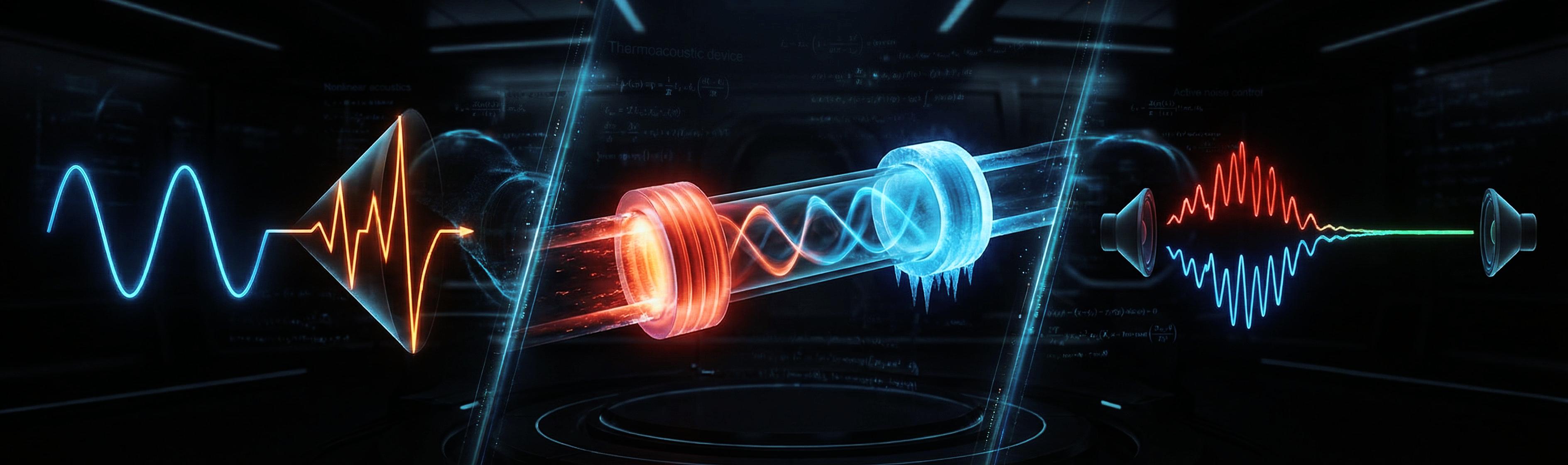
What happens when sound is so loud the air 'breaks'? This finale explores shock waves, thermoacoustic refrigerators, and Active Noise Control—the frontiers of modern acoustics.
What happens when sound is so loud the air 'breaks'? This finale explores shock waves, thermoacoustic refrigerators, and Active Noise Control—the frontiers of modern acoustics.
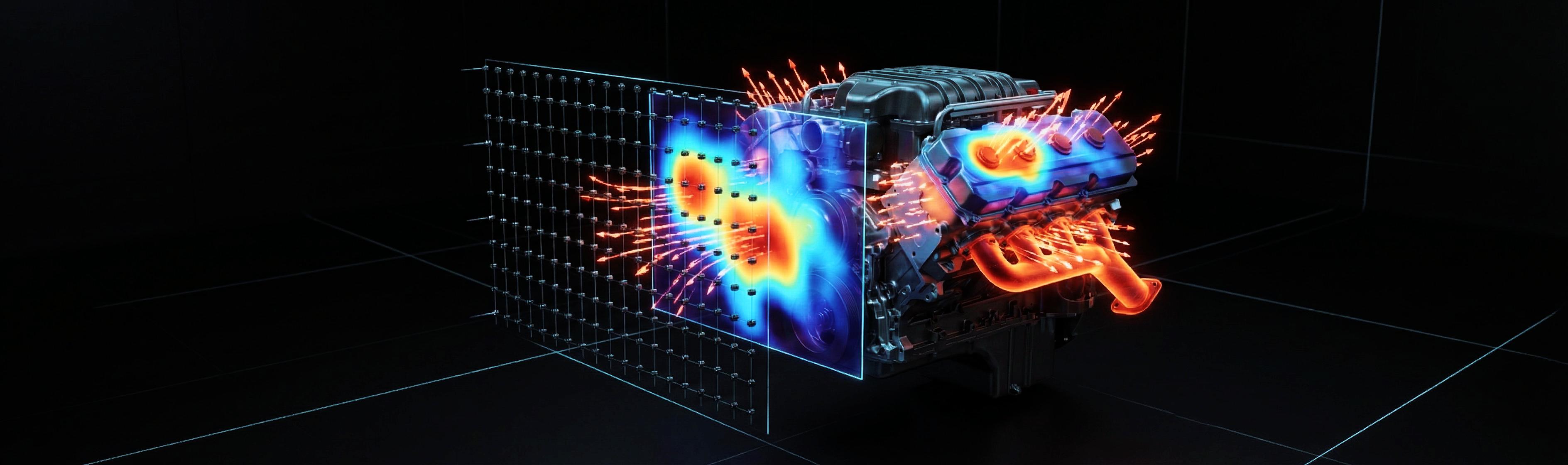
How do engineers 'see' where noise comes from? This post explores Sound Intensity vectors and Near-field Acoustic Holography—technologies that create 'heat maps' of noise sources.
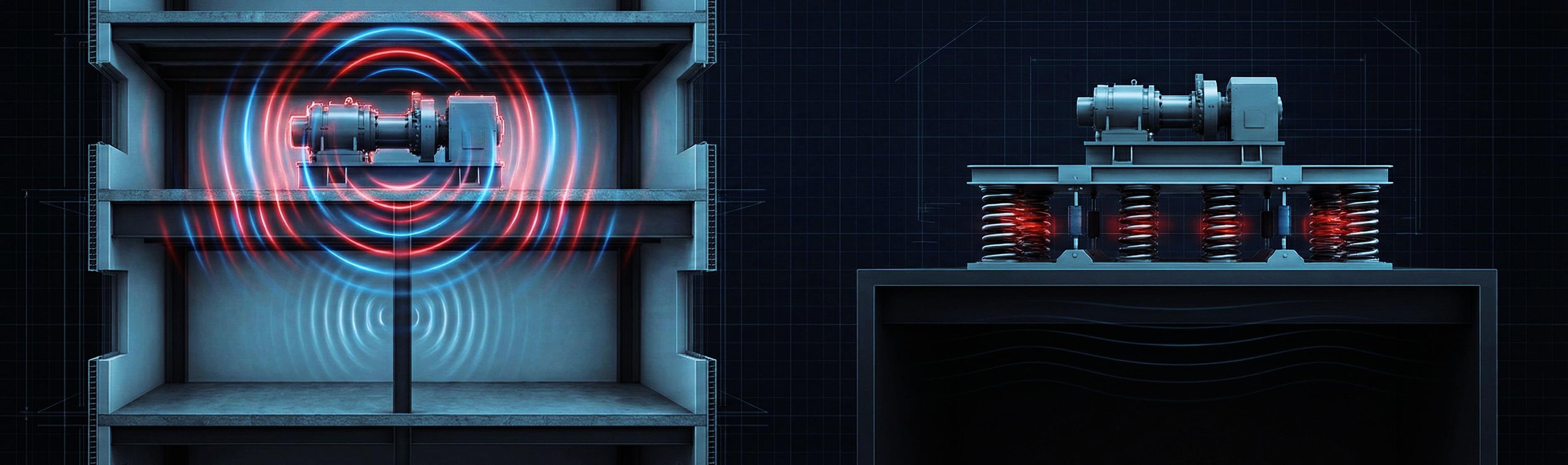
Why can you hear the subway through a sealed building? This post explores how flexural waves travel through structures and how springs and damping break the chain of vibration.
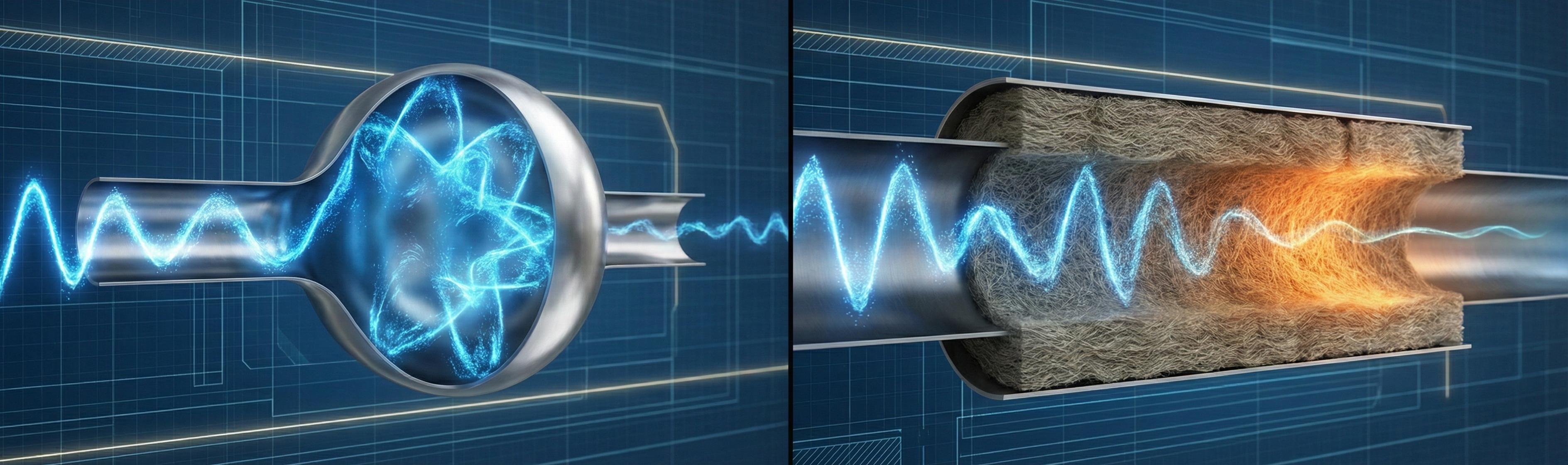
How do cars silence engines without choking them? This post explores reactive silencers (expansion chambers that reflect noise) and resistive silencers (lined ducts that absorb it).
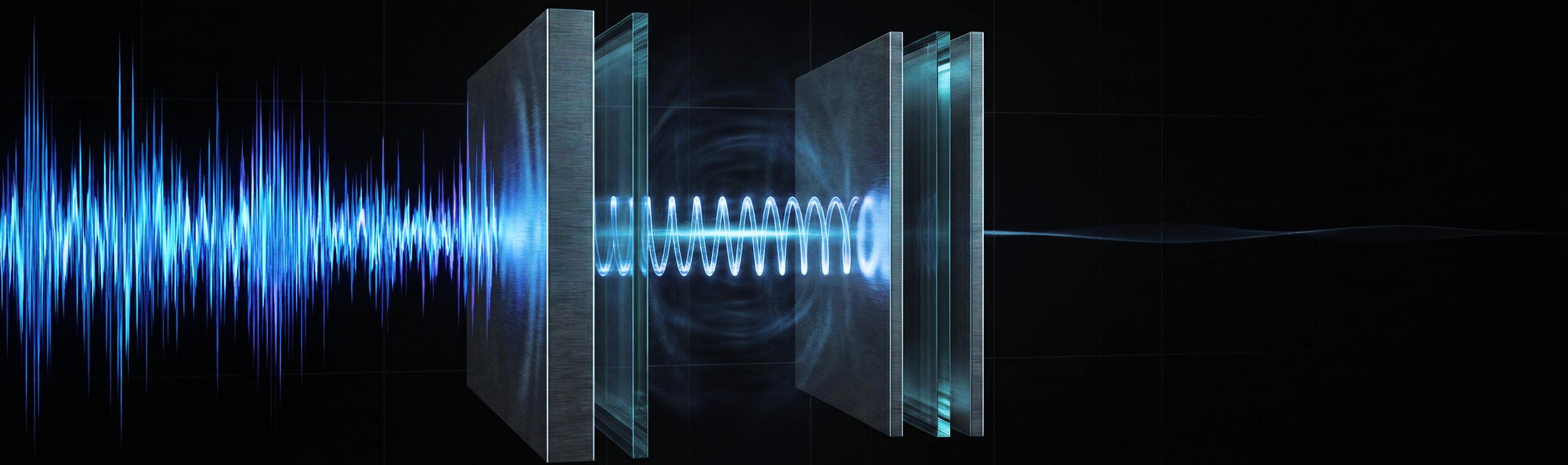
Why do heavy walls block more sound? What makes double-pane windows so effective? This post explores the Mass Law, the coincidence effect, and how double walls achieve 18 dB/octave insulation.
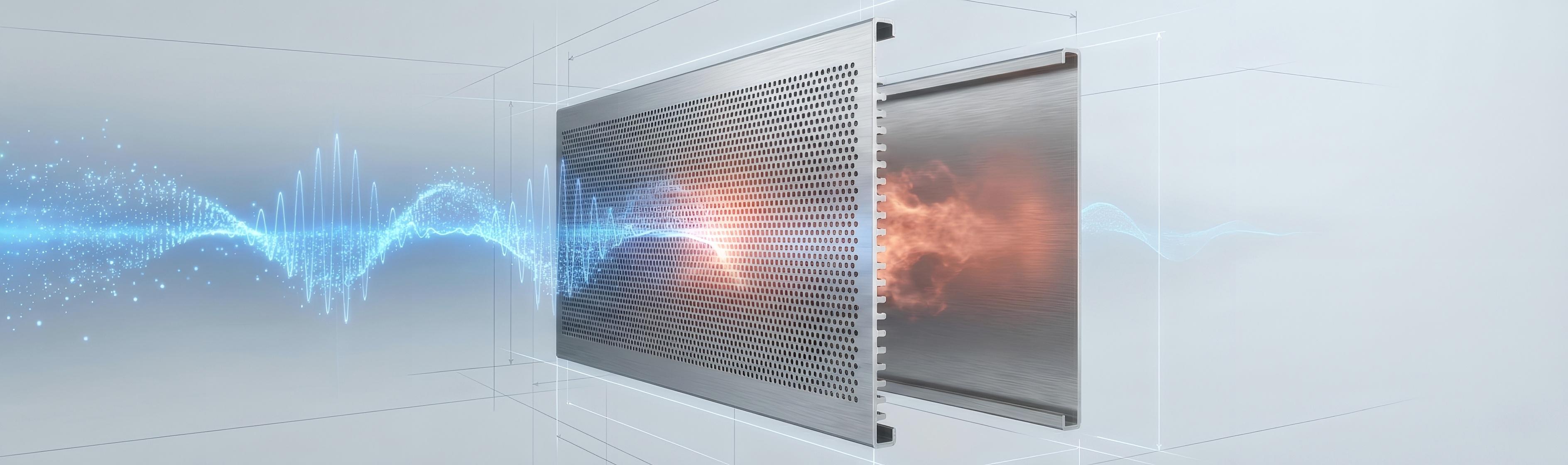
Can a metal sheet absorb sound like a sponge? Ma Dayou's Micro-Perforated Panel theory proves it can—using sub-millimeter holes to turn viscous friction into broadband absorption without fibers.

Why does foam absorb sound but rubber doesn't? How can an empty bottle silence a specific tone? This post explores flow resistivity in porous absorbers and the spring-mass physics of Helmholtz resonators.
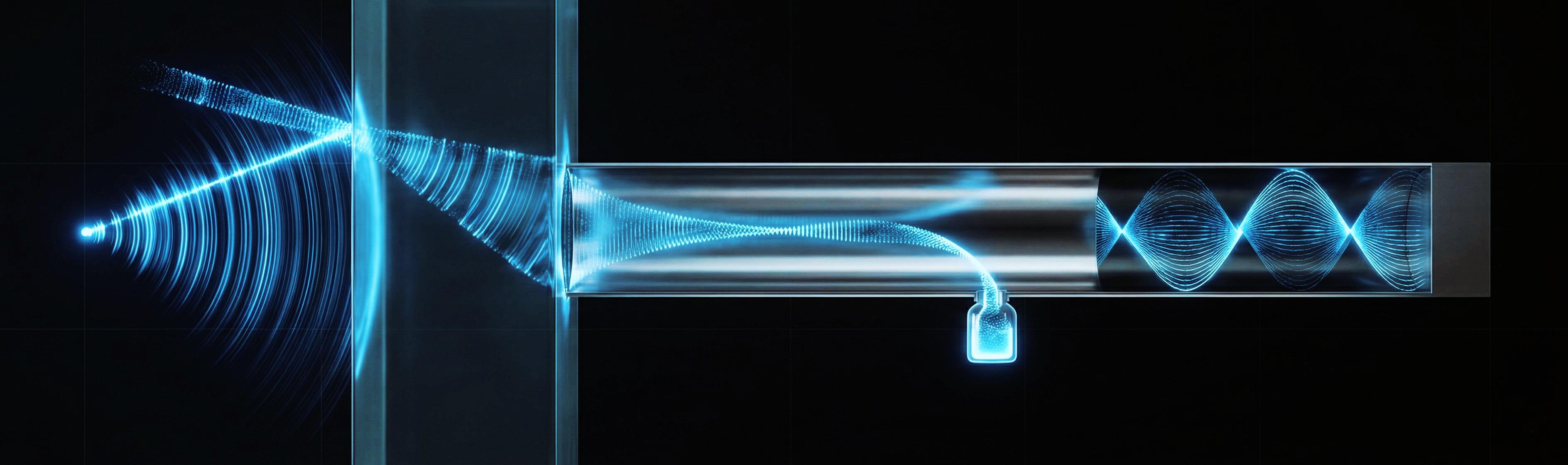
Why does sound bounce off walls but pass through windows? How do mufflers silence engines? This post explores impedance matching, Snell's Law, Helmholtz resonators, and the standing waves used to measure material absorption.
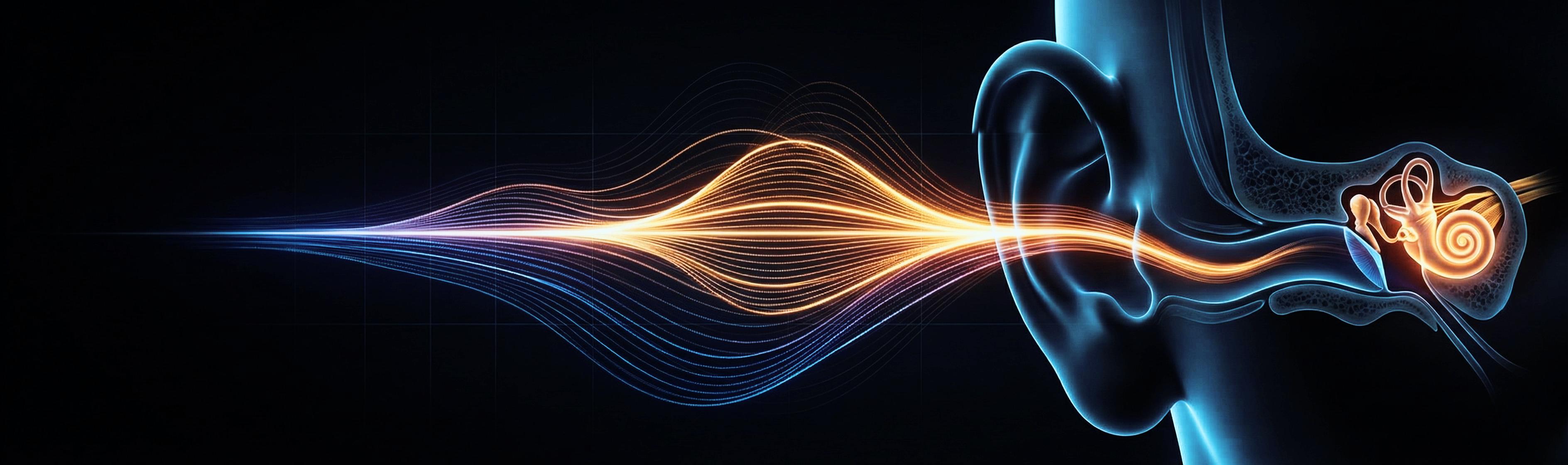
Understanding why we use decibels, how sound levels add up, and how A-weighting captures human perception of noise.
Tracing the history of acoustics from ancient Chinese tuning to Galileo, and deriving the fundamental wave equation that governs all sound propagation.