The Essential Reading List: 100+ Books to Read in a Lifetime
Meaning, Spirit & The Human Psyche
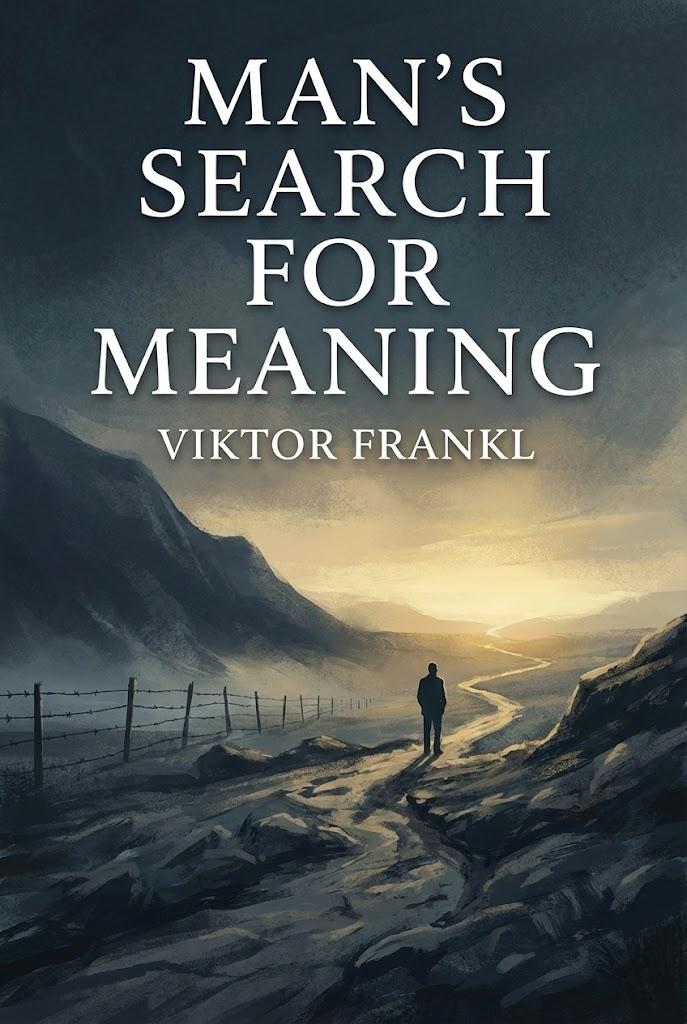
Published: 1946
Viktor Frankl, a Jewish psychiatrist who survived Nazi concentration camps, shares a profound truth born from extreme suffering.
Core Insight
“He who has a why to live can bear almost any how.” — Nietzsche
Those who survived the camps were not the physically strongest, but those who held onto an unfinished purpose — a loved one waiting, an unwritten book, an unfulfilled duty.
Three Pillars of Meaning
- Creative Work — Creating something or accomplishing a deed
- Experience & Love — Encountering beauty or loving someone deeply
- Attitude Toward Suffering — When fate cannot be changed, change yourself
The Ultimate Freedom
“Everything can be taken from a man but one thing: the last of the human freedoms — to choose one’s attitude in any given set of circumstances.”
Key Takeaway: Meaning is not given to us — we must actively create it. Even in suffering, we retain the power to choose how we respond.
中文书名:《活出意义来》
核心思想
“此时此刻,你不是在期待生活给予你什么,而是生活在期待你付出什么。”
弗兰克尔作为犹太裔精神科医生在纳粹集中营的亲身经历,揭示了一个深刻真理:人在任何境遇中都有选择态度的自由。
三大核心洞见
1. 意义是生存的动力
“He who has a why to live can bear almost any how.” — 尼采
那些在集中营中幸存下来的人,往往不是体格最强壮的,而是心中仍有未完成使命的人——等待重逢的爱人、未写完的书、未尽的责任。
2. 痛苦本身可以有意义 当无法避免痛苦时,我们仍可选择如何承受它。苦难成为成长和见证人性尊严的机会。
3. 意义的三条途径
- 创造性工作:通过创造或成就某事
- 体验与爱:通过体验美好或爱一个人
- 面对苦难的态度:当无法改变命运时,改变自己的态度
终极自由
“人所拥有的任何东西,都可以被剥夺,唯独人性最后的自由——在任何境遇中选择一己态度和生活方式的自由——不能被剥夺。”
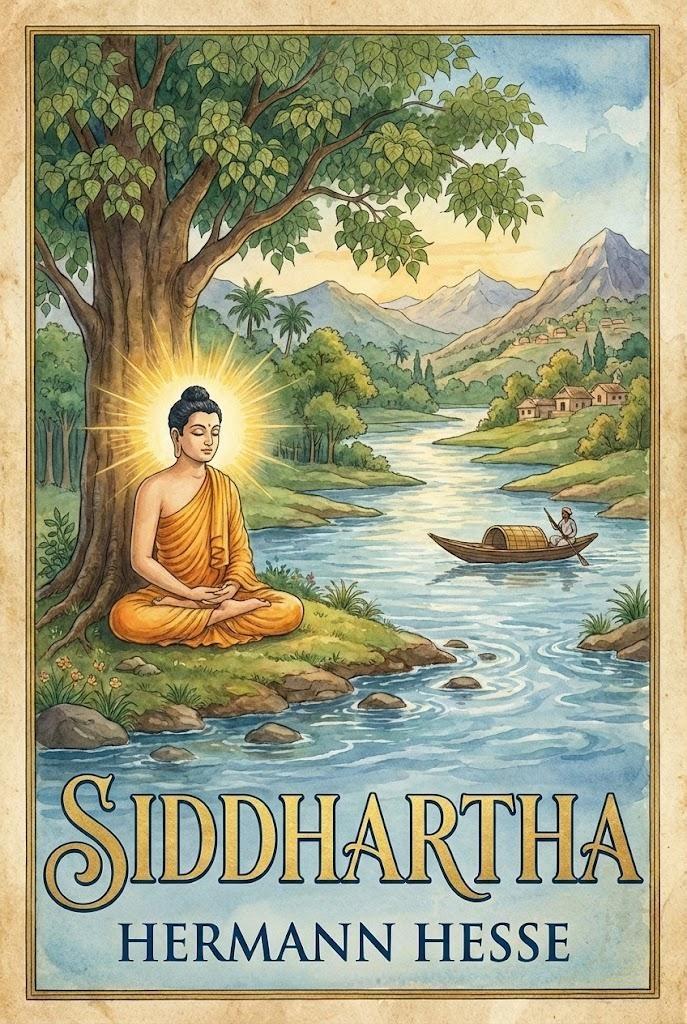
Published: 1922
Hermann Hesse’s spiritual journey of a young Brahmin seeking enlightenment.
Core Insight
Wisdom cannot be taught — it must be lived. Siddhartha rejects teachers, doctrines, and even the Buddha himself, choosing instead to learn from the river of life.
Three Stages of Awakening
- Renunciation — Leaving comfort and tradition to seek truth
- Immersion — Experiencing worldly pleasures and suffering
- Transcendence — Finding unity with all things
The River’s Wisdom
“The river is everywhere at the same time — at the source and at the mouth, at the waterfall, at the ferry, at the current, in the ocean… only the present exists for it.”
Key Takeaway: Stop seeking enlightenment outside yourself. Truth is found not through doctrines but through direct experience of life’s totality — its pleasures and pains, gains and losses.
中文书名:《悉达多》(又译《流浪者之歌》)
核心思想
赫尔曼·黑塞笔下的悉达多,讲述了一个婆罗门青年寻求证悟的灵性旅程。
“知识可以传授,但智慧无法传授。”
觉醒的三个阶段
- 出离 — 放弃舒适与传统,踏上求道之路
- 入世 — 体验尘世的欲望、贪婪与痛苦
- 超越 — 在绝望中听到"Om"的声音,万物归一
河流的智慧
河流教导悉达多,时间并无分别——源头与河口、瀑布与大海,都在当下同时存在。
核心启示: 不要向外寻求真理。真理不在教义中,而在对生命整体的直接体验中——包括快乐与痛苦、得到与失去。每一个瞬间都是圆满的。
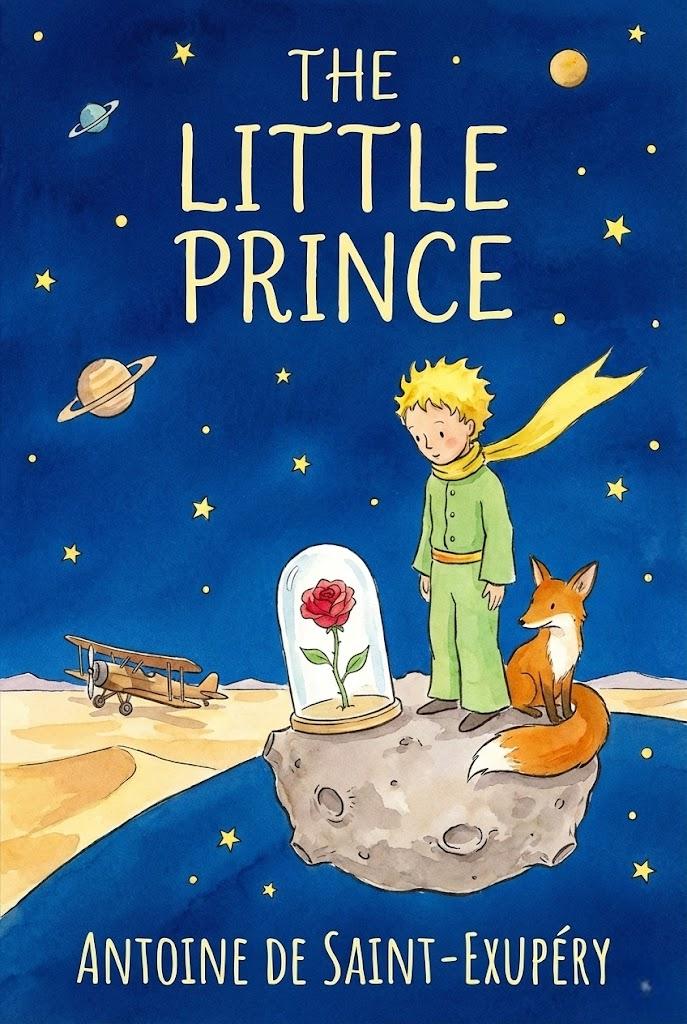
Published: 1943
A pilot stranded in the Sahara meets a mysterious child from asteroid B-612.
Core Insight
“What is essential is invisible to the eye. It is only with the heart that one can see rightly.”
The Little Prince’s journey through planets satirizes adult obsessions — power, vanity, greed — while celebrating childlike wonder.
Timeless Wisdom
- On Love: “You become responsible, forever, for what you have tamed.”
- On Time: “It is the time you have spent on your rose that makes your rose so important.”
- On Seeing: Adults count and measure; children truly see.
The Rose and The Fox
The fox teaches the Prince that relationships require investment. His rose is special not because it’s unique, but because he watered it, protected it, and loved it.
Key Takeaway: In a world obsessed with acquisition, the most precious things — love, friendship, meaning — cannot be bought. They are cultivated through care, attention, and time.
中文书名:《小王子》
核心思想
“只有用心才能看清事物本质,重要的东西用眼睛是看不见的。”
永恒的智慧
小王子在星际旅行中遇到的成人,讽刺了成人世界的荒谬——对权力、虚荣、金钱的执着,却遗忘了生命中最淳朴的快乐。
玫瑰与狐狸
狐狸教会了小王子什么是驯养(建立关系): “因为你为你的玫瑰花费了时间,这才使你的玫瑰变得如此重要。”
核心启示: 在这个通过数字和占有来衡量价值的世界里,真正珍贵的东西——爱、友谊、羁绊——是买不到的。它们需要我们投入时间、关心和耐心去浇灌。你永远要为你所驯养的东西负责。
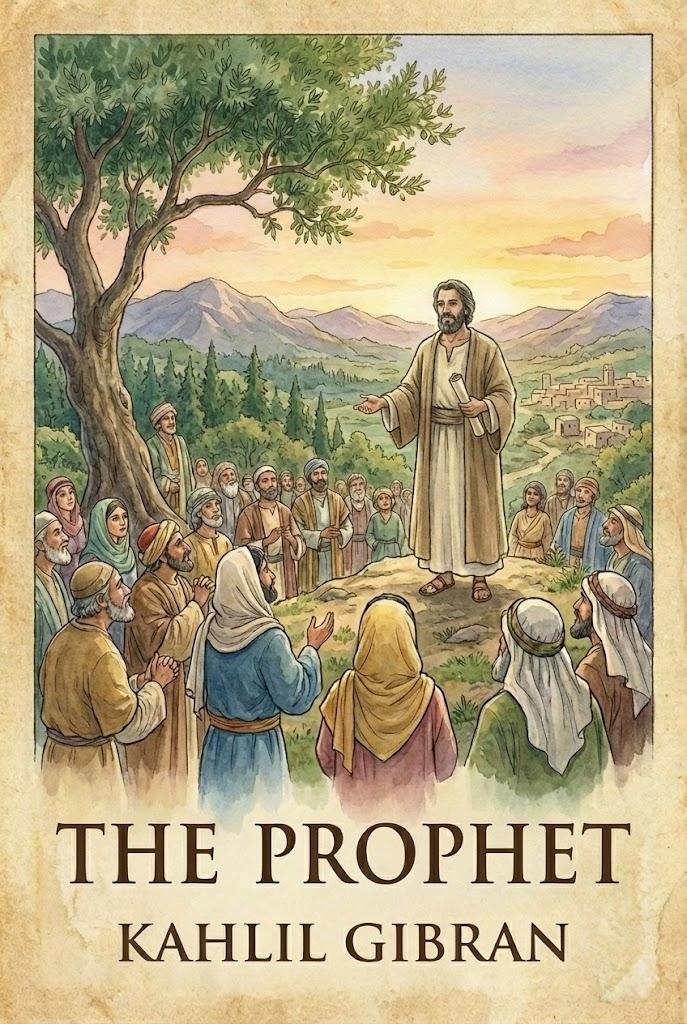
Published: 1923
Kahlil Gibran’s poetic masterpiece on life’s fundamental questions.
Core Insight
A prophet departing a city offers wisdom on love, work, children, death, and freedom — distilled into lyrical prose.
Essential Teachings
On Love:
“Love possesses not nor would it be possessed; for love is sufficient unto love.”
On Work:
“Work is love made visible. If you cannot work with love, it is better to sit at the gate of the temple and beg.”
On Children:
“Your children are not your children. They are the sons and daughters of Life’s longing for itself.”
On Joy and Sorrow:
“The deeper that sorrow carves into your being, the more joy you can contain.”
The Balance
Gibran teaches that opposites are inseparable — joy and sorrow, giving and receiving, freedom and restraint. Life is not about choosing one over the other, but embracing both.
Key Takeaway: True wisdom lies in balance. We cannot know joy without sorrow, cannot love without risking loss, cannot grow without struggle.
中文书名:《先知》
核心思想
纪伯伦的散文诗杰作,一位先知在离别前为城中人民解答关于生命的终极疑惑。
经典诗句
关于爱:
“爱不占有,也不被占有;因为爱在爱中满足。”
关于工作:
“工作是看得见的爱。如果你不能带着爱工作,而只是在厌恶中劳作,其实不如坐在殿门前乞讨。”
关于孩子:
“你们的孩子,都不是你们的孩子。他们是生命为自己所渴望的儿女。你可以给予他们的是你的爱,却不是你的想法,因为他们有自己的思想。”
核心启示: 生命的智慧在于平衡与接纳。悲伤在你的心上刻得越深,你便能容纳越多的快乐。生命不是非黑即白的选择,而是对立统一的舞蹈。
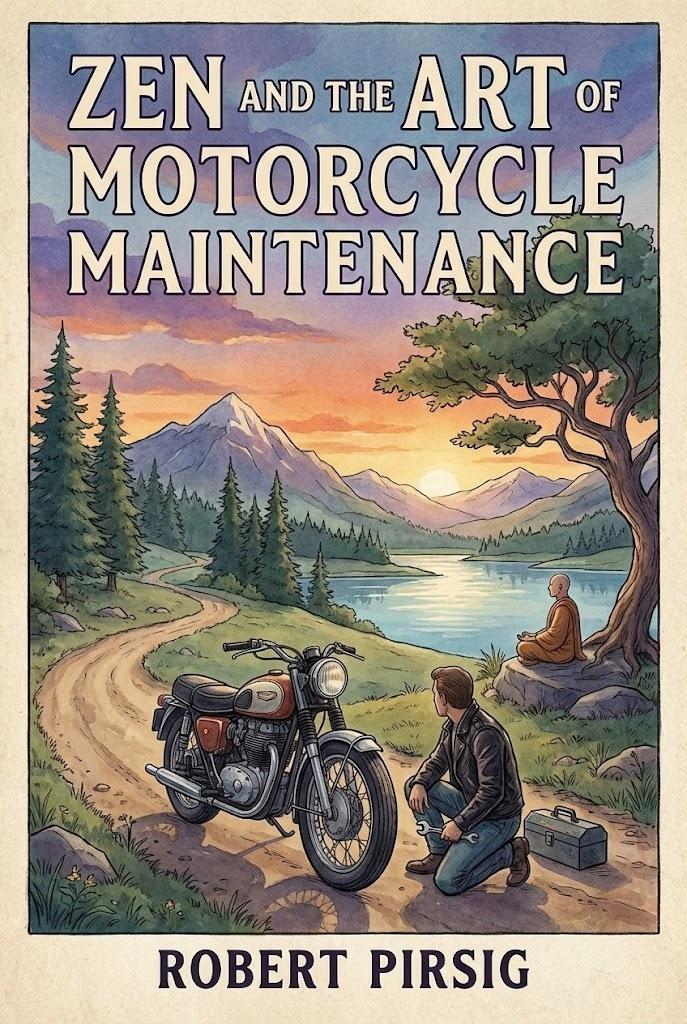
Published: 1974
A cross-country motorcycle journey becomes a meditation on philosophy, technology, and the meaning of quality.
Core Insight
The narrator explores the conflict between classical understanding (rational, analytical) and romantic understanding (intuitive, holistic) — arguing both are incomplete.
The Concept of Quality
“Quality is not just the result of an object — it’s the relationship between the observer, the object, and the act of observation.”
Quality cannot be defined, yet we all recognize it. It precedes intellectual classification — it is the source from which subjects and objects arise.
Key Ideas
- Chautauqua: A journey is meaningless if you rush to the destination
- Gumption: Enthusiasm and care are essential for meaningful work
- Phaedrus: The shadow self that pursued Quality to the edge of sanity
The Motorcycle as Metaphor
Maintaining a motorcycle requires both technical skill and genuine care. Those who refuse to understand their machines become alienated from them — just as we become alienated from technology and work when we don’t engage with care.
Key Takeaway: Excellence comes not from following rules, but from caring deeply about what you do. Quality is a verb, not a noun.
中文书名:《禅与摩托车维修艺术》
核心思想
一次横跨美国的摩托车之旅,演变成一场关于哲学、科技与"良质"(Quality)的沉思。
古典与浪漫的对立
- 古典认知:理性的、分析的、注重底层结构的(如摩托车维修手册)
- 浪漫认知:感性的、直觉的、注重表面美感的(如沿途的风景)
作者认为现代人的焦虑源于这两者的分裂,而解决之道在于良质。
什么是良质?
良质无法定义,但它是一切的源头。它存在于主观与客观接触的那一刹那。
维修摩托车的禅意: 当你在此刻的工作中投入关切(Care),主客体的对立便消失了。这不仅是在维修车,也是在修缮你自己。
核心启示: 真正的卓越不来自于刻板的规则,而来自于进取心和全情投入。无论做代码、写作还是生活,当你在这件事中看见了"良质",你便与道合一。
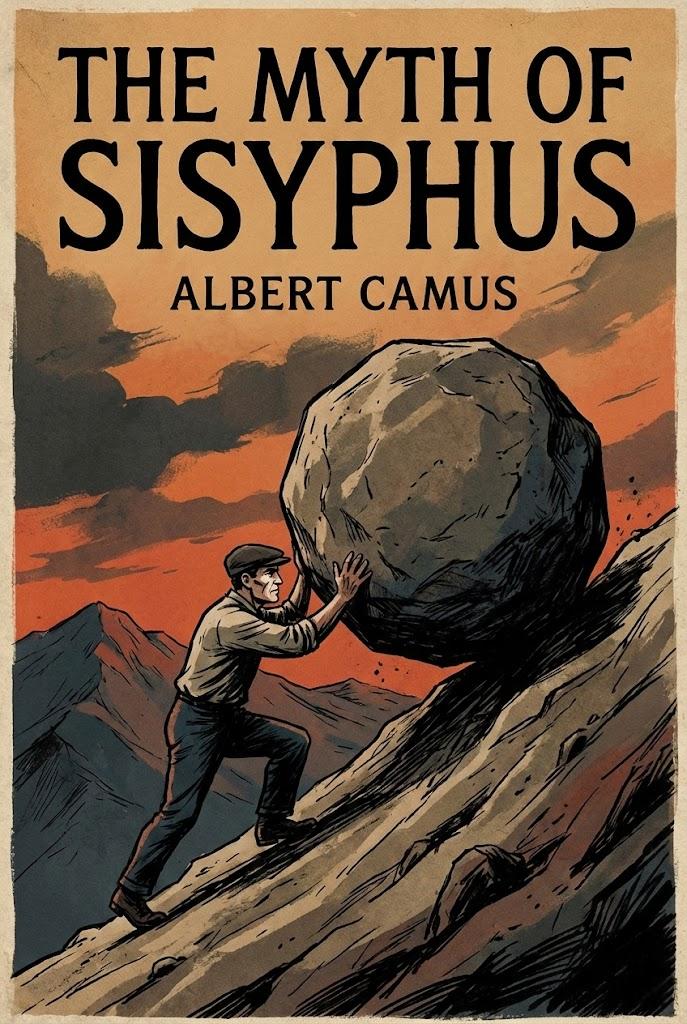
Published: 1942
Albert Camus’ philosophical essay confronts the fundamental question: Is life worth living?
Core Insight
“There is but one truly serious philosophical problem, and that is suicide.”
Camus argues that life is absurd — there is no inherent meaning in the universe, yet we desperately seek one. This confrontation between our desire for meaning and the universe’s silence is the absurd.
Sisyphus as Hero
The Greek myth of Sisyphus — condemned to roll a boulder up a hill for eternity, only for it to roll back down — becomes Camus’ central metaphor for human existence.
Three Responses to the Absurd
- Suicide — Camus rejects this as “giving in”
- Philosophical Suicide — Escaping into religion or abstract hope — also rejected
- Revolt — The heroic response: accept the absurd and live fully anyway
The Ultimate Affirmation
“One must imagine Sisyphus happy.”
The struggle itself is enough. By embracing the absurd, we find freedom. Each moment becomes precious precisely because it is fleeting.
Key Takeaway: Life has no inherent meaning, but that is liberating, not defeating. We are free to create our own meaning through passionate engagement with life.
中文书名:《西西弗神话》
核心思想
加缪在这篇哲学随笔中直面生命的根本问题:人生是否值得活?
“真正严肃的哲学问题只有一个,那就是自杀。”
什么是荒诞?
加缪认为,荒诞产生于人类对意义的渴望与宇宙沉默之间的对峙。世界本身没有意义,但我们却不断追问"为什么"——这种张力就是荒诞。
西西弗斯的启示
西西弗斯被惩罚永远将巨石推上山顶,然后看着它滚下来,周而复始。这成为加缪描述人类存在的核心隐喻。
面对荒诞的三种方式
- 肉体自杀 — 加缪拒绝,认为是屈服
- 哲学自杀 — 逃入宗教或抽象希望 — 同样被拒绝
- 反抗 — 接受荒诞,依然全力以赴地活着
终极肯定
“我们必须想象西西弗斯是幸福的。”
核心启示: 生命没有内在意义,但这恰恰是解放,而非绝望。既然没有预设的意义,我们就能自由地创造自己的意义。在推石的过程中,西西弗斯是自己命运的主人。
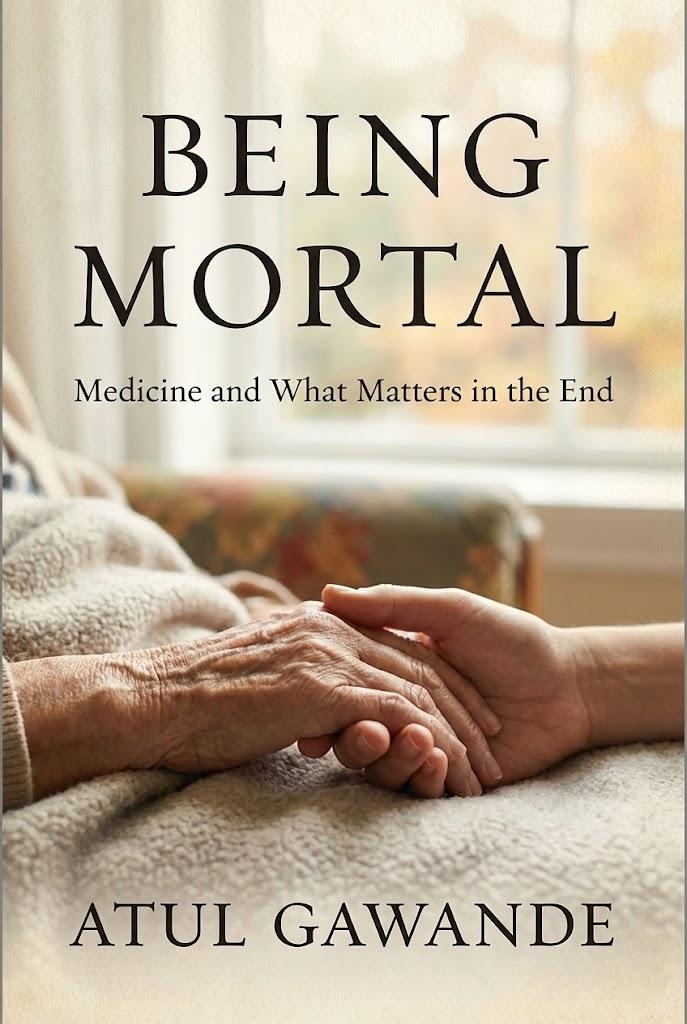
Published: 2014
A surgeon and public health researcher examines how medicine fails the dying and how we can do better.
Core Insight
Modern medicine has extended life but forgotten how to help people live well at the end. We’ve turned dying into a medical problem to be solved, rather than a human experience to be navigated.
Key Ideas
The Nursing Home Problem: Safety and longevity have become healthcare’s primary goals — often at the expense of autonomy, meaning, and dignity.
What Matters Most:
“People have priorities besides simply prolonging their lives. Surveys find that their top concerns include avoiding suffering, being with family, having the touch of others, being mentally aware, and not becoming a burden.”
The Hard Conversation: Doctors are trained to fix problems, not to have conversations about what makes life worth living. But these conversations are crucial.
Five Questions for End of Life
- What is your understanding of where you are with your illness?
- What are your fears or worries for the future?
- What are your goals and priorities?
- What outcomes are unacceptable to you?
- What trade-offs are you willing to make?
Key Takeaway: A good life is not just about more time — it’s about what you do with that time. Medicine should help people live meaningfully, not just longer.
中文书名:《最好的告别》
核心思想
阿图·葛文德是一位外科医生和公共卫生研究者。他通过亲身经历和大量案例,揭示了现代医学在面对死亡时的困境。
现代医学的盲点
我们把"死亡"变成了一个需要战胜的医学问题,却忘记了它是一个需要陪伴的人生过程。
“在养老院和医院里,我们往往把安全和延长生命当作首要目标——却牺牲了老人真正看重的东西:自主、尊严和生活的意义。”
五个关键问题
当面对严重疾病时,我们需要和家人/医生讨论:
- 你对自己目前病情的理解是什么?
- 你最害怕的是什么?
- 你的目标和优先事项是什么?
- 哪些结果对你来说是不可接受的?
- 你愿意做出什么样的权衡?
何为"好死"?
不是无痛、不是延长、不是"不惜一切代价"——而是在生命最后阶段,仍然能够做对自己有意义的事。
核心启示: 生命的质量比长度更重要。真正的医学关怀,是帮助人们活得有意义,而不仅仅是活得更久。
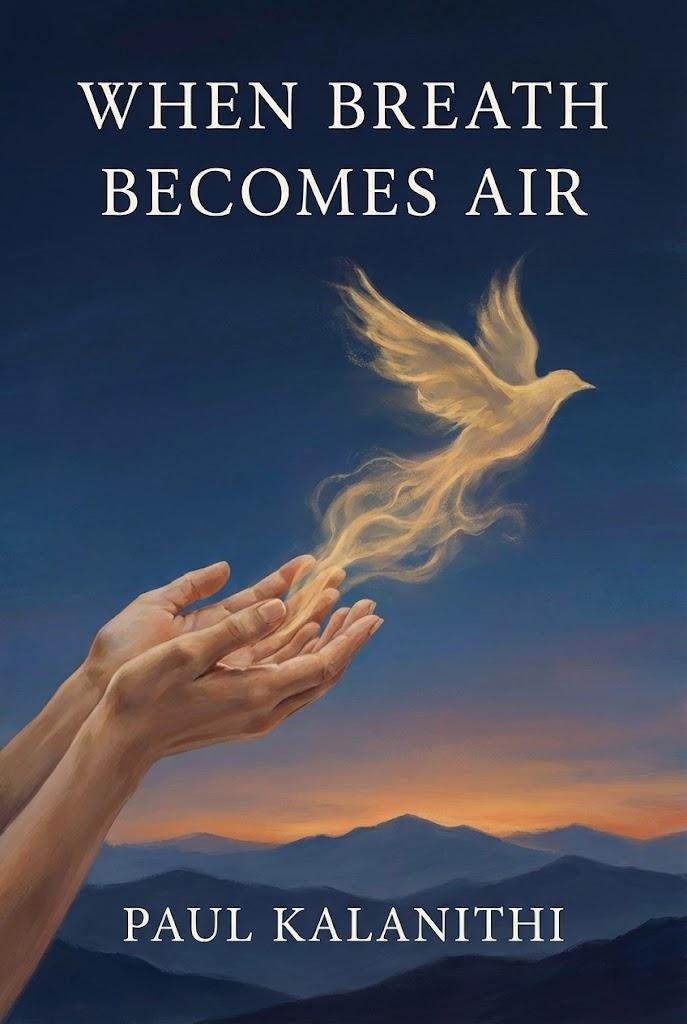
Published: 2016
A young neurosurgeon diagnosed with terminal cancer reflects on mortality, meaning, and what makes life worth living.
Core Insight
Paul Kalanithi was 36, at the pinnacle of his neurosurgery career, when he was diagnosed with Stage IV lung cancer. This memoir, written in his final months, asks: When death comes, what makes life worth living?
Before Diagnosis
As a neurosurgeon, Kalanithi dealt with death daily — helping patients and families navigate the most difficult decisions. He understood the brain’s fragility and the thin line between life and death.
After Diagnosis
“I would have to learn to live in a different way, seeing death as an imposing itinerary, not as an indefinite future.”
The future that once stretched endlessly before him collapsed into an urgent present.
The Central Question
“What makes life meaningful enough to go on living?”
For Kalanithi, the answer was purpose — continuing to work, becoming a father, and writing this book.
Literature as Meaning
Throughout his life and illness, Kalanithi found solace in literature — discovering that art alone could make sense of the ineffable.
Key Takeaway: Meaning is not found by avoiding death, but by facing it honestly and choosing what matters most.
中文书名:《当呼吸化为空气》
核心思想
保罗·卡拉尼什是斯坦福大学神经外科住院医生,36岁时被确诊为晚期肺癌。这本书是他生命最后几个月写下的回忆录。
从医者到患者
作为神经外科医生,卡拉尼什每天都在与死亡打交道——帮助患者和家属做出最艰难的决定。然而,当他自己成为患者时,一切都变了。
“我不得不学会用一种不同的方式活着,把死亡视为一个迫近的行程,而不是遥远的地平线。”
生命的意义何在?
面对确定的死亡,卡拉尼什不断追问:是什么让生命值得继续活下去?
他的答案是:目标感 (Purpose)
- 继续做手术,尽管身体日渐衰弱
- 成为父亲,即使知道自己无法看着女儿长大
- 写作这本书,把自己的思考留给世人
文学的救赎
卡拉尼什一生都在科学与人文之间寻找平衡。在生命的最后时刻,他发现只有文学才能表达那些难以言喻的追问。
核心启示: 意义不是通过逃避死亡获得的,而是通过坦诚地面对它,并选择什么是最重要的。
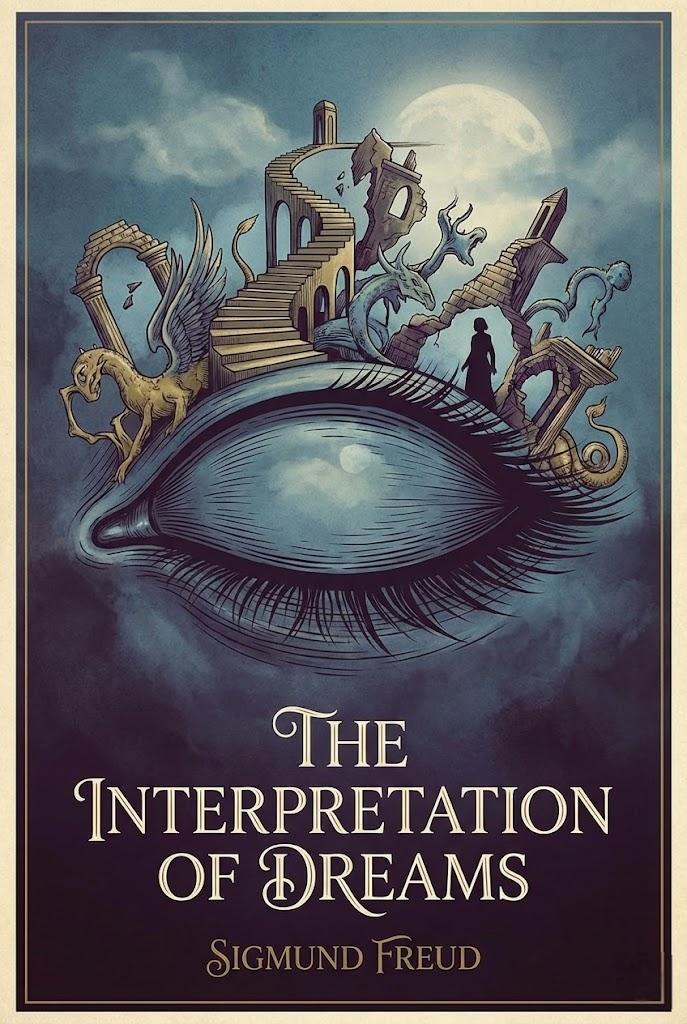
Published: 1899
Freud’s groundbreaking work that established dreams as the “royal road to the unconscious.”
Core Insight
Dreams are not random — they are disguised fulfillments of repressed wishes. By analyzing their symbolism, we can access the hidden workings of the unconscious mind.
The Structure of Dreams
Manifest Content: What you remember — the surface narrative of the dream.
Latent Content: The hidden meaning — the repressed wishes, fears, and conflicts that the dream disguises.
Dream Work: The process by which the unconscious transforms latent content into manifest content through:
- Condensation — Multiple ideas compressed into one image
- Displacement — Emotional intensity shifted to trivial details
- Symbolization — Abstract ideas represented by concrete images
Why Dreams Disguise
The unconscious contains desires that are unacceptable to the conscious mind. Dreams allow these wishes to be expressed in a safe, disguised form — protecting sleep and preventing anxiety.
The Method
Freud developed free association — asking patients to say whatever comes to mind about each dream element — to decode the latent meaning.
Key Takeaway: The mind has hidden depths. Dreams are one window into this unconscious realm, revealing desires and conflicts we may not consciously acknowledge.
中文书名:《梦的解析》
核心思想
弗洛伊德的这部开创性著作确立了精神分析的基础:梦是通往无意识的"皇家大道"。
“梦是被压抑愿望的伪装满足。”
梦的双重结构
显梦 (Manifest Content):你记得的内容——梦的表面叙事。
隐梦 (Latent Content):隐藏的意义——被压抑的愿望、恐惧和冲突。
梦的工作机制
无意识通过以下方式将"隐梦"转化为"显梦":
- 凝缩:多种想法压缩成一个形象
- 置换:情感强度转移到琐碎细节上
- 象征化:抽象概念用具体意象表达
为什么梦需要伪装?
无意识中包含着意识层面难以接受的欲望。梦允许这些愿望以安全、伪装的形式表达——保护睡眠,防止焦虑。
解梦方法
弗洛伊德发展了自由联想法——让患者说出关于每个梦境元素浮现的任何想法——以此解码隐藏的意义。
核心启示: 心灵有着隐藏的深度。梦是通往这一无意识领域的窗口,揭示我们可能不愿承认的欲望和冲突。
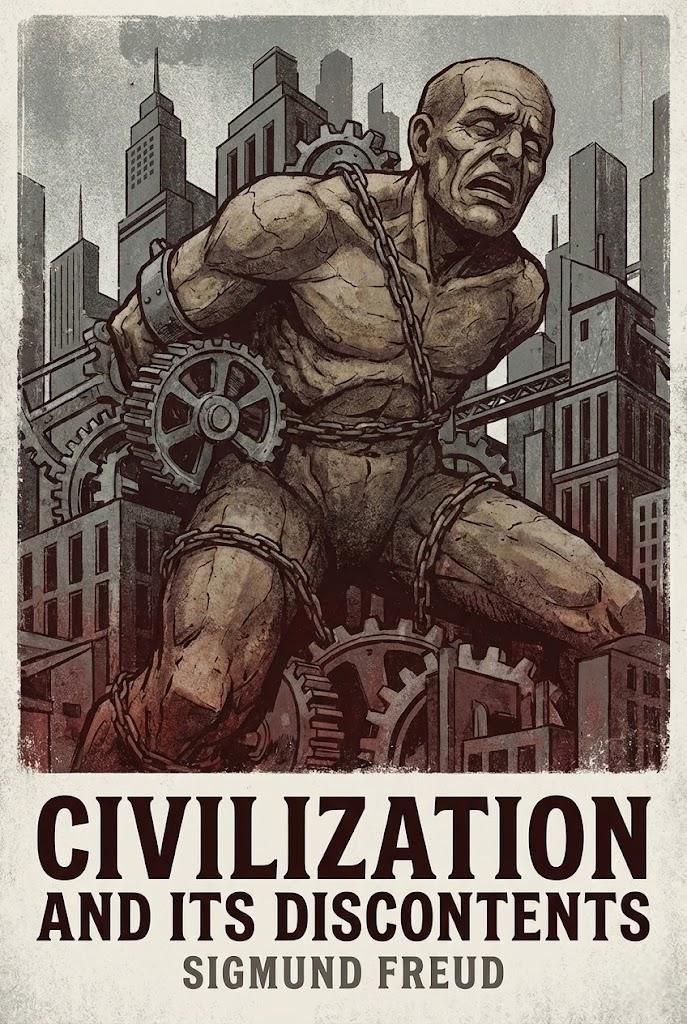
Published: 1930
Freud’s meditation on the tension between individual desires and the demands of society.
Core Insight
Civilization requires us to repress our instincts — especially aggression and sexuality. This repression creates neurosis and unhappiness, but it is the price we pay for living together.
The Fundamental Conflict
Humans have two primary drives:
- Eros — The life instinct (love, creativity, connection)
- Thanatos — The death instinct (aggression, destruction, self-harm)
Civilization requires the sublimation of both — channeling raw instinct into socially acceptable forms.
The Problem of Aggression
“Men are not gentle creatures… they are, on the contrary, creatures among whose instinctual endowments is to be reckoned a powerful share of aggressiveness.”
Society must control this aggression through guilt, law, and the superego (internalized authority).
The Cost of Civilization
The more civilized we become, the more we must repress. This creates a permanent discontent — a diffuse unhappiness that comes from sacrificing our deepest impulses.
No Easy Answers
Freud offers no solution. The conflict between individual pleasure and social order is irreconcilable. We are trapped between instinct and civilization.
Key Takeaway: Happiness is not civilization’s goal. Society demands sacrifice, and this sacrifice creates a fundamental tension at the heart of human existence.
中文书名:《文明及其缺憾》
核心思想
弗洛伊德在这部晚期作品中探讨了人类永恒的困境:个人欲望与社会规范之间的张力。
文明要求我们压抑本能——尤其是攻击性和性欲。这种压抑带来神经症和不幸,但它是我们共同生活所必须付出的代价。
人性的两种本能
- 爱之本能 (Eros):生命本能——爱、创造、连接
- 死之本能 (Thanatos):死亡本能——攻击、毁灭、自我伤害
文明要求将这两种本能升华——把原始冲动转化为社会可接受的形式。
攻击性的问题
“人并非温顺的生物……恰恰相反,在他的本能禀赋中,攻击性占有相当大的分量。”
社会必须通过内疚、法律和超我(内化的权威)来控制这种攻击性。
文明的代价
我们越文明,就越需要压抑。这创造了一种永久的不满足感——一种弥漫的不幸,源于对最深层冲动的牺牲。
无解的困局
弗洛伊德没有提供解决方案。个人快乐与社会秩序之间的冲突是不可调和的。我们被困在本能与文明之间。
核心启示: 幸福并非文明的目标。社会要求牺牲,而这种牺牲在人类存在的核心制造了一种根本性的张力。
Philosophy & Wisdom
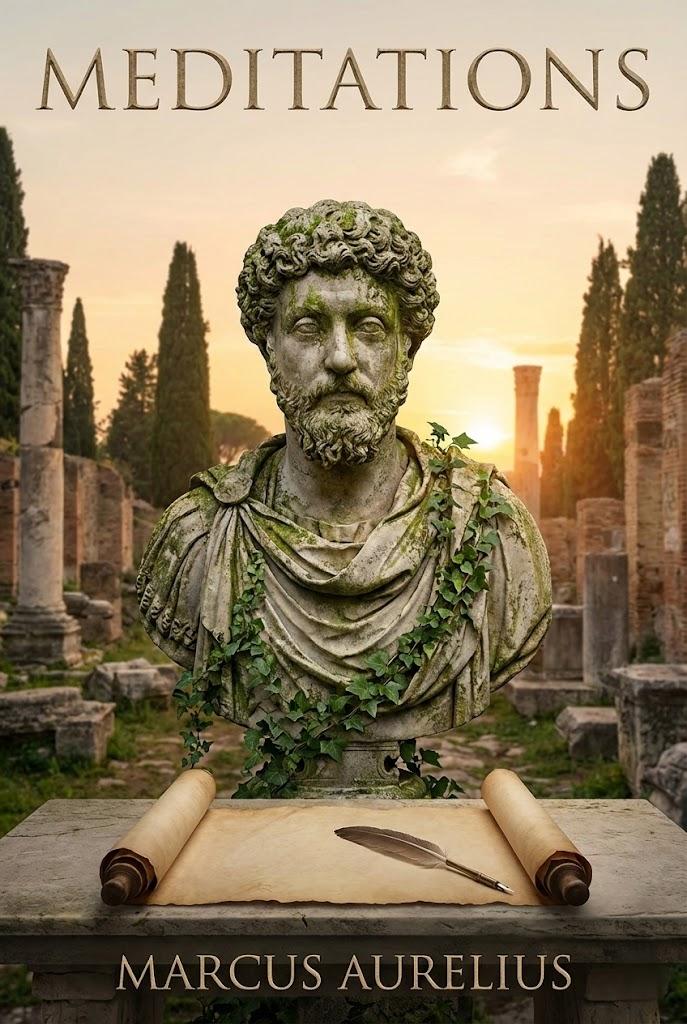
Published: 180 CE
Roman Emperor Marcus Aurelius’ private journal of Stoic philosophy — never meant for publication.
Core Insight
“You have power over your mind — not outside events. Realize this, and you will find strength.”
Written during military campaigns, these are notes to himself on how to live virtuously amid chaos, power, and mortality.
Stoic Principles
1. Focus on What You Control You cannot control external events — only your judgments and responses to them.
2. Memento Mori
“Think of yourself as dead. You have lived your life. Now take what’s left and live it properly.”
Death is not to be feared but used as motivation to live fully now.
3. The View from Above See your problems from a cosmic perspective. Your troubles are small in the vastness of time and space.
Practical Wisdom
- Start each day by expecting difficulties
- Practice negative visualization — imagine losing what you have
- Act for the common good, not personal glory
Key Takeaway: Happiness comes not from external success but from inner virtue. Master your mind, and you master your life.
中文书名:《沉思录》
核心思想
这是罗马皇帝马可·奥勒留的私人日记——从未打算出版。在军旅途中,他写下对自己的提醒:如何在权力、混乱和死亡面前保持德性。
“你对自己的心灵有控制权——而非外部事件。认识到这一点,你就会找到力量。”
斯多葛核心原则
1. 专注于你能控制的 你无法控制外部事件——只能控制你对它们的判断和反应。
2. 记住你终有一死 (Memento Mori)
“把自己当作已经死去。你已经活过了你的一生。现在拿好剩下的,好好活着。”
3. 宇宙视角 从宏观视角看待问题。在时间和空间的浩瀚中,你的烦恼微不足道。
核心启示: 幸福不来自外在成功,而来自内在德性。掌控你的心灵,你就掌控了你的人生。
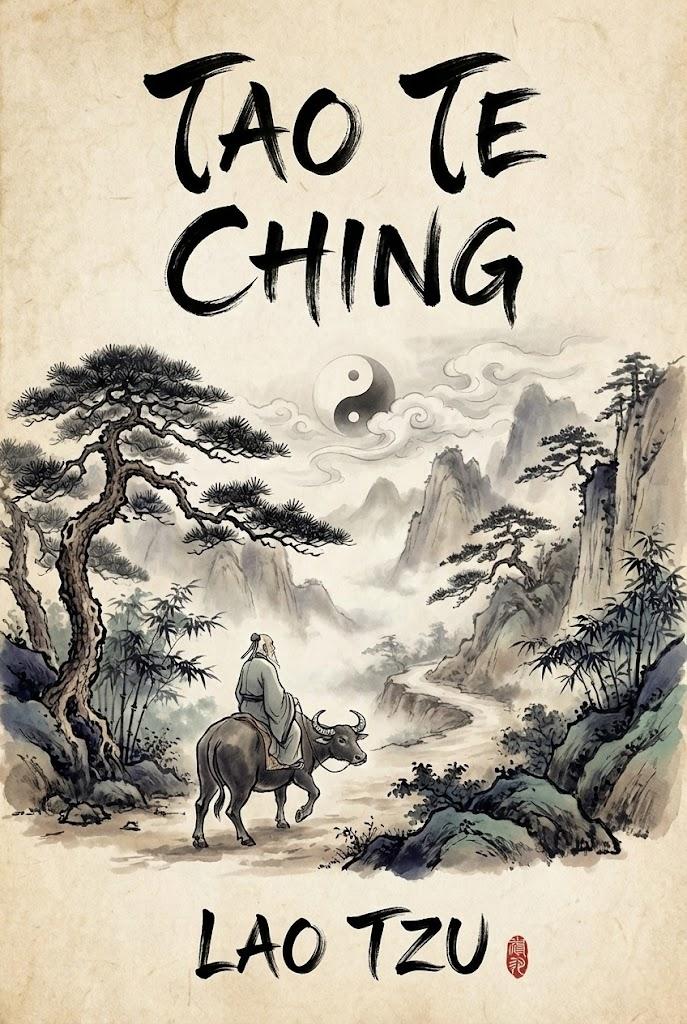
Published: ~6th Century BCE
The foundational text of Taoism, attributed to Lao Tzu — 81 brief chapters of profound paradox.
Core Insight
“The Tao that can be told is not the eternal Tao.”
The Tao (道) is the underlying principle of the universe — formless, nameless, yet the source of all things.
Central Concepts
Wu Wei (无为) — Non-Action Not passivity, but effortless action aligned with nature. Like water, which overcomes the hard by being soft.
Yin and Yang Opposites are complementary. Strength contains weakness; fullness contains emptiness.
Simplicity and Humility
“The sage does not compete, and therefore no one can compete with him.”
Paradoxical Wisdom
- “The softest thing in the world overcomes the hardest.”
- “To lead the people, walk behind them.”
- “Those who know do not speak; those who speak do not know.”
Key Takeaway: Stop forcing. Stop striving. Align with the natural flow of things, and action becomes effortless.
中文书名:《道德经》
核心思想
“道可道,非常道;名可名,非常名。”
道是宇宙的根本法则——无形、无名,却是万物之源。
核心概念
无为 不是"什么都不做",而是顺应自然的、不勉强的行动。如水之柔弱,却能胜刚强。
阴阳 对立面是互补的。刚中有柔,满中有空。
朴素与谦逊
“夫唯不争,故天下莫能与之争。”
悖论智慧
- “天下之至柔,驰骋天下之至坚。”
- “欲上民,必以言下之;欲先民,必以身后之。”
- “知者不言,言者不知。”
核心启示: 停止强求,停止妄为。顺应万物的自然流动,行动就会变得毫不费力。
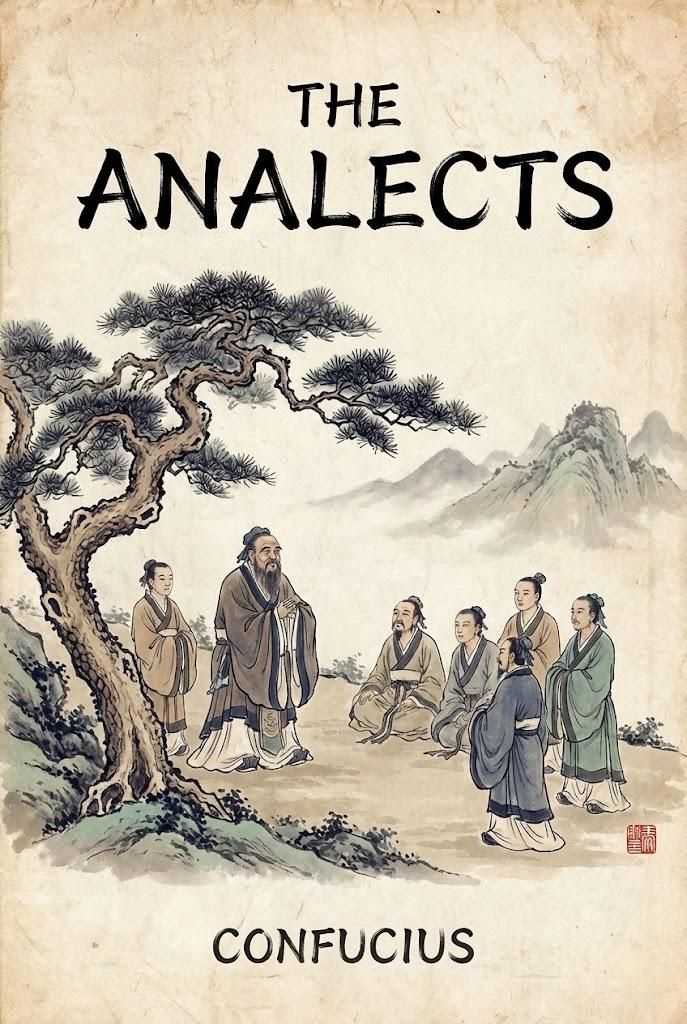
Published: ~5th Century BCE
A collection of sayings and dialogues of Confucius, compiled by his disciples.
Core Insight
Confucius sought to restore social harmony through ren (仁, benevolence) and li (礼, ritual propriety). A good society begins with cultivated individuals.
The Five Relationships
Confucian ethics center on five key relationships:
- Ruler — Subject
- Parent — Child
- Husband — Wife
- Elder — Younger
- Friend — Friend
Each relationship has mutual obligations. Order flows from proper conduct in each role.
Central Virtues
- Ren (仁) — Benevolence, humaneness
- Yi (义) — Righteousness, duty
- Li (礼) — Ritual propriety, etiquette
- Zhi (智) — Wisdom
- Xin (信) — Faithfulness, integrity
Famous Sayings
“己所不欲,勿施于人。” — What you do not wish for yourself, do not do to others.
“学而时习之,不亦说乎?” — Is it not a pleasure to learn and practice what you have learned?
Key Takeaway: Personal cultivation leads to social harmony. Be the change you wish to see — in family, community, and state.
中文书名:《论语》
核心思想
《论语》是孔子及其弟子言行的记录。孔子试图通过仁(爱人)和礼(规范行为)来恢复社会和谐。
五伦
儒家伦理以五种关系为核心:
- 君臣
- 父子
- 夫妇
- 兄弟
- 朋友
每种关系都有相互的义务。社会秩序源于每个人在其角色中的恰当行为。
核心美德
- 仁:爱人,人道
- 义:正当,责任
- 礼:仪式,礼节
- 智:智慧
- 信:诚实,守信
经典语录
“己所不欲,勿施于人。” “学而时习之,不亦说乎?” “君子和而不同,小人同而不和。”
核心启示: 个人修养导向社会和谐。从自身做起,修身齐家治国平天下。

Published: 1854
Thoreau’s account of two years spent in a cabin by Walden Pond — an experiment in simple living.
Core Insight
“I went to the woods because I wished to live deliberately, to front only the essential facts of life, and see if I could not learn what it had to teach.”
Modern life is cluttered with unnecessary complexity. Strip it away to find what truly matters.
The Experiment
Thoreau built a cabin in the woods near Concord, Massachusetts. He aimed to reduce life to its essentials: food, shelter, clothing, and fuel.
Key Themes
Simplicity
“Our life is frittered away by detail… Simplify, simplify.”
Self-Reliance Live by your own principles, not society’s expectations.
Nature as Teacher The natural world offers wisdom that civilization obscures.
Civil Disobedience During his Walden years, Thoreau was jailed for refusing to pay taxes supporting slavery and the Mexican-American War.
Deliberate Living
Most people live in “quiet desperation” — working jobs they hate to buy things they don’t need. Wake up. Choose consciously.
Key Takeaway: You don’t need much to live well. Simplify your life to discover what is truly essential.
中文书名:《瓦尔登湖》
核心思想
“我到林中去,是因为我希望从容不迫地生活,只面对生活的基本事实,看看我能不能学到它要教给我的东西。”
实验
梭罗在马萨诸塞州康科德镇附近的瓦尔登湖畔建造了一间小屋,独居两年两个月。他试图将生活简化到最本质的需求:食物、住所、衣服和燃料。
核心主题
简朴
“我们的生活被琐碎消耗殆尽……简化,再简化。”
自力更生 按照自己的原则生活,而非社会的期望。
自然为师 自然世界提供了文明所遮蔽的智慧。
公民不服从 在瓦尔登湖期间,梭罗因拒绝缴纳支持奴隶制和美墨战争的税款而入狱。
核心启示: 过好生活不需要太多东西。简化你的生活,发现什么才是真正重要的。
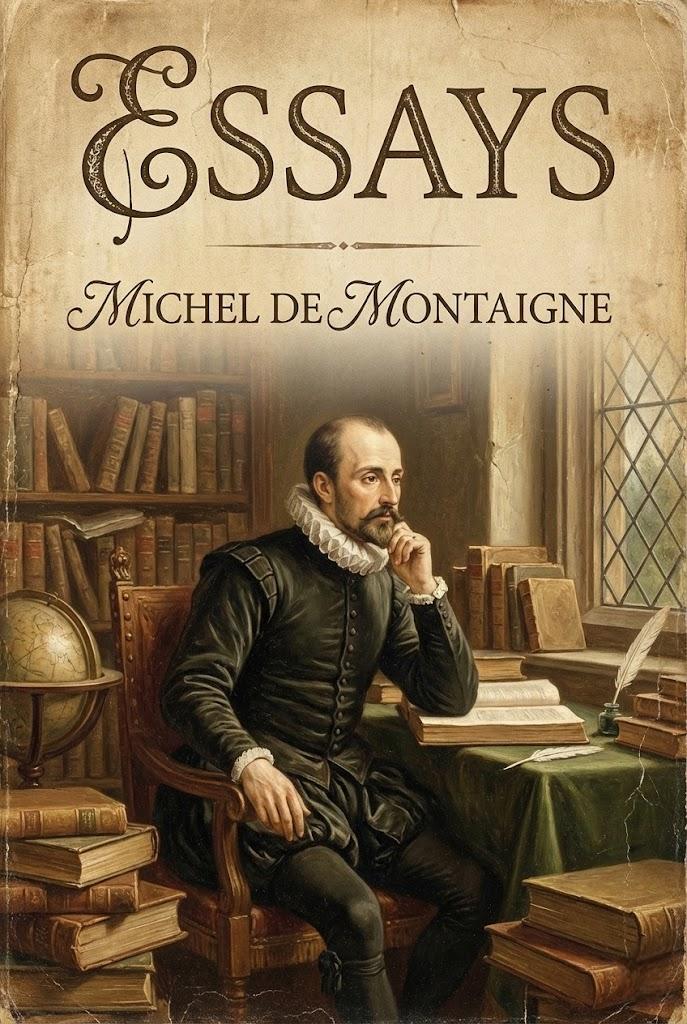
Published: 1580
The invention of the personal essay — Montaigne’s reflections on himself, humanity, and the art of living.
Core Insight
“Que sais-je?” — What do I know?
Montaigne pioneered radical intellectual humility. By examining himself honestly, he aimed to understand human nature.
The Method
Rather than argue abstract principles, Montaigne explored his own experience: his fears, habits, tastes, and contradictions. The personal became universal.
Notable Essays
- “On Cannibals” — Questions European “civilization” by examining indigenous Brazilian cultures
- “On Experience” — The body and everyday life as sources of wisdom
- “On Friendship” — His profound bond with Étienne de La Boétie
- “To Philosophize is to Learn to Die” — Accepting mortality frees us to live
Style and Influence
Montaigne’s conversational, digressive style invented the essay form. He influenced Shakespeare, Emerson, Nietzsche, and countless others.
Key Takeaway: Know thyself — honestly, without pretense. Self-examination is the path to wisdom.
中文书名:《随笔集》
核心思想
“我知道什么?” (Que sais-je?)
蒙田开创了彻底的智识谦逊。通过诚实地审视自己,他试图理解人性。
方法
蒙田不是论证抽象原则,而是探索自己的经验:恐惧、习惯、品味和矛盾。个人的变成了普遍的。
著名篇章
- 《论食人族》——通过审视巴西土著文化,质疑欧洲"文明"
- 《论经验》——身体和日常生活作为智慧的来源
- 《论友谊》——他与艾蒂安·德·拉·波埃西的深厚情谊
- 《哲学就是学习死亡》——接受必死性使我们自由地活着
风格与影响
蒙田发明了"随笔"这一文体。他影响了莎士比亚、爱默生、尼采等无数后人。
核心启示: 认识你自己——诚实地、不加伪装地。自我审视是通往智慧的道路。
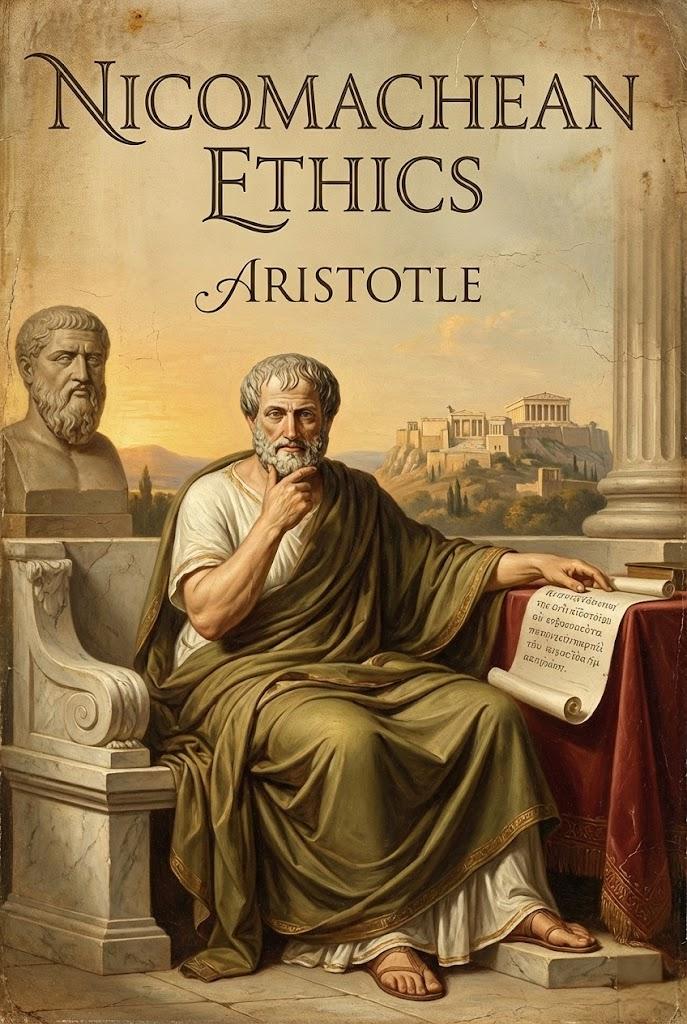
Published: ~350 BCE
Aristotle’s treatise on how to live a good life — the foundation of Western ethics.
Core Insight
The goal of human life is eudaimonia (εὐδαιμονία) — often translated as “happiness” but better understood as “flourishing” or “living well.”
Virtue Ethics
Happiness is not pleasure or wealth, but the activity of the soul in accordance with virtue. We become good by doing good.
The Golden Mean
Every virtue is a balance between two extremes:
- Courage is between recklessness and cowardice
- Generosity is between extravagance and stinginess
- Honesty is between boastfulness and self-deprecation
Character and Habit
“We are what we repeatedly do. Excellence, then, is not an act, but a habit.”
Virtue is developed through practice. We become courageous by doing courageous things.
Practical Wisdom (Phronesis)
The master virtue is practical wisdom — knowing what to do in specific situations. It cannot be taught from a book but must be learned through experience.
Key Takeaway: Happiness is achieved by living virtuously — developing good character through repeated right action.
中文书名:《尼各马可伦理学》
核心思想
人生的目标是幸福 (eudaimonia)——不是快乐或财富,而是"活得好"、“繁盛”。
德性伦理学
幸福是灵魂依据德性的活动。我们通过行善而成为好人。
中庸之道
每种德性都是两个极端之间的平衡:
- 勇敢介于鲁莽和怯懦之间
- 慷慨介于挥霍和吝啬之间
- 诚实介于自夸和自贬之间
性格与习惯
“我们反复做的事情造就了我们。因此,卓越不是一种行为,而是一种习惯。”
德性通过实践培养。我们通过做勇敢的事情而变得勇敢。
实践智慧 (Phronesis)
最高的德性是实践智慧——知道在具体情境中该做什么。它不能从书本中学到,必须通过经验获得。
核心启示: 幸福通过有德性地生活来实现——通过反复的正确行动来培养良好的品格。
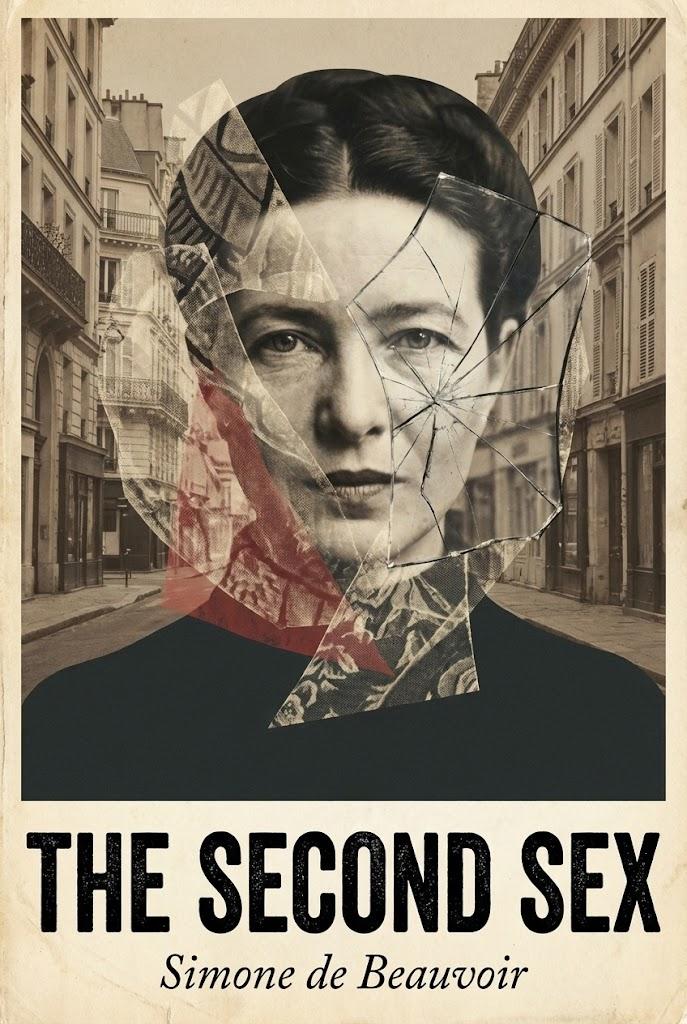
Published: 1949
The foundational text of modern feminism — Beauvoir’s analysis of how women are made “the Other.”
Core Insight
“One is not born, but rather becomes, a woman.”
Femininity is not biological destiny but a social construction. Women are not inherently passive or nurturing — they are made so.
The Concept of “The Other”
Throughout history, man has been the Subject — the norm, the default. Woman has been defined as The Other — a deviation, defined only in relation to man.
How Women Are Made
Beauvoir traces how women are shaped from childhood:
- Socialization into passivity and domesticity
- Economic dependence on men
- Myths of “eternal feminine” mystery
- Marriage and motherhood as limiting identities
The Path to Liberation
Women must reject the role of Object and claim themselves as Subjects — autonomous beings who define themselves through their own projects and choices.
Key Takeaway: Gender is constructed, not given. Women (and all people) can transcend limiting social roles by claiming their freedom.
中文书名:《第二性》
核心思想
“女人不是天生的,而是后天形成的。”
女性气质不是生物命运,而是社会建构。女性并非天生被动或有母性——她们是被塑造成这样的。
“他者"的概念
纵观历史,男性一直是主体——规范、默认。女性被定义为他者——一种偏离,只能相对于男性来定义。
女性是如何被塑造的
波伏娃追溯了女性从童年开始是如何被塑造的:
- 被社会化为被动和家务
- 经济上依赖男性
- “永恒女性气质"的神话
- 婚姻和母性作为限制性的身份
解放之路
女性必须拒绝客体的角色,将自己确立为主体——通过自己的计划和选择来定义自己的自主存在。
核心启示: 性别是建构的,不是给定的。女性(以及所有人)可以通过宣称自己的自由来超越限制性的社会角色。
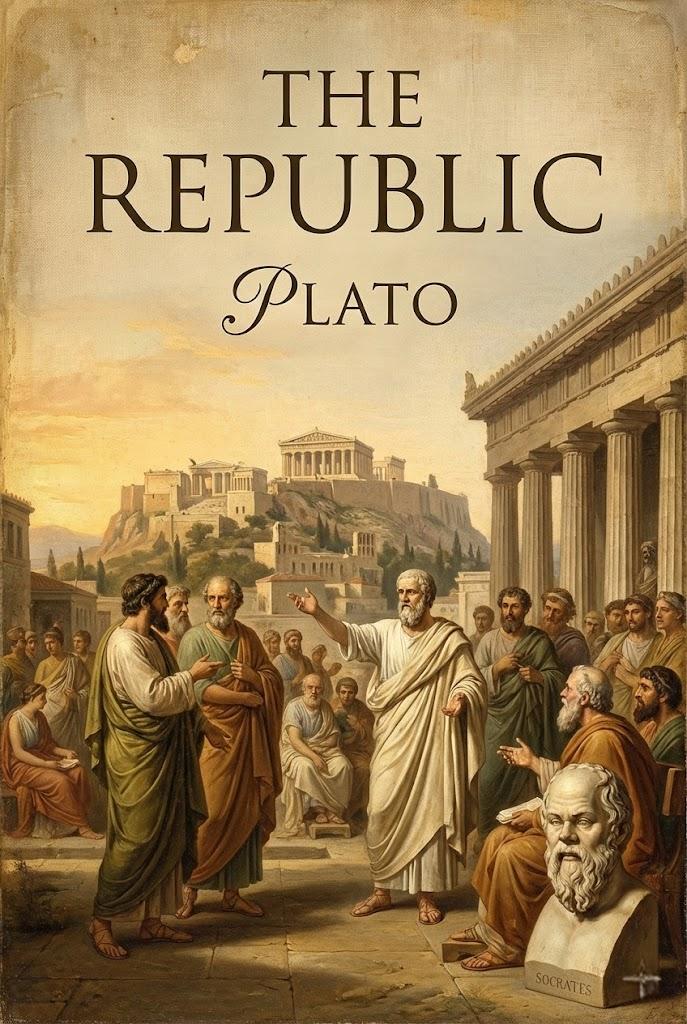
Published: ~380 BCE
Plato’s vision of the ideal state — a dialogue on justice, education, and the nature of reality.
Core Insight
Justice in the state mirrors justice in the soul. Both require the proper ordering of their parts.
The Tripartite Soul
Plato divides the soul into three parts:
- Reason — seeks truth and wisdom
- Spirit — seeks honor and courage
- Appetite — seeks pleasure and gain
A just soul is one where reason rules, aided by spirit, over the appetites.
The Ideal State
Correspondingly, the ideal city has three classes:
- Philosopher-Kings — rule with wisdom
- Guardians — defend with courage
- Producers — provide material needs
The Allegory of the Cave
Prisoners chained in a cave see only shadows on the wall. One escapes and sees the sun — true reality. He returns to free others, but they resist.
The philosopher who sees truth has a duty to enlighten others.
Key Takeaway: Justice is harmony — each part fulfilling its proper function. The pursuit of wisdom leads to the Good.
中文书名:《理想国》
核心思想
国家的正义反映灵魂的正义。两者都需要各部分的恰当秩序。
灵魂的三重结构
柏拉图将灵魂分为三个部分:
- 理性——追求真理和智慧
- 意气——追求荣誉和勇气
- 欲望——追求快乐和利益
正义的灵魂是理性在意气的帮助下统治欲望。
理想城邦
相应地,理想城邦有三个阶层:
- 哲学王——以智慧统治
- 护卫者——以勇气守护
- 生产者——提供物质需求
洞穴寓言
囚犯被锁在洞穴中,只能看到墙上的影子。一个人逃了出来,看到了太阳——真正的实在。他回来解放他人,但他们抗拒。
看到真理的哲学家有责任启蒙他人。
核心启示: 正义是和谐——每个部分履行其恰当的功能。对智慧的追求通向善。
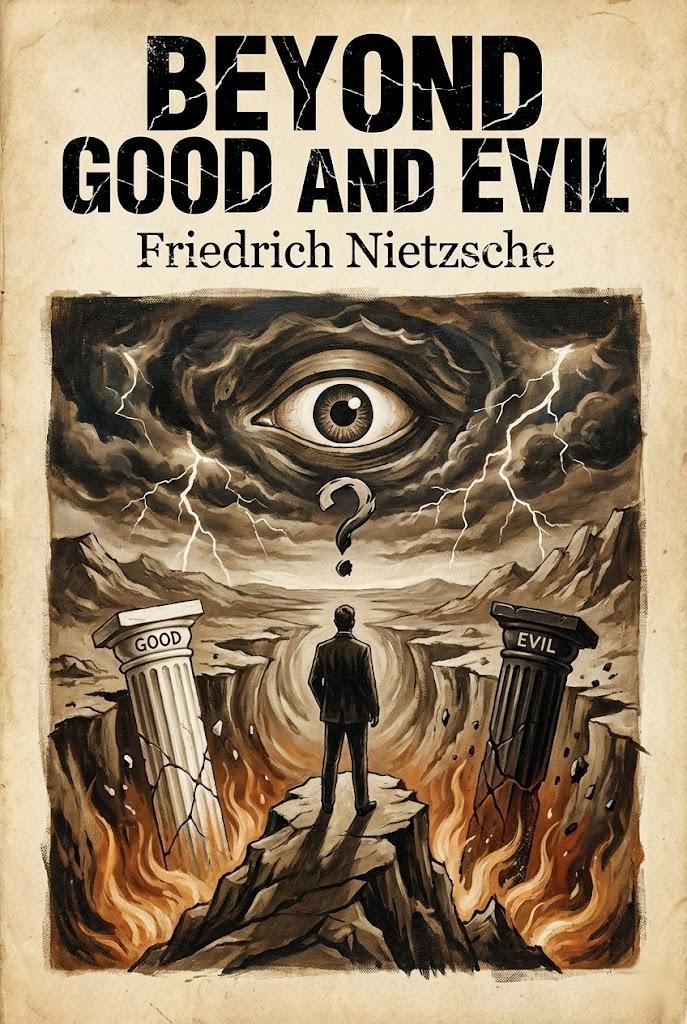
Published: 1886
Nietzsche’s critique of traditional morality and his vision of the free spirit.
Core Insight
Traditional morality — especially Christian morality — is not universal truth but a tool of the weak to restrain the strong. It must be overcome.
Master and Slave Morality
- Master Morality: Values strength, nobility, pride. “Good” = powerful, admirable.
- Slave Morality: Values humility, pity, meekness. “Good” = weak, suffering.
Slave morality arose from resentment (ressentiment) against the strong.
The Will to Power
Life is fundamentally about growth, self-overcoming, and the expansion of power — not merely survival or pleasure.
Perspectivism
There are no “facts,” only interpretations. Every philosophy reflects the values and prejudices of its creator.
The Free Spirit
“Independence is for the very few; it is a privilege of the strong.”
The free spirit questions all values, creates new ones, and lives dangerously.
Key Takeaway: Question all inherited values. Have the courage to think for yourself and create your own meaning.
中文书名:《善恶的彼岸》
核心思想
传统道德——尤其是基督教道德——不是普遍真理,而是弱者用来约束强者的工具。它必须被超越。
主人道德与奴隶道德
- 主人道德:崇尚力量、高贵、骄傲。“善” = 强大、令人钦佩。
- 奴隶道德:崇尚谦卑、怜悯、温顺。“善” = 软弱、受苦。
奴隶道德源于对强者的怨恨 (ressentiment)。
权力意志
生命从根本上是关于成长、自我超越和权力的扩张——而非仅仅是生存或快乐。
视角主义
没有"事实",只有解释。每种哲学都反映其创造者的价值观和偏见。
自由精神
“独立只属于极少数人;它是强者的特权。”
自由精神质疑所有价值,创造新价值,冒险生活。
核心启示: 质疑所有继承的价值。要有勇气独立思考,创造自己的意义。
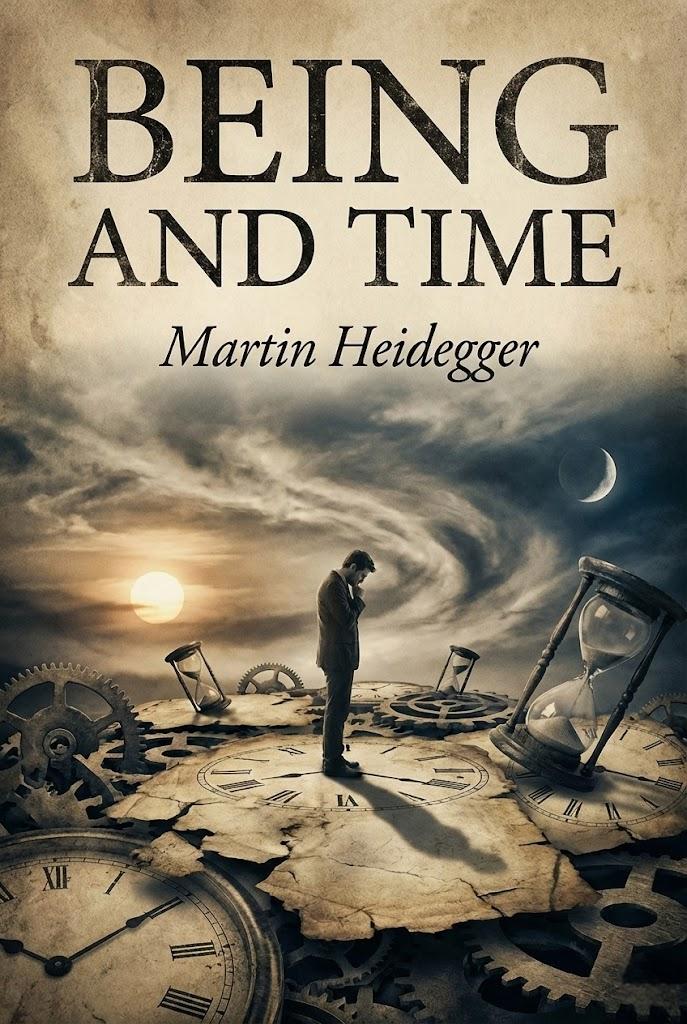
Published: 1927
Heidegger’s revolutionary work on the question of Being — one of the most influential (and difficult) philosophy books of the 20th century.
Core Insight
Philosophy has forgotten the fundamental question: What does it mean to be? We understand particular beings, but not Being itself.
Dasein (Being-There)
Heidegger’s term for human existence. Unlike objects, we are beings who care about our own existence and ask questions about it.
Being-in-the-World
We are not isolated minds observing a separate world. We are always already embedded in a world of meaning, tools, and relationships.
Authenticity vs. Inauthenticity
- Inauthenticity (Das Man): Living as “they” do — following social conventions without questioning
- Authenticity: Owning your existence, facing your mortality, choosing your own path
Being-Toward-Death
“Death is the possibility of the absolute impossibility of Dasein.”
Confronting our mortality forces us to take our finite lives seriously and live authentically.
Key Takeaway: Wake up from conformity. Face your mortality. Ask what it means for you, specifically, to exist.
中文书名:《存在与时间》
核心思想
哲学遗忘了根本问题:存在意味着什么? 我们理解各种存在者,但不理解"存在"本身。
此在 (Dasein)
海德格尔用这个词来指人的存在。与物体不同,我们是关心自己存在的存在者,会追问它的意义。
在世界中存在
我们不是观察独立世界的孤立心灵。我们总是已经嵌入在意义、工具和关系的世界中。
本真与非本真
- 非本真 (Das Man):像"常人"那样生活——不假思索地遵循社会习俗
- 本真:拥有你的存在,面对你的必死性,选择你自己的道路
向死而生
“死亡是此在绝对不可能性的可能性。”
直面必死迫使我们认真对待有限的生命,本真地生活。
核心启示: 从从众中醒来。面对你的必死。追问对你个人来说,存在意味着什么。
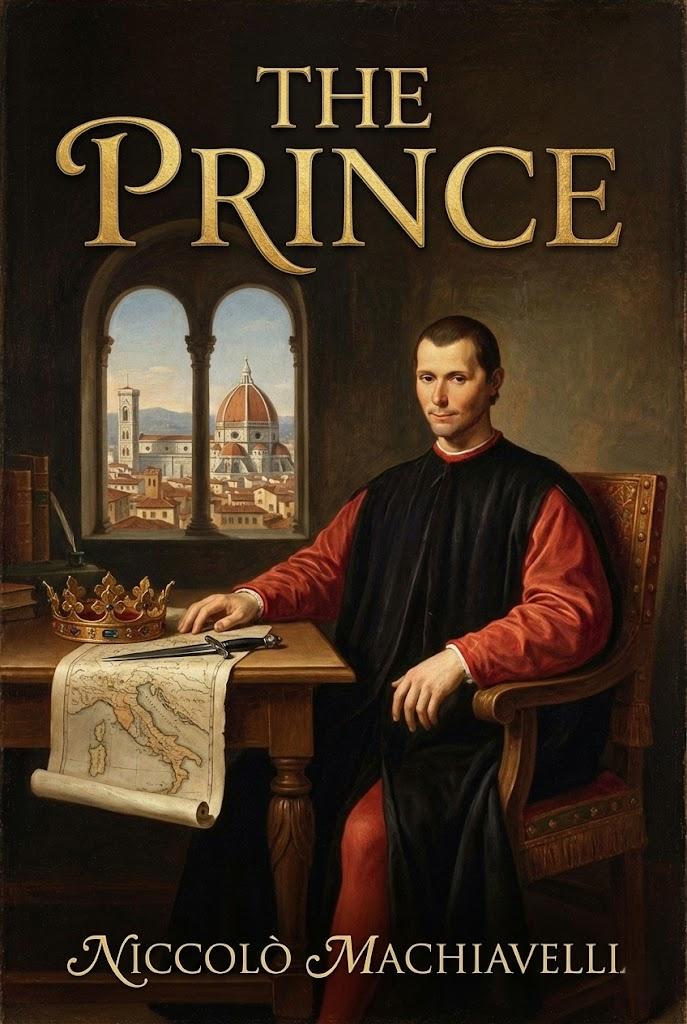
Published: 1532
Machiavelli’s handbook for rulers — a ruthlessly practical guide to acquiring and maintaining power.
Core Insight
“It is better to be feared than loved, if you cannot be both.”
Effective rulers must be willing to act immorally when necessary. Politics has its own logic, separate from personal ethics.
Key Principles
Fortune and Virtue Success depends partly on luck (Fortuna) and partly on skill (Virtù) — adaptability, decisiveness, willingness to act boldly.
Appear Virtuous, Act Pragmatically
“Everyone sees what you appear to be, few experience what you really are.”
A prince should seem merciful, faithful, and religious — while being prepared to act otherwise when needed.
Fear vs. Love Fear is more reliable than love. Love depends on others’ will; fear depends on your actions.
Cruelty Well Used Sometimes cruelty is necessary — but do it quickly and all at once, then stop. Kindness should be distributed slowly.
Key Takeaway: Political power follows its own rules. The Prince who ignores reality for idealism will lose everything.
中文书名:《君主论》
核心思想
“如果不能同时被爱戴和畏惧,那么被畏惧比被爱戴更安全。”
有效的统治者必须在必要时愿意采取不道德的行动。政治有其自身的逻辑,与个人伦理分开。
核心原则
命运与德性 成功部分取决于运气 (Fortuna),部分取决于能力 (Virtù)——适应性、果断性、大胆行动的意愿。
表面有德,行事务实
“每个人都看到你表面上的样子,很少有人体验到你真正是什么样。”
君主应该显得仁慈、忠诚和虔诚——同时准备好在需要时采取相反的行动。
恐惧 vs. 爱戴 恐惧比爱戴更可靠。爱戴取决于他人的意愿;恐惧取决于你的行动。
善用残忍 有时残忍是必要的——但要迅速、一次性完成,然后停止。恩惠应该缓慢分发。
核心启示: 政治权力遵循其自身的规则。忽视现实而追求理想主义的君主将失去一切。
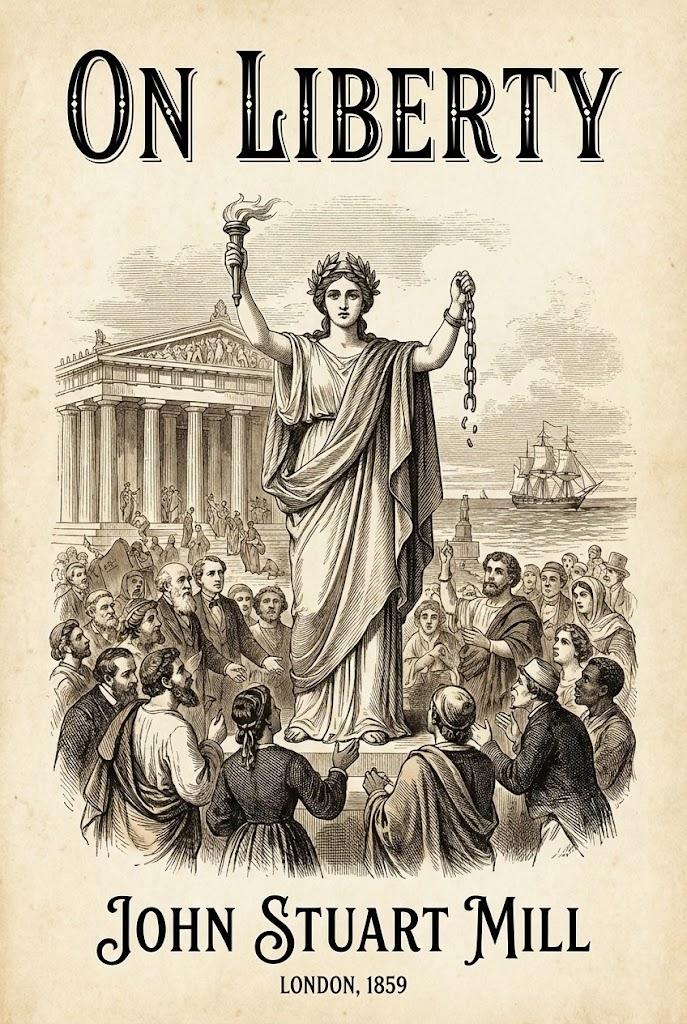
Published: 1859
Mill’s classic defense of individual freedom against state and social tyranny.
Core Insight
“The only purpose for which power can be rightfully exercised over any member of a civilized community, against his will, is to prevent harm to others.”
This is the Harm Principle — the foundation of liberalism.
The Tyranny of the Majority
Democracy is not enough to protect freedom. The majority can oppress minorities through social pressure, not just laws.
“Society can and does execute its own mandates… it practises a social tyranny more formidable than many kinds of political oppression.”
Why Freedom Matters
Utility: Free discussion leads to truth. Even false opinions sharpen our understanding of true ones.
Individuality: People flourish through experimentation and self-development. Conformity stifles human potential.
Progress: New ideas often seem dangerous. Protecting dissenters allows society to improve.
Limits of Liberty
Freedom may be restricted only to prevent harm to others — not to protect people from themselves (paternalism) or to enforce morality.
Key Takeaway: Protect individual liberty — especially unpopular opinions and unconventional lifestyles. Society benefits from diversity.
中文书名:《论自由》
核心思想
“权力可以正当地对文明社会任何成员违背其意愿行使的唯一目的,是防止对他人的伤害。”
这是伤害原则——自由主义的基础。
多数人的暴政
民主不足以保护自由。多数人可以通过社会压力压迫少数人,而不仅仅是通过法律。
为什么自由重要
效用: 自由讨论通向真理。即使是错误的意见也能磨砺我们对正确意见的理解。
个性: 人们通过实验和自我发展而繁盛。从众扼杀人类潜能。
进步: 新想法往往看起来危险。保护异见者允许社会进步。
自由的界限
只有为了防止对他人的伤害才能限制自由——不是为了保护人们免受自己的伤害(家长主义)或强制执行道德。
核心启示: 保护个人自由——尤其是不受欢迎的意见和非传统的生活方式。社会从多样性中受益。
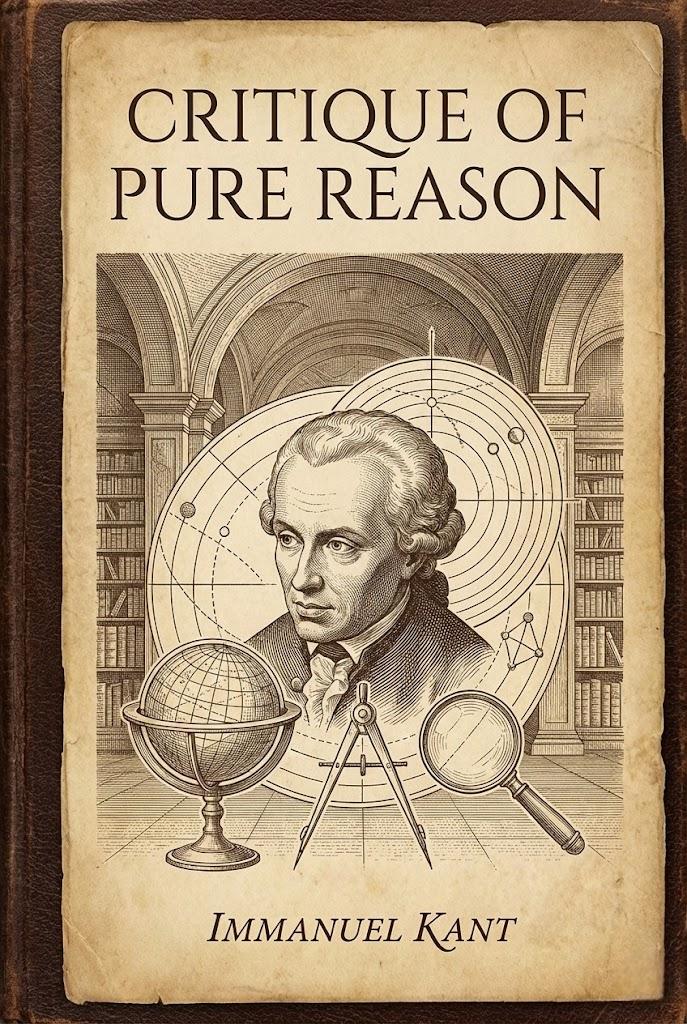
Published: 1781
Kant’s monumental investigation into the limits and possibilities of human knowledge.
Core Insight
Knowledge requires both experience and the mind’s contribution. Kant reconciled rationalism and empiricism by showing that the mind actively structures experience.
The Copernican Revolution in Philosophy
Just as Copernicus moved the center from Earth to Sun, Kant moved the center from object to subject. We don’t passively receive reality — our minds impose structure on it.
Key Distinctions
A Priori vs. A Posteriori
- A priori: knowledge independent of experience (mathematics)
- A posteriori: knowledge from experience (science)
Analytic vs. Synthetic
- Analytic: truth by definition (“All bachelors are unmarried”)
- Synthetic: truth that adds new information
Synthetic A Priori
Kant’s revolutionary claim: Some knowledge is both synthetic (informative) and a priori (necessary). Examples: mathematics, geometry, causality.
The Limits of Reason
We can know things only as they appear to us (phenomena), not as they are in themselves (noumena). Metaphysical questions about God, freedom, and immortality cannot be answered by pure reason.
Key Takeaway: The mind is not a blank slate — it actively shapes experience. Philosophy must investigate reason’s limits.
中文书名:《纯粹理性批判》
核心思想
知识需要经验和心灵的贡献两者。康德通过表明心灵积极地构造经验,调和了理性主义和经验主义。
哲学中的哥白尼革命
正如哥白尼把中心从地球移到太阳,康德把中心从客体移到主体。我们不是被动地接收现实——我们的心灵对其施加结构。
关键区分
先验 vs. 后验
- 先验:独立于经验的知识(数学)
- 后验:来自经验的知识(科学)
分析 vs. 综合
- 分析:定义上的真理(“所有单身汉都未婚”)
- 综合:添加新信息的真理
先天综合判断
康德的革命性主张:某些知识既是综合的(信息性的)又是先验的(必然的)。例如:数学、几何、因果关系。
理性的界限
我们只能认识事物向我们显现的样子(现象),而非其自身(物自体)。关于上帝、自由和不朽的形而上学问题无法由纯粹理性回答。
核心启示: 心灵不是白板——它积极地塑造经验。哲学必须探究理性的界限。
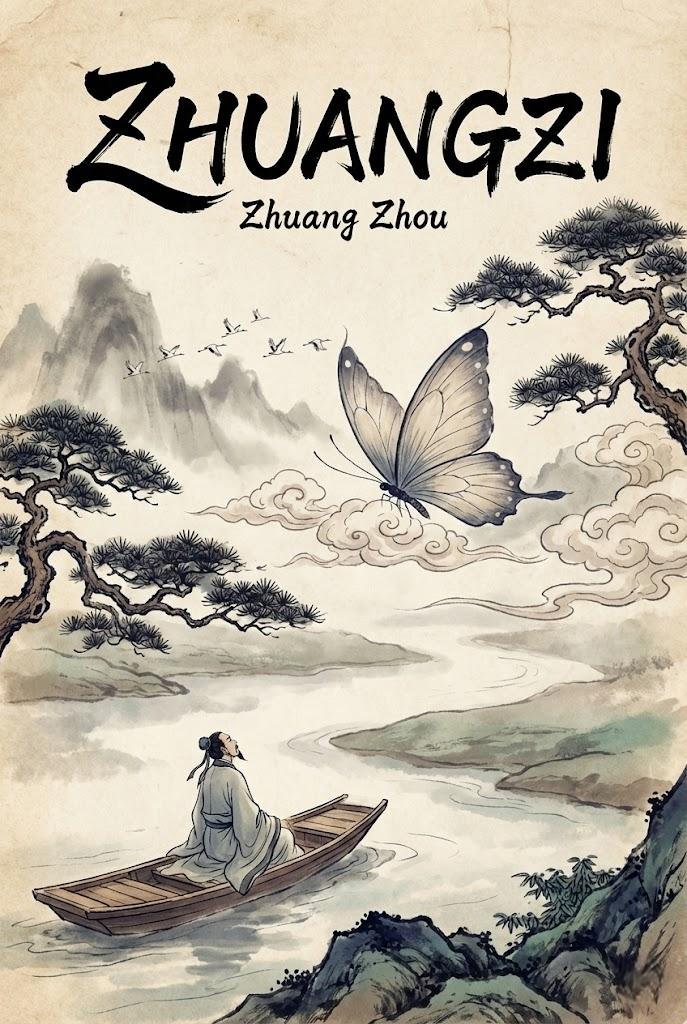
Published: ~3rd Century BCE
The foundational text of philosophical Taoism — playful, paradoxical, and profound.
Core Insight
Where the Tao Te Ching is concise and oracular, the Zhuangzi is expansive and literary — full of stories, dialogues, and wild imagery.
The Butterfly Dream
“Once Zhuangzi dreamt he was a butterfly, fluttering happily. Suddenly he woke and found he was Zhuangzi. But was he a man dreaming he was a butterfly, or a butterfly dreaming he was a man?”
This challenges our certainty about identity and reality.
Key Concepts
Relativity of Perspectives There is no absolute standpoint. What seems large or small, good or bad, depends on one’s position.
Uselessness is Useful The gnarled tree that cannot be cut for lumber survives. Sometimes being “useless” by worldly standards is true freedom.
Wuwei (Non-Action) Like the Tao Te Ching, Zhuangzi advocates effortless action — the “knack” that comes from practice and letting go.
Skill and Flow Stories of Cook Ding cutting an ox or Wheelwright Bian carving wheels illustrate the mastery that transcends technique.
Key Takeaway: Let go of fixed perspectives. Embrace uncertainty, relativity, and the freedom that comes from not knowing.
中文书名:《庄子》
核心思想
如果说《道德经》简洁而神谕,《庄子》则是广博而文学的——充满故事、对话和狂野的意象。
庄周梦蝶
“昔者庄周梦为胡蝶,栩栩然胡蝶也。不知周之梦为胡蝶与,胡蝶之梦为周与?”
这挑战了我们对身份和现实的确定性。
核心概念
视角的相对性 没有绝对的立场。什么看起来大或小、好或坏,取决于你的位置。
无用之用 无法被砍伐的弯曲之树得以存活。有时按世俗标准"无用"才是真正的自由。
无为 像《道德经》一样,《庄子》提倡毫不费力的行动——来自练习和放手的"诀窍"。
技艺与心流 庖丁解牛或轮扁斫轮的故事展示了超越技术的精通。
核心启示: 放下固定的视角。拥抱不确定性、相对性,以及来自"不知"的自由。
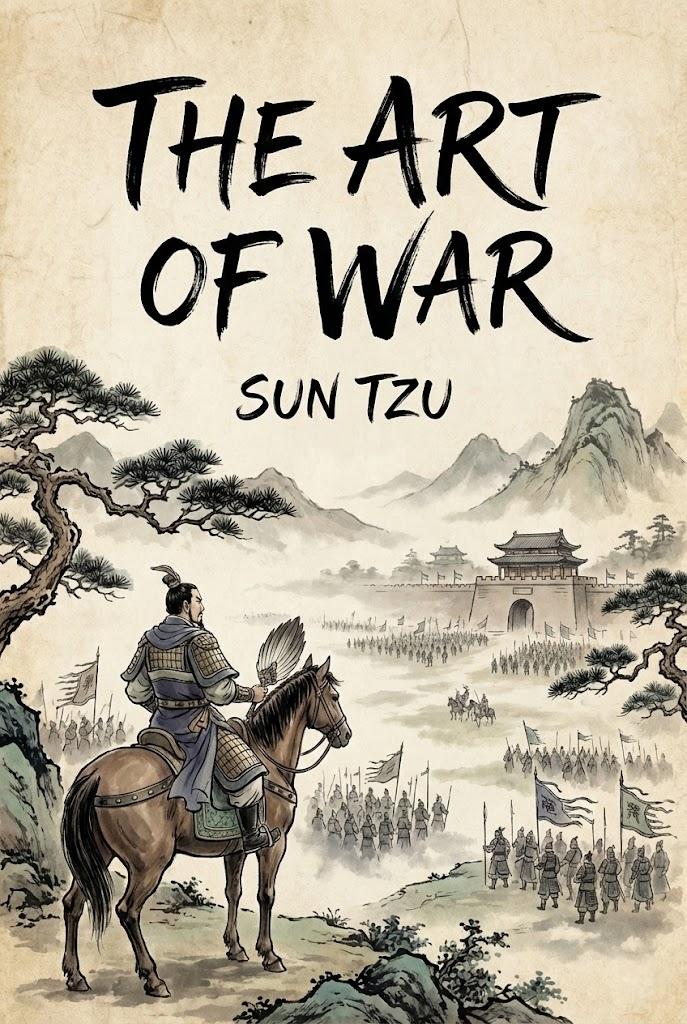
Published: ~5th Century BCE
The oldest and most influential treatise on military strategy — applied far beyond the battlefield.
Core Insight
“The supreme art of war is to subdue the enemy without fighting.”
War is not about destruction but about achieving objectives with minimal cost. The best victory is the one that never requires battle.
Key Principles
Know Your Enemy and Yourself
“If you know the enemy and know yourself, you need not fear the result of a hundred battles.”
Deception and Surprise
“All warfare is based on deception.”
Appear weak when strong, and strong when weak. Attack where the enemy is unprepared.
Flexibility and Adaptation
“Water shapes its course according to the ground. In war, shape your strategy according to the enemy.”
Speed and Decisiveness Long campaigns drain resources and morale. Strike swiftly and conclude quickly.
Beyond War
Sun Tzu’s principles apply to business, diplomacy, and personal conflict:
- Plan thoroughly before acting
- Understand your competition
- Choose battles wisely
- Win through strategy, not force
Key Takeaway: True mastery lies in achieving victory without conflict. Understand the situation completely, then act decisively.
中文书名:《孙子兵法》
核心思想
“百战百胜,非善之善者也;不战而屈人之兵,善之善者也。”
战争不是关于破坏,而是关于以最小代价达成目标。最好的胜利是不需要战斗的胜利。
核心原则
知己知彼
“知己知彼,百战不殆。”
诡道
“兵者,诡道也。”
强时示弱,弱时示强。攻其不备。
灵活与适应
“水因地而制流,兵因敌而制胜。”
速度与果断 久战会消耗资源和士气。迅速出击,尽快结束。
超越战争
孙子的原则适用于商业、外交和个人冲突:
- 行动前周密计划
- 了解你的竞争对手
- 明智地选择战斗
- 通过策略而非武力取胜
核心启示: 真正的精通在于不战而胜。完全理解形势,然后果断行动。
Economics & Society
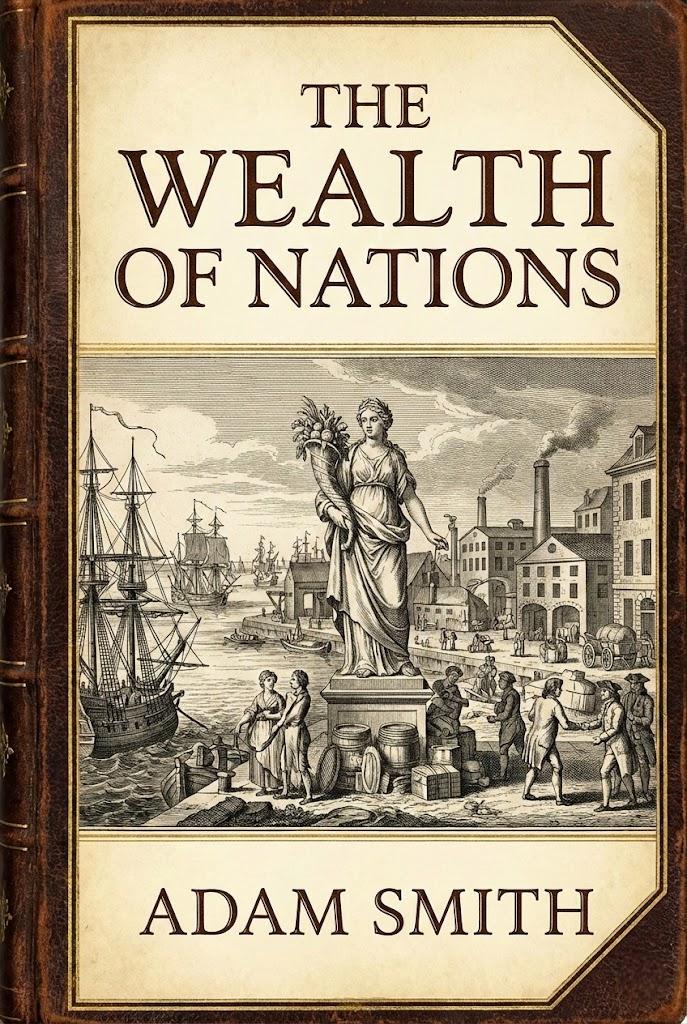
Published: 1776
The foundational text of modern economics — Smith’s inquiry into what makes nations prosper.
Core Insight
“It is not from the benevolence of the butcher, the brewer, or the baker that we expect our dinner, but from their regard to their own interest.”
Self-interest, channeled through markets, produces social benefit — as if by an invisible hand.
Key Concepts
Division of Labor Specialization dramatically increases productivity. Smith’s famous pin factory example: one worker alone makes maybe 20 pins a day; ten workers specializing make 48,000.
The Invisible Hand Individual pursuit of profit leads to efficient resource allocation — often achieving public good better than deliberate planning.
Free Markets Remove artificial barriers to trade. Competition drives innovation and lowers prices.
Labor Theory of Value The value of a commodity relates to the labor required to produce it.
Nuanced Smith
Despite his reputation, Smith also warned about:
- The moral hazards of capitalism
- The danger of monopolies
- The need for public education and infrastructure
Key Takeaway: Markets harness self-interest for social good. But Smith never advocated unregulated laissez-faire.
中文书名:《国富论》
核心思想
“我们获得晚餐,不是因为屠夫、酿酒师或面包师的仁慈,而是因为他们对自身利益的关注。”
自利心通过市场渠道产生社会利益——仿佛被一只看不见的手引导。
核心概念
分工 专业化大大提高了生产力。斯密著名的制针厂例子:一个工人单独工作每天大约做20根针;十个专业分工的工人做48,000根。
看不见的手 个人追求利润导致资源的有效配置——往往比刻意的规划更能实现公共利益。
自由市场 消除贸易的人为障碍。竞争推动创新并降低价格。
劳动价值论 商品的价值与生产它所需的劳动有关。
更全面的斯密
尽管他的名声如此,斯密也警告过:
- 资本主义的道德风险
- 垄断的危险
- 公共教育和基础设施的必要性
核心启示: 市场利用自利心促进社会福祉。但斯密从未提倡不受监管的自由放任。
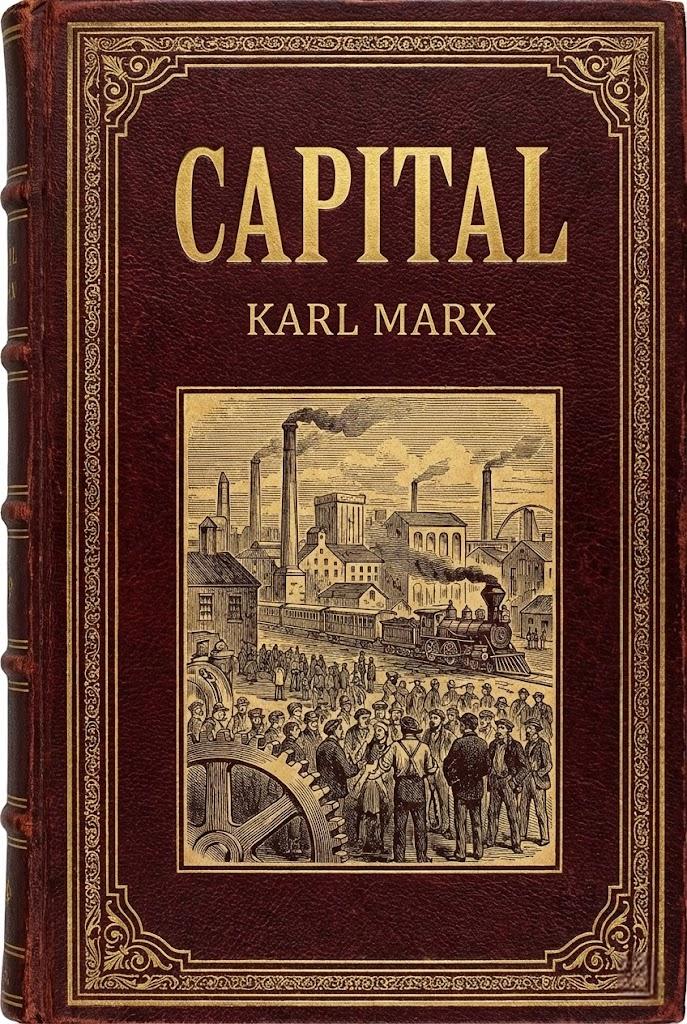
Published: 1867
Marx’s analysis of capitalism — its internal contradictions and inevitable transformation.
Core Insight
Capitalism is not natural or eternal. It is a historical system that emerged, developed, and will eventually be superseded.
Key Concepts
Labor Theory of Value The value of commodities derives from the labor required to produce them.
Surplus Value Workers produce more value than they receive in wages. This difference — surplus value — is the source of capitalist profit. It is, in Marx’s view, exploitation.
Alienation Under capitalism, workers are alienated from:
- The products they make
- The process of production
- Their fellow workers
- Their own human potential
Historical Materialism Economic relations form the “base” of society; culture, law, and politics are the “superstructure” built upon it.
Contradictions of Capitalism
- Tendency of profit rates to fall
- Concentration of wealth
- Periodic crises of overproduction
Legacy
Regardless of one’s political views, Das Kapital remains essential for understanding capitalism’s dynamics.
Key Takeaway: Capitalism creates immense wealth but also exploitation and instability. Understanding its logic is essential for critiquing or defending it.
中文书名:《资本论》
核心思想
资本主义不是自然的或永恒的。它是一个历史性的体系,它产生、发展,并最终将被取代。
核心概念
劳动价值论 商品的价值来源于生产它们所需的劳动。
剩余价值 工人生产的价值超过他们获得的工资。这个差额——剩余价值——是资本家利润的来源。在马克思看来,这是剥削。
异化 在资本主义下,工人与以下方面异化:
- 他们制造的产品
- 生产过程
- 他们的同事
- 他们自己的人类潜能
历史唯物主义 经济关系构成社会的"基础";文化、法律和政治是建立在其上的"上层建筑"。
资本主义的矛盾
- 利润率下降的趋势
- 财富的集中
- 周期性的生产过剩危机
遗产
无论持何种政治观点,《资本论》对于理解资本主义的动力学仍然至关重要。
核心启示: 资本主义创造了巨大的财富,但也带来了剥削和不稳定。理解其逻辑对于批判或捍卫它都是必不可少的。
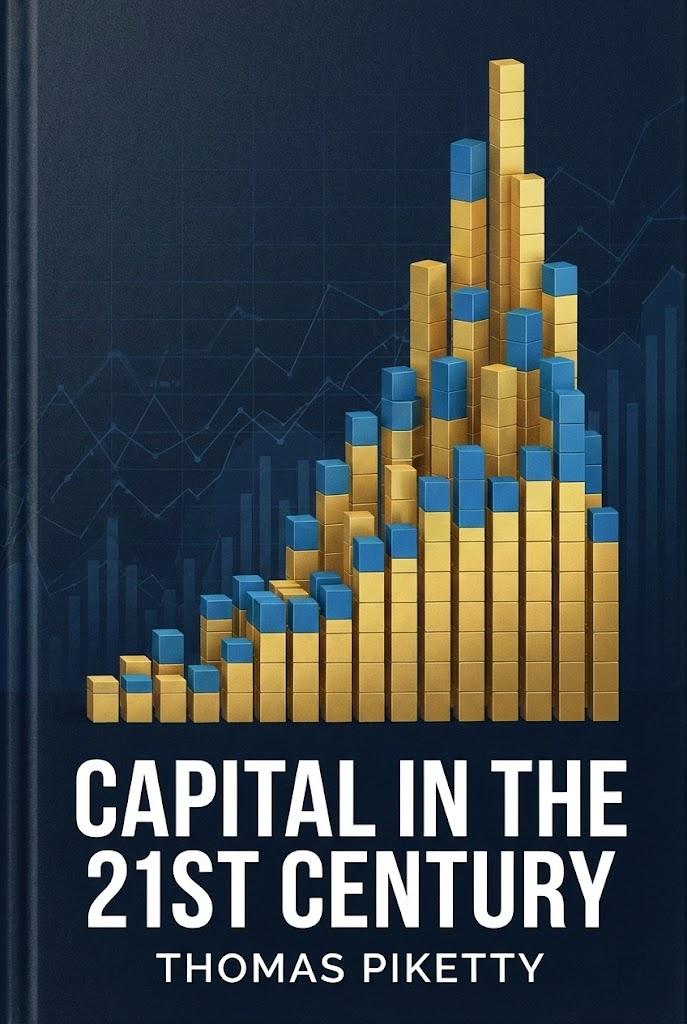
Published: 2013
Piketty’s data-driven analysis of wealth inequality — and why it’s getting worse.
Core Insight
“r > g”
When the rate of return on capital (r) exceeds the rate of economic growth (g), wealth concentrates in fewer hands. This is the normal state of capitalism.
Key Findings
Historical Data Piketty compiled centuries of tax records from multiple countries, revealing:
- The 20th century’s relative equality was an exception
- We are returning to 19th-century levels of inequality
Patrimonial Capitalism Inherited wealth becomes dominant. Success depends more on birth than effort or talent.
The U-Curve of Inequality Inequality fell in the 20th century due to:
- Two World Wars destroying capital
- Progressive taxation
- Strong labor movements
Now these forces have weakened.
Policy Proposals
- Global wealth tax to prevent capital flight
- Progressive income taxes
- Transparency on wealth holdings
Debates
Critics question his data, definitions of capital, and policy prescriptions. But r > g has become shorthand for our era’s central economic problem.
Key Takeaway: Without intervention, capitalism naturally concentrates wealth. Policy choices matter.
中文书名:《21世纪资本论》
核心思想
“r > g”
当资本回报率 (r) 超过经济增长率 (g) 时,财富集中在更少的人手中。这是资本主义的正常状态。
核心发现
历史数据 皮凯蒂汇编了多个国家几个世纪的税务记录,揭示了:
- 20世纪的相对平等是一个例外
- 我们正在回到19世纪的不平等水平
世袭资本主义 继承财富变得占主导地位。成功更多取决于出身,而非努力或才能。
不平等的U型曲线 20世纪不平等下降的原因:
- 两次世界大战摧毁了资本
- 累进税制
- 强大的劳工运动
现在这些力量已经削弱。
政策建议
- 全球财富税以防止资本外逃
- 累进所得税
- 财富持有的透明度
核心启示: 如果不加干预,资本主义自然会集中财富。政策选择很重要。
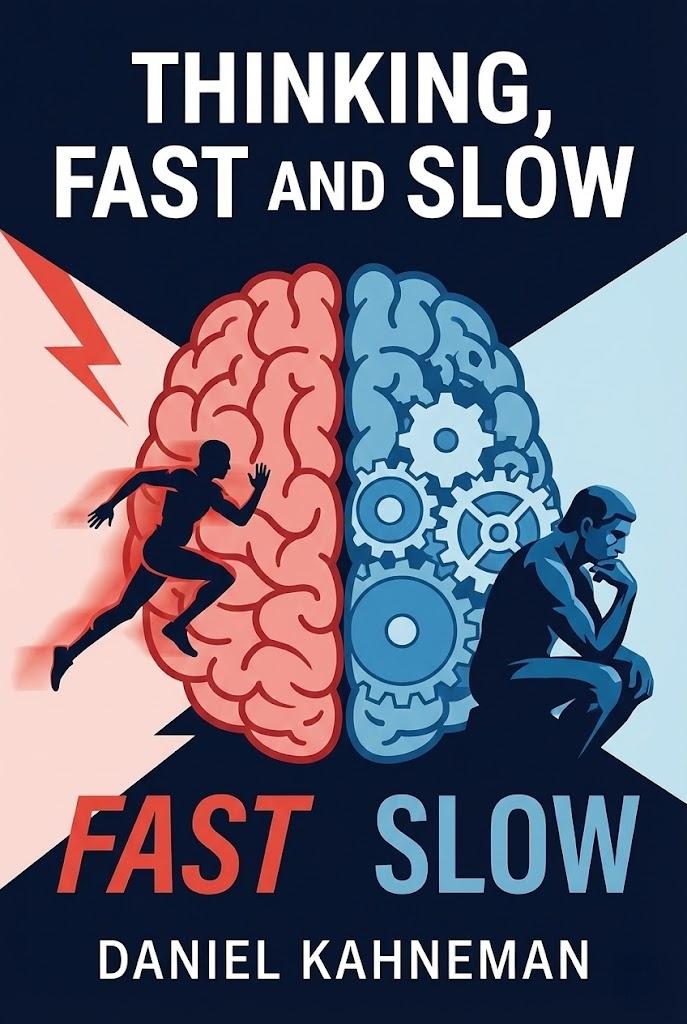
Published: 2011
Kahneman’s synthesis of decades of research on cognitive biases and the two systems of thinking.
Core Insight
The mind has two modes of operation:
- System 1: Fast, intuitive, automatic, emotional
- System 2: Slow, deliberate, effortful, logical
Most decisions are made by System 1 — which is efficient but prone to systematic errors.
Key Biases
Anchoring: First numbers we hear disproportionately influence our judgments.
Availability: We judge probability by how easily examples come to mind.
Loss Aversion: Losses hurt more than equivalent gains feel good.
Overconfidence: We are systematically overconfident in our predictions.
Framing: How options are presented changes our choices.
What You See Is All There Is (WYSIATI)
System 1 constructs coherent stories from limited information. We rarely notice what’s missing.
Practical Applications
Understanding these biases helps with:
- Personal decision-making
- Business and investing
- Public policy design (nudges)
Key Takeaway: We are not rational agents. Understanding our cognitive limitations is the first step to better decisions.
中文书名:《思考,快与慢》
核心思想
心智有两种运作模式:
- 系统1:快速、直觉、自动、情感化
- 系统2:缓慢、审慎、费力、逻辑性
大多数决定由系统1做出——它高效但容易出现系统性错误。
核心偏见
锚定效应:我们最先听到的数字会对判断产生不成比例的影响。
可得性偏见:我们通过例子多么容易浮现来判断概率。
损失厌恶:损失的痛苦大于等量收益的快乐。
过度自信:我们对预测系统性地过度自信。
框架效应:选项的呈现方式改变我们的选择。
所见即全部 (WYSIATI)
系统1从有限信息中构建连贯的故事。我们很少注意到缺少了什么。
实际应用
理解这些偏见有助于:
- 个人决策
- 商业和投资
- 公共政策设计(助推)
核心启示: 我们不是理性的主体。理解我们的认知局限是做出更好决策的第一步。
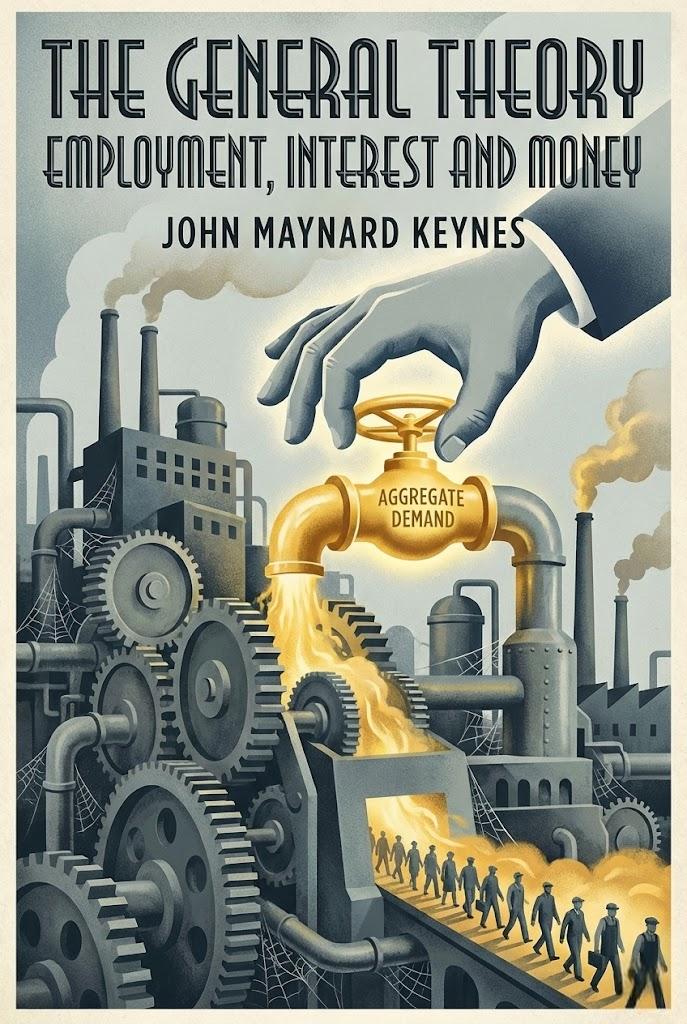
Published: 1936
Keynes’ revolutionary theory that governments should manage economic cycles through fiscal policy.
Core Insight
In recessions, private spending collapses. Markets do not automatically self-correct. Government must step in to boost demand.
The Problem with Classical Economics
Before Keynes, economists believed:
- Markets always clear
- Unemployment is temporary
- Supply creates its own demand (Say’s Law)
The Great Depression proved them wrong.
Key Concepts
Aggregate Demand Total spending in the economy determines output and employment — not just supply.
The Multiplier Effect Government spending circulates through the economy. One dollar of spending creates more than one dollar of economic activity.
Liquidity Trap When interest rates are near zero, monetary policy loses effectiveness. Fiscal policy (government spending and taxes) becomes essential.
Animal Spirits Economic decisions are driven not just by rational calculation but by emotion, confidence, and herd behavior.
Legacy
Keynes’ ideas shaped the post-war economic consensus and remain influential in debates about recessions, stimulus, and austerity.
Key Takeaway: Markets can fail. Government intervention is sometimes necessary to prevent prolonged economic suffering.
中文书名:《就业、利息和货币通论》
核心思想
在衰退中,私人支出崩溃。市场不会自动自我修正。政府必须介入以提振需求。
古典经济学的问题
在凯恩斯之前,经济学家相信:
- 市场总是出清
- 失业是暂时的
- 供给创造自身的需求(萨伊定律)
大萧条证明他们错了。
核心概念
总需求 经济中的总支出决定产出和就业——不仅仅是供给。
乘数效应 政府支出在经济中循环。一美元的支出创造超过一美元的经济活动。
流动性陷阱 当利率接近零时,货币政策失去效力。财政政策(政府支出和税收)变得至关重要。
动物精神 经济决策不仅由理性计算驱动,还由情绪、信心和羊群行为驱动。
遗产
凯恩斯的思想塑造了战后的经济共识,并在关于衰退、刺激和紧缩的辩论中仍然具有影响力。
核心启示: 市场可能失灵。政府干预有时是防止长期经济痛苦所必需的。
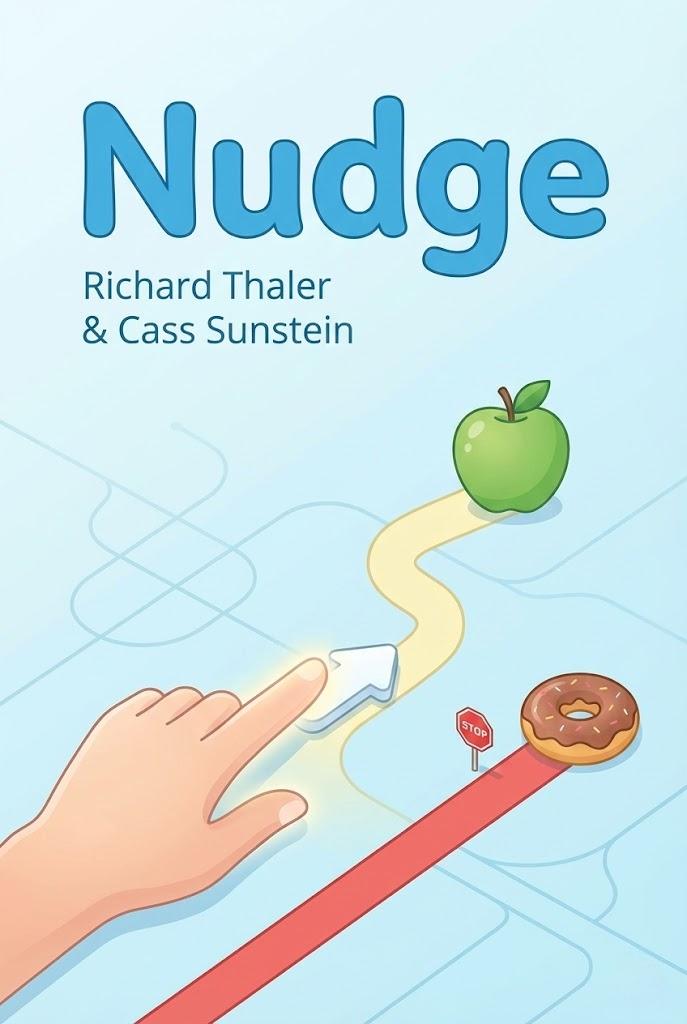
Published: 2008
Thaler and Sunstein’s guide to designing environments that help people make better choices — without restricting freedom.
Core Insight
Libertarian Paternalism: You can influence behavior for the better while still respecting freedom of choice.
Choice Architecture
The way options are presented affects decisions. A “nudge” structures choices to make good outcomes more likely.
Key Nudges
Default Options: People tend to stick with defaults. Make the best option the default (e.g., automatic enrollment in retirement savings).
Social Proof: People follow what others do. Show that most people pay taxes on time, and compliance increases.
Feedback: Give people immediate information about their choices (e.g., energy usage compared to neighbors).
Simplification: Remove unnecessary complexity from forms and processes.
Examples
- Cafeteria design placing healthy foods at eye level
- Organ donation as opt-out rather than opt-in
- “Save More Tomorrow” — automatic escalation of retirement contributions
Critiques
Some argue nudges are manipulative, that people should make fully informed choices, or that nudges can backfire.
Key Takeaway: Small changes in how choices are presented can have big effects on behavior. Use this power wisely.
中文书名:《助推》
核心思想
自由主义家长制:你可以在尊重选择自由的同时,引导行为向更好的方向发展。
选择架构
选项的呈现方式影响决策。“助推"构建选择以使好结果更可能发生。
核心助推方式
默认选项:人们倾向于坚持默认选项。让最佳选项成为默认(例如,养老储蓄的自动登记)。
社会证明:人们跟随他人的做法。显示大多数人按时纳税,遵从率就会提高。
反馈:给人们关于其选择的即时信息(例如,与邻居相比的能源使用)。
简化:消除表格和流程中不必要的复杂性。
示例
- 餐厅设计将健康食品放在视线水平
- 器官捐献改为默认选择加入
- “明天多存钱”——退休贡献的自动递增
核心启示: 选择呈现方式的微小改变可以对行为产生重大影响。明智地使用这种力量。
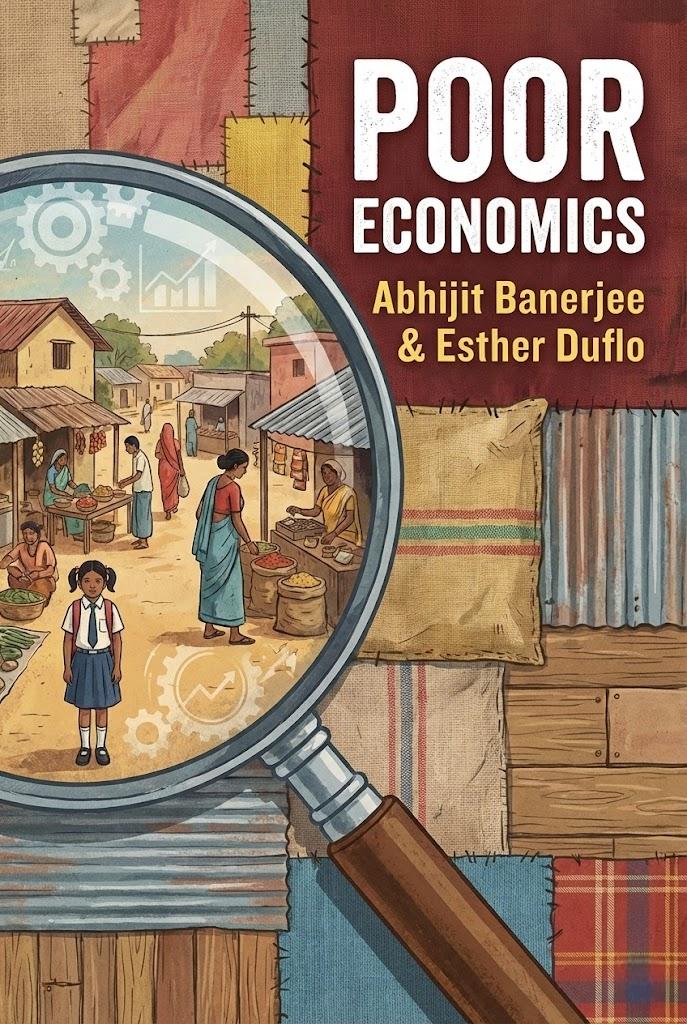
Published: 2011
Two Nobel laureates use randomized experiments to understand what really helps the poor.
Core Insight
Poverty interventions often fail because they’re based on assumptions rather than evidence. Randomized Controlled Trials (RCTs) reveal what actually works.
The Method
Like medical trials, RCTs randomly assign some people to receive an intervention while a control group does not. This isolates the true effect.
Surprising Findings
On Education: Simply giving families money for school supplies often doesn’t increase attendance. Deworming children (cheap, simple) dramatically improves outcomes.
On Microfinance: It’s not the miracle cure once claimed. Effects on poverty are modest.
On Food: The poor don’t always prioritize more calories. They value taste and variety too.
On Savings: The poor can save — if given safe, accessible mechanisms. Mental accounting matters.
Big Questions
- Why don’t the poor eat more when they get more money?
- Why don’t they use free bed nets?
- Why do they start businesses that don’t grow?
The answers are context-dependent and nuanced.
Key Takeaway: Good intentions aren’t enough. Test assumptions with evidence. Understanding the lives of the poor is essential to helping them.
中文书名:《贫穷的本质》
核心思想
扶贫干预措施经常失败,因为它们基于假设而非证据。随机对照试验 (RCTs) 揭示什么真正有效。
方法
像医学试验一样,RCTs 随机分配一些人接受干预,而对照组不接受。这样可以分离真正的效果。
令人惊讶的发现
关于教育:仅仅给家庭学习用品的钱通常不会增加出勤率。给儿童驱虫(便宜、简单)能显著改善结果。
关于小额信贷:它不是曾经声称的奇迹疗法。对贫困的影响是有限的。
关于食物:穷人并不总是优先考虑更多卡路里。他们也重视口味和多样性。
关于储蓄:穷人可以储蓄——如果有安全、便捷的机制。心理账户很重要。
大问题
- 为什么穷人赚更多钱时不吃更多?
- 为什么他们不使用免费的蚊帐?
- 为什么他们创办不增长的企业?
答案是依赖具体情境的,且富有细微差别。
核心启示: 好意不够。用证据检验假设。理解穷人的生活对于帮助他们至关重要。
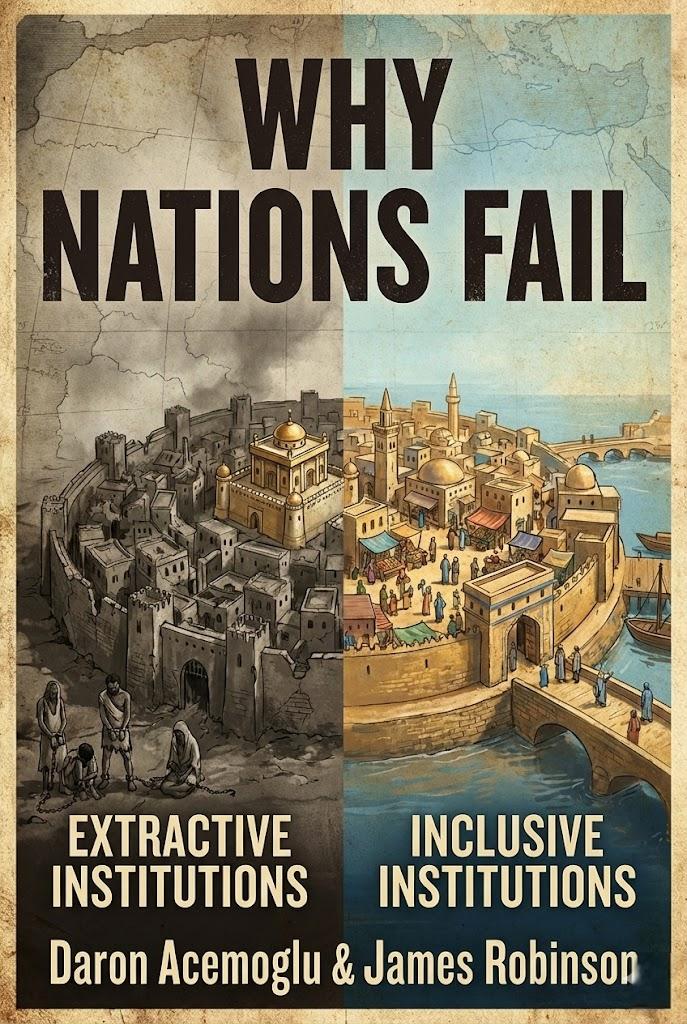
Published: 2012
Why some countries are rich and others poor — it’s the institutions, not geography or culture.
Core Insight
Nations fail because of extractive institutions — political and economic systems that concentrate power and wealth in the hands of a few.
Nations succeed with inclusive institutions — systems that distribute power broadly and encourage participation.
Extractive vs. Inclusive
Extractive Institutions:
- Insecure property rights
- Monopolies and barriers to entry
- Concentrated political power
- Lack of rule of law
Inclusive Institutions:
- Secure property rights
- Open markets and competition
- Pluralistic politics
- Independent judiciary
Critical Junctures
History matters. Small differences at critical moments (e.g., the Black Death, colonization) set countries on different trajectories. These paths are then reinforced over time.
Case Studies
- Nogales: The same city, split by the US-Mexico border, has radically different outcomes on each side.
- Colonization: Extractive colonies (Congo) vs. settler colonies (Australia) left different institutional legacies.
Key Takeaway: Prosperity requires inclusive political and economic institutions. Aid and resources won’t help if institutions remain extractive.
中文书名:《国家为什么会失败》
核心思想
一些国家富裕而另一些贫穷的原因——是制度,而非地理或文化。
汲取型 vs 包容型
汲取型制度:
- 不安全的产权
- 垄断和进入壁垒
- 集中的政治权力
- 缺乏法治
包容型制度:
- 安全的产权
- 开放的市场和竞争
- 多元主义政治
- 独立的司法
关键节点
历史很重要。关键时刻的微小差异(如黑死病、殖民化)使国家走上不同的轨迹。这些路径随后不断被强化。
案例研究
- 诺加莱斯:同一座城市,被美墨边境分开,两边有截然不同的结果。
- 殖民化:汲取型殖民地(刚果)vs 定居型殖民地(澳大利亚)留下了不同的制度遗产。
核心启示: 繁荣需要包容的政治和经济制度。如果制度仍然是汲取型的,援助和资源都无济于事。
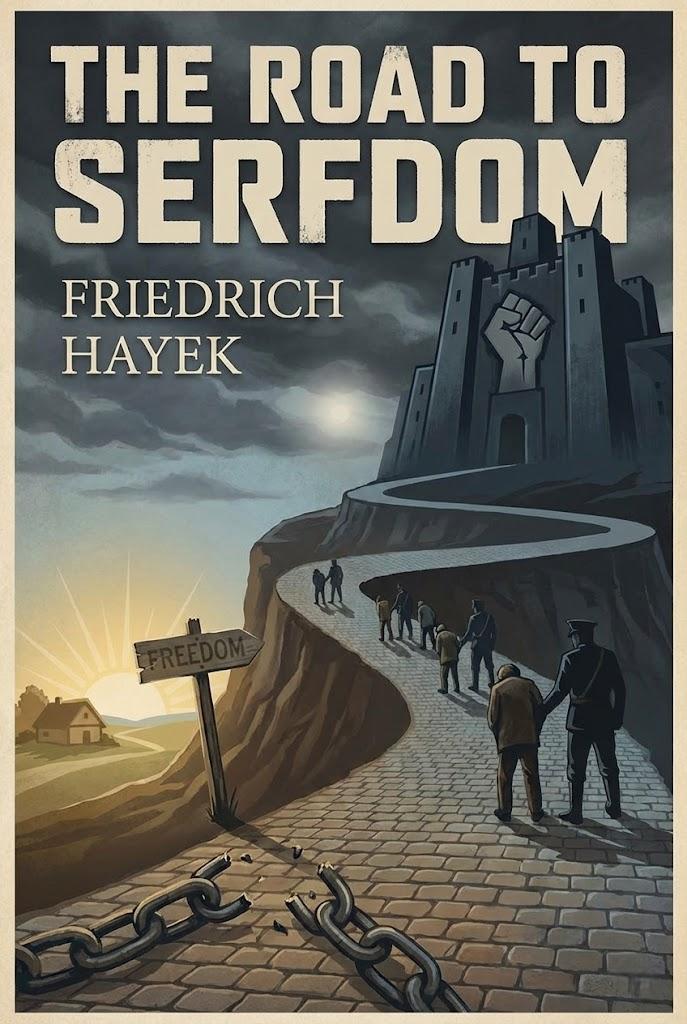
Published: 1944
Hayek’s warning that central planning leads inexorably to totalitarianism.
Core Insight
The more the state controls the economy, the more it must control everything else. Good intentions pave the road to tyranny.
The Argument
Central Planning Requires Coercion Economic decisions involve trade-offs between competing values. When planners make these decisions, they must impose their values on everyone — ultimately through force.
The Knowledge Problem No central authority can gather and process the information dispersed among millions of individuals. Markets aggregate this knowledge through prices.
Incremental Slide Socialism doesn’t arrive all at once. Each intervention creates problems requiring further intervention, until freedom is entirely extinguished.
Historical Context
Written during WWII, Hayek saw disturbing parallels between fascism and socialism — both involving centralized control.
Influence
The book influenced Thatcher, Reagan, and the neoliberal turn of the 1980s.
Critiques
Critics argue Hayek overstates the case — Nordic social democracies combine extensive welfare states with political freedom.
Key Takeaway: Be wary of concentrated power. Economic freedom and political freedom are intertwined.
中文书名:《通往奴役之路》
核心思想
国家对经济控制越多,就越需要控制其他一切。好意铺成了通往暴政之路。
论证
中央计划需要强制 经济决策涉及竞争价值之间的权衡。当计划者做出这些决策时,他们必须将自己的价值观强加给每个人——最终通过武力。
知识问题 没有中央权威能够收集和处理分散在数百万个人中的信息。市场通过价格汇总这些知识。
渐进式滑坡 社会主义不是一下子到来的。每次干预都会产生需要进一步干预的问题,直到自由完全熄灭。
历史背景
写于二战期间,哈耶克看到法西斯主义和社会主义之间令人不安的相似之处——两者都涉及集中控制。
影响
这本书影响了撒切尔、里根和1980年代的新自由主义转向。
核心启示: 警惕权力集中。经济自由和政治自由是相互交织的。
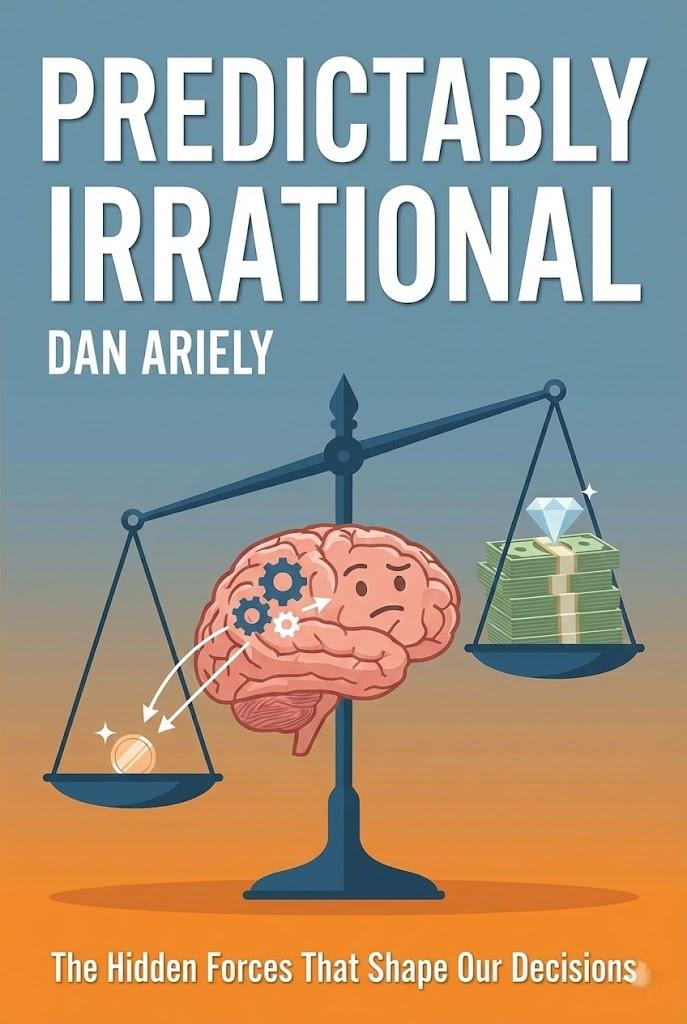
Published: 2008
Ariely’s exploration of systematic irrationality — why we make the same mistakes over and over.
Core Insight
We are not just irrational — we are predictably irrational. Our mistakes follow patterns, which means they can be studied and anticipated.
Key Experiments
The Decoy Effect When choosing between options A and B, adding a clearly inferior option C (similar to B) makes B more attractive.
The Power of Free “Free” triggers irrational excitement. We choose free options even when paid options have better value.
Social vs. Market Norms Mixing social relationships with money corrupts them. Offering payment for favors can reduce goodwill.
Arbitrary Coherence Initial prices (even random ones) anchor subsequent valuations. We’re influenced by numbers we know are arbitrary.
Expectation Shapes Experience If you expect expensive wine to taste better, it will. Expectations physically alter perception.
Practical Implications
- Marketers exploit these biases
- Policy designers can use them for good (like nudges)
- Self-awareness helps us resist manipulation
Key Takeaway: Our irrationality is patterned and predictable. Understanding it gives us power over it.
中文书名:《怪诞行为学》
核心思想
我们不仅是非理性的——我们是可预测地非理性的。我们的错误遵循模式,这意味着它们可以被研究和预测。
核心实验
诱饵效应 当在选项A和B之间选择时,添加一个明显更差的选项C(类似于B)会使B更有吸引力。
免费的力量 “免费"触发非理性的兴奋。即使付费选项更有价值,我们也会选择免费选项。
社会规范 vs. 市场规范 将社会关系与金钱混合会腐蚀它们。为帮忙提供付款可能会减少善意。
任意一致性 初始价格(即使是随机的)会锚定后续估值。我们受到我们知道是任意的数字的影响。
期望塑造体验 如果你期望昂贵的葡萄酒味道更好,它就会更好。期望从物理上改变感知。
实际意义
- 营销者利用这些偏见
- 政策设计者可以用它们做好事(如助推)
- 自我意识帮助我们抵制操纵
核心启示: 我们的非理性是有规律的、可预测的。理解它就能给我们力量。
Biography & Memoir
Published: 1994
Nelson Mandela’s autobiography — from rural childhood to the presidency of South Africa.
Core Insight
Freedom is not given; it must be fought for. And the fight never ends — each generation must renew the struggle.
The Journey
- Childhood: Born into Xhosa royalty, raised in the traditional ways
- Activism: Law practice, joining the ANC, the turn to armed resistance
- Imprisonment: 27 years on Robben Island — emerging without bitterness
- Presidency: Leading South Africa through its transition
Key Lessons
Patience and Perspective Prison taught Mandela to take the long view. Change comes slowly but is worth the wait.
Reconciliation Over Revenge Mandela chose to forgive his oppressors — not from weakness, but from strategic wisdom. A divided nation cannot heal through vengeance.
Leadership Through Example Actions speak louder than words. Mandela’s conduct — dignified, principled, unwavering — inspired a nation.
“I learned that courage was not the absence of fear, but the triumph over it.”
Key Takeaway: Freedom requires sacrifice and patience. True leadership means serving something larger than yourself.
中文书名:《漫漫自由路》
核心思想
自由不是被赋予的;它必须通过斗争获得。而斗争永不结束——每一代人都必须重新开始。
人生旅程
- 童年:出生于科萨王室,在传统方式中长大
- 激进主义:律师执业、加入非洲人国民大会、转向武装抵抗
- 监禁:在罗本岛的27年——没有怨恨地走出来
- 总统:领导南非完成转型
核心教训
耐心与远见 监狱教会了曼德拉从长远的角度看问题。变化来得很慢,但值得等待。
和解而非报复 曼德拉选择原谅压迫者——不是出于软弱,而是出于战略智慧。一个分裂的民族无法通过复仇来愈合。
以身作则的领导 行动胜于言语。曼德拉的行为——有尊严、有原则、坚定不移——激励了一个国家。
核心启示: 自由需要牺牲和耐心。真正的领导意味着服务于比自己更大的东西。
Published: 1965
Malcolm X’s transformation from street hustler to Nation of Islam minister to global human rights advocate.
Core Insight
One person can transform completely — multiple times. Identity is not fixed but constantly remade through experience and reflection.
The Transformations
- Malcolm Little: Raised in poverty, father killed, family scattered, turned to crime
- Detroit Red: Hustler, drug dealer, burglar — imprisoned at 20
- Malcolm X: Converted to Nation of Islam in prison, became its most powerful voice
- El-Hajj Malik El-Shabazz: After Mecca, rejected racial separatism for universal human rights
Key Themes
Self-Education In prison, Malcolm read voraciously — dictionary to philosophy. Education is liberation.
Speaking Truth to Power Malcolm never softened his message for white audiences. His uncompromising honesty was both criticized and admired.
Evolution and Growth His pilgrimage to Mecca shattered his belief that all white people were devils. He could change his mind.
“I’m for truth, no matter who tells it. I’m for justice, no matter who it’s for or against.”
Key Takeaway: Never stop questioning. The truth may require you to abandon everything you once believed.
中文书名:《马尔科姆·X自传》
核心思想
一个人可以彻底转变——多次。身份不是固定的,而是通过经验和反思不断重塑的。
多次蜕变
- 马尔科姆·利特尔:在贫困中长大,父亲被杀,家庭离散,走上犯罪道路
- 底特律红:骗子、毒贩、盗贼——20岁入狱
- 马尔科姆·X:在狱中改信伊斯兰国度,成为其最有力的声音
- 埃尔-哈吉·马利克·埃尔-沙巴兹:麦加朝圣后,放弃种族分离主义,转向普世人权
核心主题
自我教育 在监狱里,马尔科姆如饥似渴地阅读——从字典到哲学。教育即解放。
向权力说真话 马尔科姆从不为白人听众软化他的信息。他毫不妥协的诚实既被批评也被钦佩。
进化与成长 他的麦加朝圣粉碎了他认为所有白人都是魔鬼的信念。他能够改变自己的想法。
核心启示: 永不停止质疑。真相可能要求你放弃你曾经相信的一切。
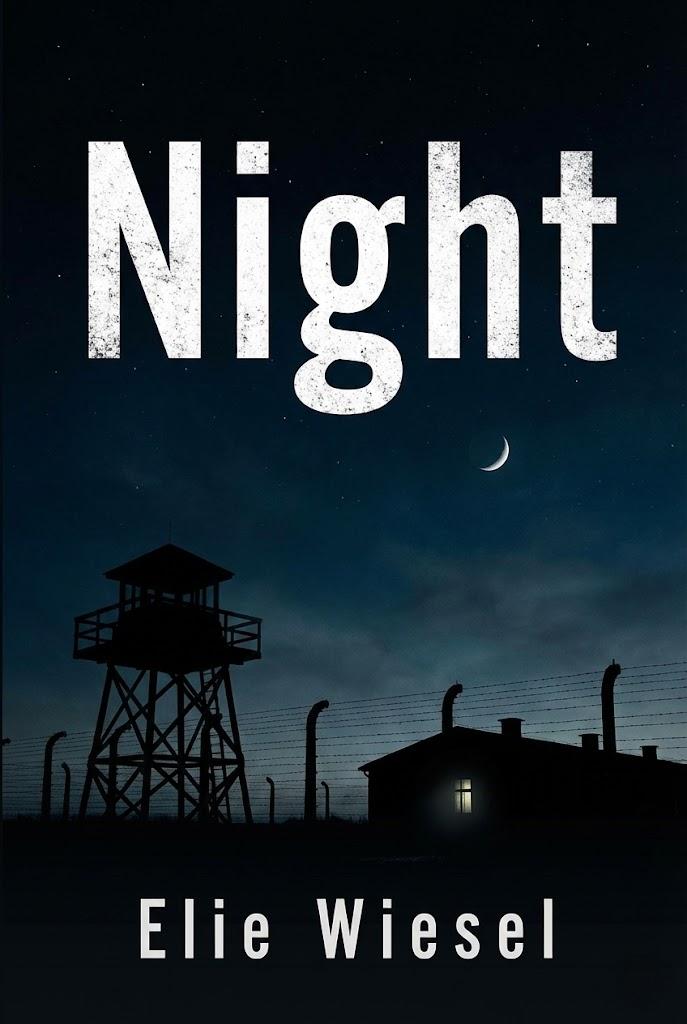
Published: 1960
Elie Wiesel’s memoir of surviving Auschwitz and Buchenwald as a teenager with his father.
Core Insight
The Holocaust was not just murder — it was the destruction of meaning itself. In the camps, God, humanity, and hope all seemed extinguished.
The Journey
Wiesel was 15 when his family was deported from Romania to Auschwitz. He survived; his mother and sister were immediately killed. He watched his father die of dysentery and exhaustion just before liberation.
The Death of Faith
“Never shall I forget those flames which consumed my faith forever.”
Wiesel arrived a devout Jew. He left questioning everything — God’s existence, God’s justice, the meaning of his survival.
Key Passages
On the hanging of a child:
“Where is God now? … He is hanging here on this gallows.”
On looking in a mirror after liberation:
“A corpse gazed back at me. The look in his eyes, as they stared into mine, has never left me.”
Witness and Memory
Wiesel felt obligated to testify — that the world might remember and never repeat.
Key Takeaway: Some experiences shatter faith and meaning. Witness is both burden and sacred duty.
中文书名:《夜》
核心思想
大屠杀不仅仅是谋杀——它是对意义本身的毁灭。在集中营里,上帝、人性和希望似乎都被扑灭了。
旅程
威塞尔15岁时,他的家人从罗马尼亚被驱逐到奥斯威辛。他幸存了下来;他的母亲和妹妹立即被杀害。他目睹父亲死于痢疾和疲惫,就在解放前不久。
信仰之死
“我永远不会忘记那些永远吞噬了我信仰的火焰。”
威塞尔来时是一个虔诚的犹太人。他离开时质疑一切——上帝的存在、上帝的公义、他幸存的意义。
关键段落
关于一个孩子被绞死:
“上帝在哪里?……他就挂在这个绞架上。”
关于解放后照镜子:
“一具尸体凝视着我。他眼中的神情,当它们凝视着我时,从未离开过我。”
见证与记忆
威塞尔感到有义务作证——让世界记住,永不重蹈覆辙。
核心启示: 有些经历粉碎信仰和意义。见证既是负担也是神圣的责任。
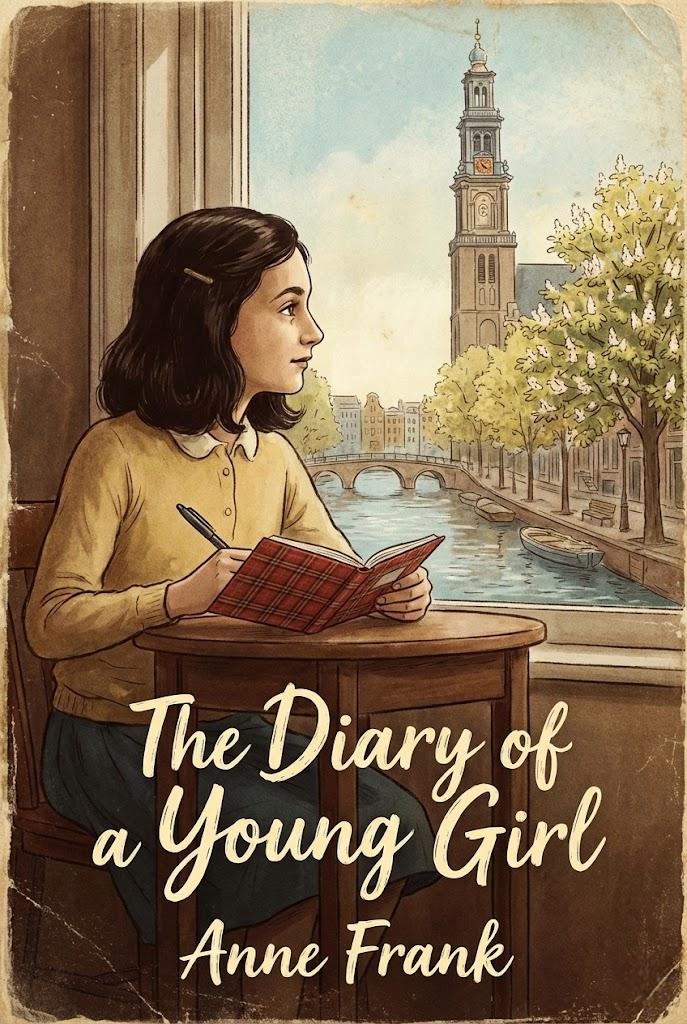
Published: 1947
Anne Frank’s journal, kept while hiding from the Nazis in Amsterdam for over two years.
Core Insight
Even in the darkest circumstances, a young girl maintained hope, humor, and an unshakeable belief in human goodness.
The Setting
From July 1942 to August 1944, Anne (13-15 years old), her family, and four others hid in a secret annex behind her father’s office. They were eventually betrayed and deported. Anne died in Bergen-Belsen, just weeks before liberation.
The Voice
Anne wrote with astonishing maturity, wit, and self-awareness for her age. She dreamed of becoming a writer.
“I still believe, in spite of everything, that people are really good at heart.”
Key Themes
Coming of Age: Anne grapples with identity, sexuality, and relationships while trapped in hiding.
Hope Amid Horror: Despite knowing the war’s atrocities, she maintains faith in humanity.
The Writer’s Vocation: She revised her diary for potential publication, taking her craft seriously.
Legacy
Published by her father Otto — the only family survivor — the diary has been translated into 70+ languages and remains one of the most-read books in the world.
Key Takeaway: Even in suffering, the human spirit can retain hope, curiosity, and the will to create.
中文书名:《安妮日记》
核心思想
即使在最黑暗的环境中,一个年轻女孩仍然保持着希望、幽默和对人性善良的坚定信念。
背景
从1942年7月到1944年8月,安妮(13-15岁)、她的家人和另外四人躲藏在她父亲办公室后面的秘密阁楼里。他们最终被出卖并被驱逐。安妮死于贝尔根-贝尔森集中营,就在解放前几周。
声音
安妮以她这个年龄令人惊叹的成熟、机智和自我意识来写作。她梦想成为一名作家。
“尽管发生了这一切,我仍然相信人心本善。”
核心主题
成长:安妮在躲藏中挣扎于身份认同、性意识和人际关系。
恐惧中的希望:尽管知道战争的暴行,她仍然对人性保持信心。
作家的使命:她为可能的出版修订了日记,认真对待她的写作。
遗产
她的父亲奥托——唯一幸存的家庭成员——出版了这本日记,它已被翻译成70多种语言,至今仍是世界上阅读量最大的书籍之一。
核心启示: 即使在苦难中,人的精神也能保持希望、好奇心和创造的意志。
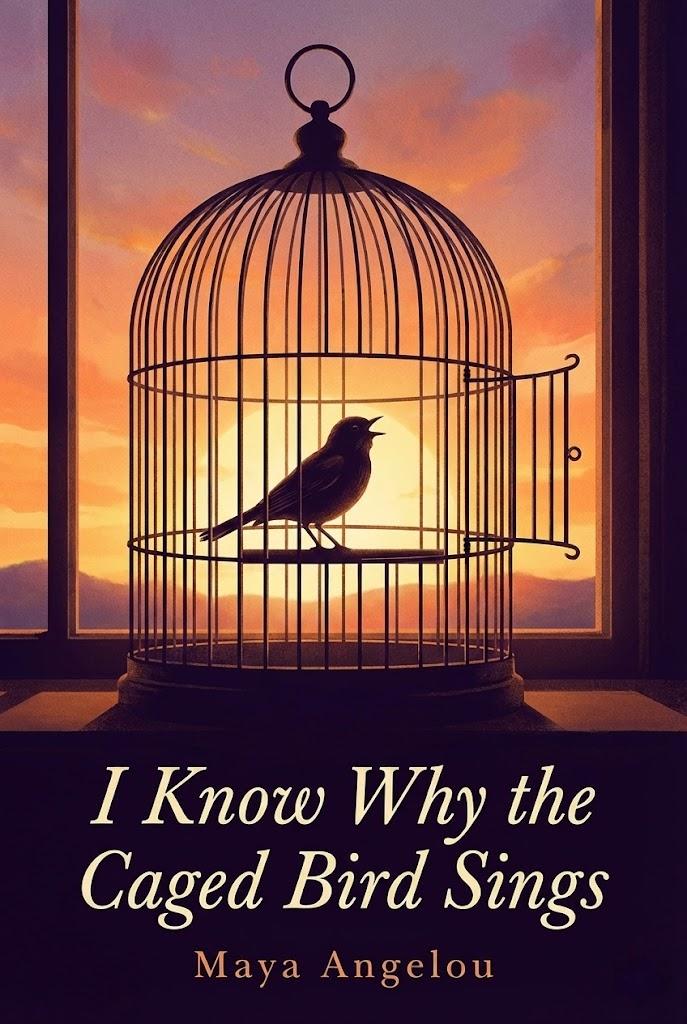
Published: 1969
Maya Angelou’s memoir of childhood in the segregated South — trauma, resilience, and the discovery of her voice.
Core Insight
Silence is not safety. Finding your voice — through literature, through speaking — is the path to freedom.
The Story
Maya (born Marguerite) and her brother are sent to live with their grandmother in Stamps, Arkansas. Later, during a visit to her mother in St. Louis, she is raped by her mother’s boyfriend. When he is killed (possibly by her uncles), she believes her voice caused his death and stops speaking for nearly five years.
The Awakening
A woman named Mrs. Flowers introduces Maya to literature — reading aloud, poetry, the power of words. Slowly, Maya reclaims her voice.
Key Themes
Racism and Resilience: Life under Jim Crow, navigating constant humiliation with dignity.
Trauma and Silence: Rape leads to muteness — a physical manifestation of psychological pain.
Literature as Liberation: Books become Maya’s refuge and eventually her instrument of power.
“There is no greater agony than bearing an untold story inside you.”
Key Takeaway: Trauma can silence us. But through art and community, we can reclaim our voices.
中文书名:《我知道笼中鸟为何歌唱》
核心思想
沉默不是安全。找到你的声音——通过文学、通过说话——是通向自由的道路。
故事
玛雅(原名玛格丽特)和她的哥哥被送去和祖母一起住在阿肯色州的斯坦普斯。后来,在去圣路易斯探望母亲时,她被母亲的男友强奸。当他被杀死(可能是被她的叔叔们杀死)后,她相信是她的声音导致了他的死亡,于是她停止说话近五年。
觉醒
一位名叫弗劳尔斯夫人的女性向玛雅介绍了文学——朗读、诗歌、文字的力量。慢慢地,玛雅重新找回了她的声音。
核心主题
种族主义与韧性:在吉姆·克劳法下的生活,有尊严地应对持续的羞辱。
创伤与沉默:强奸导致失语——心理痛苦的身体表现。
文学即解放:书籍成为玛雅的避难所,最终成为她的力量工具。
核心启示: 创伤可以使我们沉默。但通过艺术和社区,我们可以重新找回我们的声音。
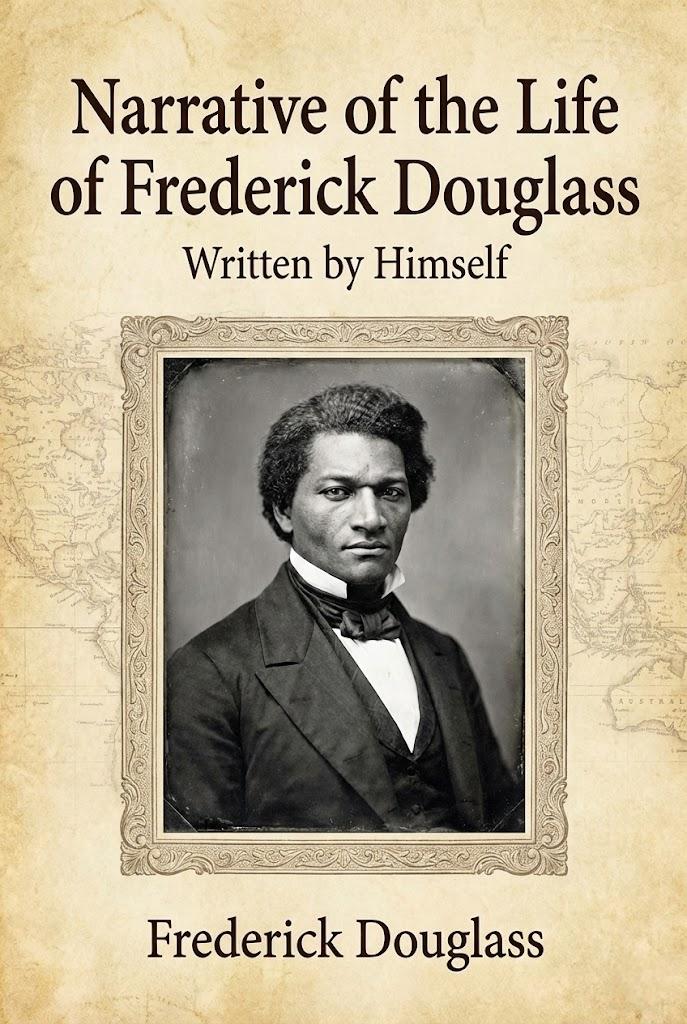
Published: 1845
Frederick Douglass’s account of slavery and his escape to freedom — a founding document of American literature.
Core Insight
Slavery corrupts everything — not just the enslaved but the enslavers. Freedom is not just physical liberation but intellectual and spiritual awakening.
The Journey
Born into slavery in Maryland, Douglass was separated from his mother as an infant. He learned to read secretly (risking severe punishment), worked as a field hand and domestic, and finally escaped at 20.
The Power of Literacy
Douglass’s enslaver’s wife began teaching him to read. When her husband stopped her — saying literacy would make him unfit for slavery — Douglass understood:
“I now understood what had been to me a most perplexing difficulty — to wit, the white man’s power to enslave the black man.”
Literacy was the path to freedom.
Key Themes
Dehumanization: Slavery denied enslaved people names, birthdays, family connections — everything that makes us human.
Religion’s Hypocrisy: Christian slaveholders were often the cruelest — using religion to justify brutality.
Self-Making: Douglass remade himself through education, oratory, and sheer will.
Key Takeaway: Knowledge is freedom. The oppressor’s greatest fear is the awakened mind.
中文书名:《一个美国奴隶的生平自述》
核心思想
奴隶制腐蚀一切——不仅是被奴役者,还有奴役者。自由不仅是身体的解放,更是智识和精神的觉醒。
旅程
道格拉斯出生于马里兰州的奴隶家庭,婴儿时就与母亲分离。他秘密地学会了阅读(冒着严厉惩罚的风险),做过田地工人和家仆,最后在20岁时逃跑。
识字的力量
道格拉斯的奴隶主的妻子开始教他阅读。当她丈夫阻止她时——说识字会使他不适合做奴隶——道格拉斯明白了:
“我现在理解了对我来说一直是最令人困惑的难题——即白人奴役黑人的力量。”
识字是通向自由的道路。
核心主题
去人性化:奴隶制剥夺了被奴役者的姓名、生日、家庭联系——一切使我们成为人的东西。
宗教的虚伪:基督徒奴隶主往往是最残忍的——用宗教来为残暴辩护。
自我塑造:道格拉斯通过教育、演说和纯粹的意志重塑了自己。
核心启示: 知识就是自由。压迫者最大的恐惧是觉醒的心灵。
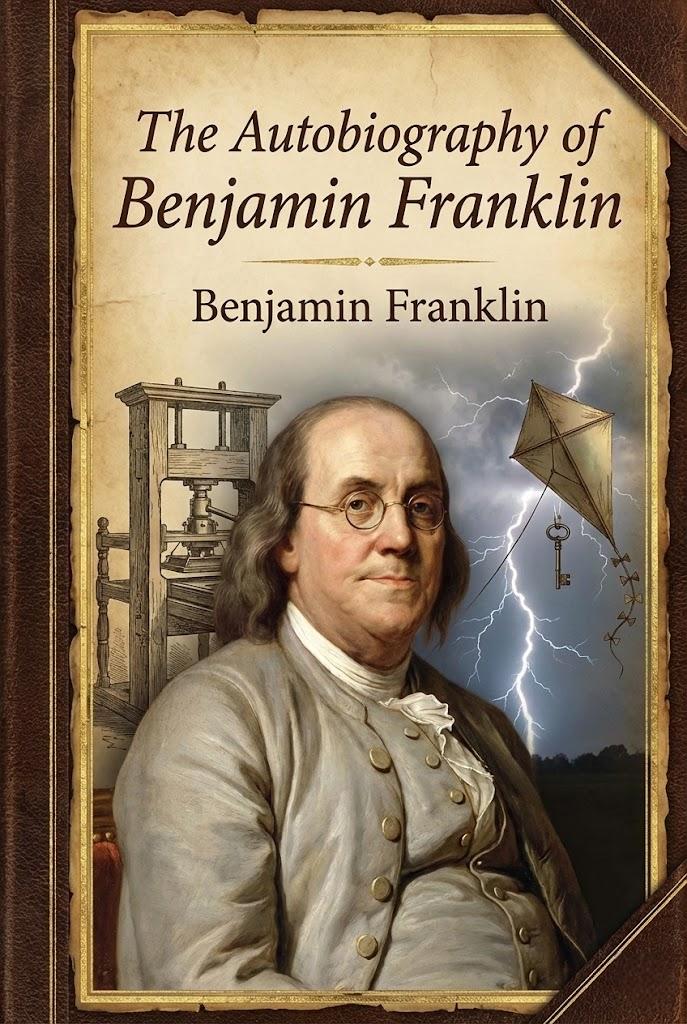
Published: 1791
Benjamin Franklin’s account of his remarkable self-invention — from humble origins to founding father.
Core Insight
Through industry, frugality, and self-improvement, anyone can rise. Franklin is the original self-made man.
The Story
Born the 15th of 17 children to a Boston candle maker, Franklin became: printer, author, inventor, scientist, diplomat, and Founding Father.
Thirteen Virtues
Franklin famously listed virtues to cultivate, tracking his progress weekly:
- Temperance
- Silence
- Order
- Resolution
- Frugality
- Industry
- Sincerity
- Justice
- Moderation
- Cleanliness
- Tranquility
- Chastity
- Humility
Key Ideas
Practical Wisdom: Focus on what works. Theory matters less than results.
Civic Virtue: Franklin founded libraries, fire companies, universities — always asking how to benefit the community.
Cheerful Pragmatism: Life is for improving — yourself and your world.
“Early to bed and early to rise makes a man healthy, wealthy, and wise.”
Key Takeaway: Character can be cultivated like a skill. Self-improvement is life’s work.
中文书名:《富兰克林自传》
核心思想
通过勤劳、节俭和自我提升,任何人都可以崛起。富兰克林是自我塑造的人的原型。
故事
富兰克林出生于波士顿一个蜡烛制造商家庭,是17个孩子中的第15个。他成为:印刷商、作家、发明家、科学家、外交官和开国元勋。
十三项美德
富兰克林著名地列出了要培养的美德,每周追踪进展:
- 节制
- 沉默
- 秩序
- 决心
- 节俭
- 勤劳
- 诚恳
- 正义
- 中庸
- 清洁
- 平静
- 贞洁
- 谦逊
核心思想
实用智慧:专注于有效的东西。理论不如结果重要。
公民美德:富兰克林创办了图书馆、消防公司、大学——总是问如何造福社区。
乐观的务实主义:生活是为了改善——你自己和你的世界。
核心启示: 品格可以像技能一样培养。自我提升是一生的工作。
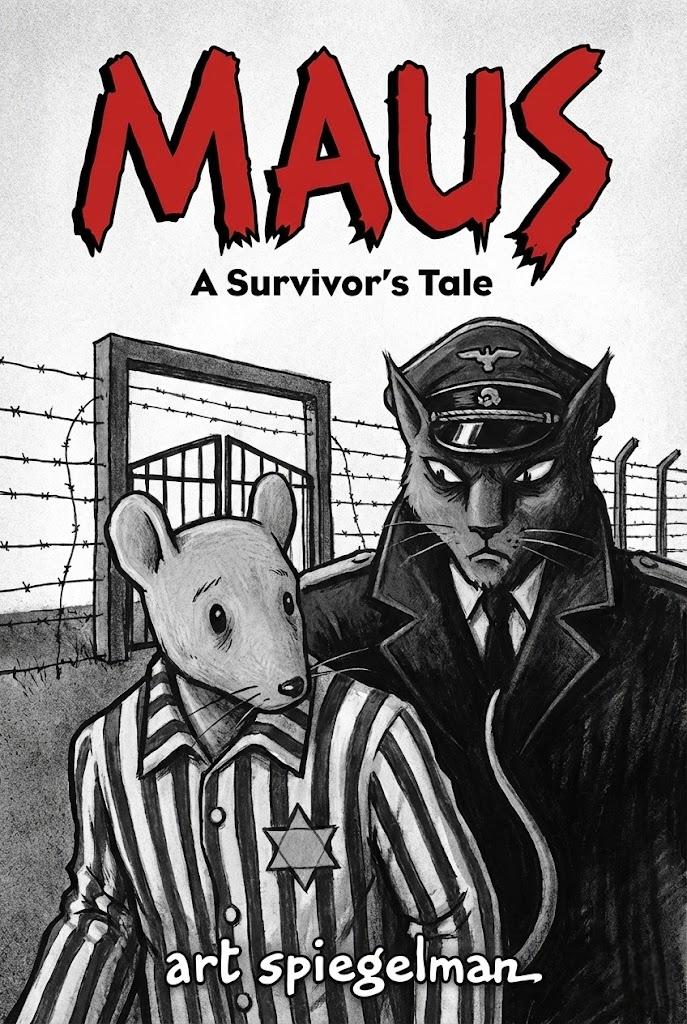
Published: 1986, 1991
Art Spiegelman’s graphic novel memoir of his father’s Holocaust survival — Jews as mice, Nazis as cats.
Core Insight
The Holocaust’s trauma echoes through generations. Maus explores not just Vladek’s experience but Art’s relationship with his father and the burden of inherited trauma.
The Form
Using comic art (“comix”) to tell the Holocaust story was controversial but revelatory. The animal metaphor — Jews as mice, Germans as cats, Poles as pigs — universalizes while also commenting on how racism reduces people to categories.
Two Stories
Vladek’s Story: Survival in Poland, Auschwitz, the death marches — told in flashback.
Art’s Story: Interviewing his aging, difficult father in 1970s-80s New York; dealing with guilt, resentment, and the shadow of his dead brother.
Key Themes
Memory and Representation: Can any form capture the Holocaust? All representations are partial.
Survivor Guilt: Vladek’s wife Anja, also a survivor, committed suicide. Art struggles with his relationship to trauma he didn’t experience.
Father-Son Conflict: Vladek is both hero and infuriating, miserly, difficult man.
Key Takeaway: Trauma doesn’t end with survival. It shapes families across generations.
中文书名:《鼠族》
核心思想
大屠杀的创伤在代际间回响。《鼠族》探索的不仅是弗拉迪克的经历,还有阿特与父亲的关系以及继承创伤的负担。
形式
使用漫画艺术来讲述大屠杀故事是有争议的,但也是启发性的。动物隐喻——犹太人是老鼠,德国人是猫,波兰人是猪——在普遍化的同时也评论了种族主义如何将人简化为类别。
两个故事
弗拉迪克的故事:在波兰、奥斯维辛、死亡行军中的生存——通过闪回讲述。
阿特的故事:在1970-80年代的纽约采访他年迈、难相处的父亲;处理内疚、怨恨和他死去的兄弟的阴影。
核心主题
记忆与表现:任何形式都能捕捉大屠杀吗?所有的表现都是片面的。
幸存者内疚:弗拉迪克的妻子安雅,同样是幸存者,后来自杀了。阿特在与他没有经历过的创伤的关系中挣扎。
父子冲突:弗拉迪克既是英雄,又是一个令人恼火、吝啬、难相处的人。
核心启示: 创伤不会随着生存而结束。它塑造了跨代的家庭。

Published: 1782
Rousseau’s groundbreaking exercise in radical self-examination — the first modern autobiography.
Core Insight
“I have resolved on an enterprise which has no precedent… I will present myself as I am.”
Rousseau aimed to reveal his complete self — virtues and vices, noble feelings and shameful acts — to demonstrate that even a flawed person can be worthy of love.
Revolutionary Honesty
Rousseau confesses:
- Abandoning his five children to foundling homes
- Falsely accusing a servant of theft (a guilt that haunted him)
- Sexual fetishes and masturbation
- Paranoia and difficult relationships
No autobiography before had been so brutally honest.
The Argument
Despite his faults, Rousseau argues he is fundamentally good — corrupted more by society than by nature. This connects to his political philosophy: humans are born good but civilization corrupts.
Influence
The Confessions invented confessional autobiography. It influenced Romanticism, psychoanalysis, and every memoirist since who has tried to be honest about themselves.
Key Takeaway: True self-knowledge requires confronting our darkest parts. Honesty about ourselves is liberating — and terrifying.
中文书名:《忏悔录》
核心思想
“我决心进行一项没有先例的事业……我将展示我真实的自己。”
卢梭旨在揭示他完整的自我——美德与恶行,高尚的情感与可耻的行为——以证明即使是一个有缺陷的人也值得被爱。
革命性的诚实
卢梭忏悔:
- 把他的五个孩子送去育婴堂
- 错误地指控一个仆人偷窃(这种内疚困扰了他一生)
- 性癖好和自慰
- 偏执和困难的人际关系
以前没有任何自传如此残酷地诚实。
论证
尽管有缺点,卢梭认为他本质上是善良的——被社会腐蚀多于被自然腐蚀。这与他的政治哲学相联系:人生来善良,但文明使人堕落。
影响
《忏悔录》发明了忏悔式自传。它影响了浪漫主义、精神分析,以及此后每一位试图对自己诚实的回忆录作家。
核心启示: 真正的自我认识需要面对我们最黑暗的部分。对自己的诚实是解放性的——也是可怕的。

Published: 1996
Jon Krakauer’s investigation into Chris McCandless — a young man who walked into the Alaskan wilderness and never came out.
Core Insight
The line between freedom and foolishness, adventure and death wish, is thin. McCandless’s story raises uncomfortable questions about idealism and its costs.
The Story
Chris McCandless graduated from Emory, gave away his savings to charity, abandoned his car, burned his money, and set out to live off the land. After two years of wandering, he walked into the Alaskan bush. Four months later, he was found dead of starvation.
Competing Interpretations
Romantic Reading: McCandless sought authentic experience, rejected materialist society, lived and died on his own terms.
Critical Reading: He was arrogant, under-prepared, and died needlessly — hurting those who loved him.
Krakauer’s Sympathy: Having taken similar risks in his own youth, Krakauer understands the pull of wilderness and absolute freedom.
Key Themes
Society vs. Nature: Can we return to a simpler life? At what cost?
Family and Escape: McCandless fled a troubled family. Did he find freedom or just running away?
The Myth of Self-Sufficiency: Even Thoreau went home for dinner. Complete independence is fantasy — and potentially fatal.
Key Takeaway: The wild offers transcendence but demands respect. Idealism without preparation is dangerous.
中文书名:《荒野生存》(又译《走入荒野》)
核心思想
自由与愚蠢、冒险与死亡意愿之间的界限很薄。麦克坎德利斯的故事引发了关于理想主义及其代价的不舒服的问题。
故事
克里斯·麦克坎德利斯从埃默里大学毕业,把积蓄捐给慈善机构,抛弃了他的汽车,烧掉了他的钱,开始过自给自足的生活。在两年的流浪之后,他走进了阿拉斯加的荒野。四个月后,他被发现饿死了。
竞争性解读
浪漫主义解读:麦克坎德利斯寻求真实的体验,拒绝物质主义社会,按照自己的方式生活和死去。
批判性解读:他傲慢、准备不足,毫无必要地死去——伤害了那些爱他的人。
克拉考尔的同情:在自己的青年时代也冒过类似的风险,克拉考尔理解荒野和绝对自由的吸引力。
核心主题
社会 vs. 自然:我们能回到更简单的生活吗?代价是什么?
家庭与逃避:麦克坎德利斯逃离了一个问题家庭。他找到了自由还是只是在逃避?
自给自足的神话:即使是梭罗也回家吃晚饭。完全的独立是幻想——而且可能是致命的。
核心启示: 荒野提供超越,但需要尊重。没有准备的理想主义是危险的。

Published: 2018
Tara Westover’s memoir of growing up in a survivalist Mormon family — and her unlikely path to Cambridge and Harvard.
Core Insight
Education is not just learning facts — it is learning that other perspectives exist, that your family’s reality is not the only reality.
The Background
Tara grew up in rural Idaho with a father who distrusted the government, medicine, and schools. She had no birth certificate, never saw a doctor, and didn’t attend school. Her childhood was dominated by her father’s apocalyptic beliefs and a violent older brother.
The Transformation
At 17, largely self-taught, Tara took the ACT and enrolled at Brigham Young University. She had never heard of the Holocaust. She didn’t know what the Civil Rights Movement was.
From BYU she went to Cambridge, then Harvard. Each step took her further from her family’s worldview.
The Cost
Education liberated Tara but also separated her from her family. Several siblings cut ties; her parents remained loyal to the abusive brother.
“You can love someone and still choose to say goodbye.”
Key Takeaway: Education transforms — but transformation has costs. Choosing to see the world differently may mean losing those who don’t.
中文书名:《你当像鸟飞往你的山》
核心思想
教育不仅仅是学习事实——它是学习到其他观点的存在,学习到你家庭的现实不是唯一的现实。
背景
塔拉在爱达荷州农村的一个摩门教生存主义者家庭长大,父亲不信任政府、医疗和学校。她没有出生证明,从未看过医生,也没有上过学。她的童年被父亲的末世论信仰和一个暴力的哥哥主导。
蜕变
17岁时,基本上是自学成才的塔拉参加了ACT考试并进入杨百翰大学。她从未听说过大屠杀。她不知道什么是民权运动。
从杨百翰大学,她去了剑桥,然后是哈佛。每一步都让她离她家庭的世界观更远。
代价
教育解放了塔拉,但也使她与家人分离。几个兄弟姐妹断绝了联系;她的父母仍然效忠于那个施暴的哥哥。
“你可以爱某个人,同时仍然选择说再见。”
核心启示: 教育带来改变——但改变有代价。选择以不同的方式看世界可能意味着失去那些不这样做的人。

Published: 2005
Jeannette Walls’s memoir of her chaotic, impoverished childhood with brilliant but deeply dysfunctional parents.
Core Insight
Love and dysfunction can coexist. Parents can fail their children profoundly while also giving them remarkable gifts.
The Story
Walls grew up with:
- A father (Rex) who was charming, alcoholic, and brilliant — promising to build a “Glass Castle” that never materialized
- A mother (Rose Mary) who was an artist, refusing to work conventional jobs even when the children went hungry
The family moved constantly, often homeless, always broke. Yet Rex taught his children to question everything; Rose Mary encouraged their creativity.
The Contradiction
The children experienced neglect, hunger, and danger. Yet Walls remembers moments of wonder, adventure, and genuine love.
Escape and Reconciliation
Jeannette escaped to New York, became a journalist, and eventually grappled with her complicated feelings toward her parents — both gratitude and anger.
“I can’t escape who I am, but I can choose what that means.”
Key Takeaway: Families are complex. You can acknowledge harm while also recognizing what was good.
中文书名:《玻璃城堡》
核心思想
爱和功能失调可以共存。父母可以深深地辜负他们的孩子,同时也给他们非凡的礼物。
故事
沃尔斯长大时陪伴着:
- 一个父亲(雷克斯),他迷人、酗酒、聪明——承诺要建造一座永远没有实现的"玻璃城堡"
- 一个母亲(罗斯·玛丽),她是一名艺术家,即使孩子们挨饿也拒绝从事传统工作
这个家庭不断搬家,经常无家可归,总是破产。然而,雷克斯教他的孩子们质疑一切;罗斯·玛丽鼓励他们的创造力。
矛盾
孩子们经历了忽视、饥饿和危险。然而,沃尔斯记得那些奇迹、冒险和真诚的爱的时刻。
逃离与和解
珍妮特逃到了纽约,成为了一名记者,并最终与她对父母复杂的感情作斗争——既有感激也有愤怒。
核心启示: 家庭是复杂的。你可以承认伤害,同时也认识到什么是好的。
Science, Nature & The Universe

Published: 1980
Carl Sagan’s celebration of the universe and the human adventure of scientific discovery.
Core Insight
“We are a way for the cosmos to know itself.”
Science is not cold or alien — it is humanity’s most profound spiritual quest. The universe is vast and we are small, but we can understand it.
Key Ideas
The Cosmic Perspective We are made of star-stuff. The atoms in our bodies were forged in ancient supernovae. We are not separate from the cosmos — we are part of it.
The Pale Blue Dot Earth from space is a tiny, fragile mote of dust. All of human history, all love and war, happened on that dot.
Science as Candle in the Dark In a demon-haunted world full of superstition, science is our best tool for finding truth.
Themes
- Wonder at the universe’s beauty and complexity
- Humility before our cosmic insignificance
- Optimism about human reason and exploration
“Somewhere, something incredible is waiting to be known.”
Key Takeaway: The cosmos is vast beyond imagining — and we have the privilege of exploring it. That is cause for wonder, not despair.
中文书名:《宇宙》
核心思想
“我们是宇宙认识自身的一种方式。”
科学不是冷酷或陌生的——它是人类最深刻的精神追求。宇宙浩瀚无边,我们渺小,但我们可以理解它。
核心思想
宇宙视角 我们是由星尘构成的。我们体内的原子是在古老的超新星中锻造的。我们不是与宇宙分离的——我们是它的一部分。
暗淡蓝点 从太空看,地球是一粒微小而脆弱的尘埃。人类历史上所有的爱与战争,都发生在那个点上。
科学是黑暗中的烛光 在一个充满迷信的世界里,科学是我们找到真相的最佳工具。
主题
- 对宇宙之美和复杂性的惊叹
- 在宇宙渺小面前的谦卑
- 对人类理性和探索的乐观
核心启示: 宇宙大得超乎想象——而我们有幸探索它。这是惊奇的理由,而非绝望。
Published: 1988
Stephen Hawking’s explanation of the universe’s deepest mysteries for general readers.
Core Insight
The universe can be understood — and that understanding is accessible to anyone willing to think carefully.
Big Questions
- How did the universe begin?
- What is time?
- Will the universe end?
- Is there a unified theory of everything?
Key Concepts
The Big Bang The universe began about 13.8 billion years ago from an infinitely dense point. Space itself expanded (not into something — space itself grew).
Black Holes Regions where gravity is so strong that nothing, not even light, can escape. Hawking showed they emit radiation and eventually evaporate.
Space-Time Einstein showed space and time are interwoven. Massive objects bend this fabric, creating gravity.
Quantum Mechanics At the smallest scales, particles behave probabilistically. The universe is fundamentally uncertain.
The Search for a Theory of Everything
Physics has two great theories: general relativity (large scale) and quantum mechanics (small scale). They don’t fit together. Finding a unified theory remains the grail quest.
Key Takeaway: The universe is strange but not incomprehensible. With effort, we can glimpse the deep rules that govern reality.
中文书名:《时间简史》
核心思想
宇宙是可以理解的——而且这种理解对任何愿意认真思考的人都是可及的。
大问题
- 宇宙是如何开始的?
- 时间是什么?
- 宇宙会结束吗?
- 有没有统一的万物理论?
核心概念
大爆炸 宇宙大约在138亿年前从一个无限密集的点开始。空间本身膨胀了(不是膨胀到什么东西里——空间本身在增长)。
黑洞 引力如此强大以至于任何东西,甚至光,都无法逃脱的区域。霍金证明它们发出辐射并最终蒸发。
时空 爱因斯坦表明时间和空间是交织在一起的。大质量物体弯曲这个织物,产生引力。
量子力学 在最小的尺度上,粒子表现出概率性。宇宙从根本上是不确定的。
寻找万物理论
物理学有两个伟大的理论:广义相对论(大尺度)和量子力学(小尺度)。它们不兼容。找到一个统一理论仍然是圣杯追求。
核心启示: 宇宙是奇怪的,但不是不可理解的。通过努力,我们可以瞥见支配现实的深层规则。
Published: 1976
Richard Dawkins’s gene-centered view of evolution — one of the most influential science books of the 20th century.
Core Insight
“We are survival machines — robot vehicles blindly programmed to preserve the selfish molecules known as genes.”
Evolution doesn’t select for individuals or species — it selects for genes. Organisms are vehicles genes build to replicate themselves.
Key Ideas
The Gene’s-Eye View Turn evolution upside down. Instead of asking “How does this behavior help the organism?” ask “How does it help the genes get copied?”
Altruism Explained Why do animals (including humans) help others? Often because those others share genes. Helping relatives helps your genes survive (kin selection).
Memes Dawkins coined the term. Just as genes are units of biological replication, memes are units of cultural replication — ideas, behaviors, styles that spread from mind to mind.
Controversies
Some misread the book as advocating selfishness. Dawkins argues the opposite: understanding our genetic programming helps us transcend it.
“We are built as gene machines… but we have the power to turn against our creators.”
Key Takeaway: Genes are replicators; we are their survival machines. But consciousness gives us freedom — we need not be slaves to our genes.
中文书名:《自私的基因》
核心思想
“我们是生存机器——被盲目编程来保存那些被称为基因的自私分子的机器人载体。”
进化不是为个体或物种选择的——它是为基因选择的。生物体是基因为了复制自己而建造的载体。
核心思想
基因视角 把进化颠倒过来。不要问"这种行为如何帮助生物体?“而要问"它如何帮助基因被复制?”
利他主义的解释 为什么动物(包括人类)帮助他人?通常是因为那些他人共享基因。帮助亲属有助于你的基因存活(亲缘选择)。
模因 (Meme) 道金斯创造了这个术语。正如基因是生物复制的单位,模因是文化复制的单位——从一个心灵传播到另一个心灵的想法、行为、风格。
争议
有些人误读这本书为提倡自私。道金斯认为恰恰相反:理解我们的基因编程有助于我们超越它。
核心启示: 基因是复制子;我们是它们的生存机器。但意识给了我们自由——我们不必成为基因的奴隶。
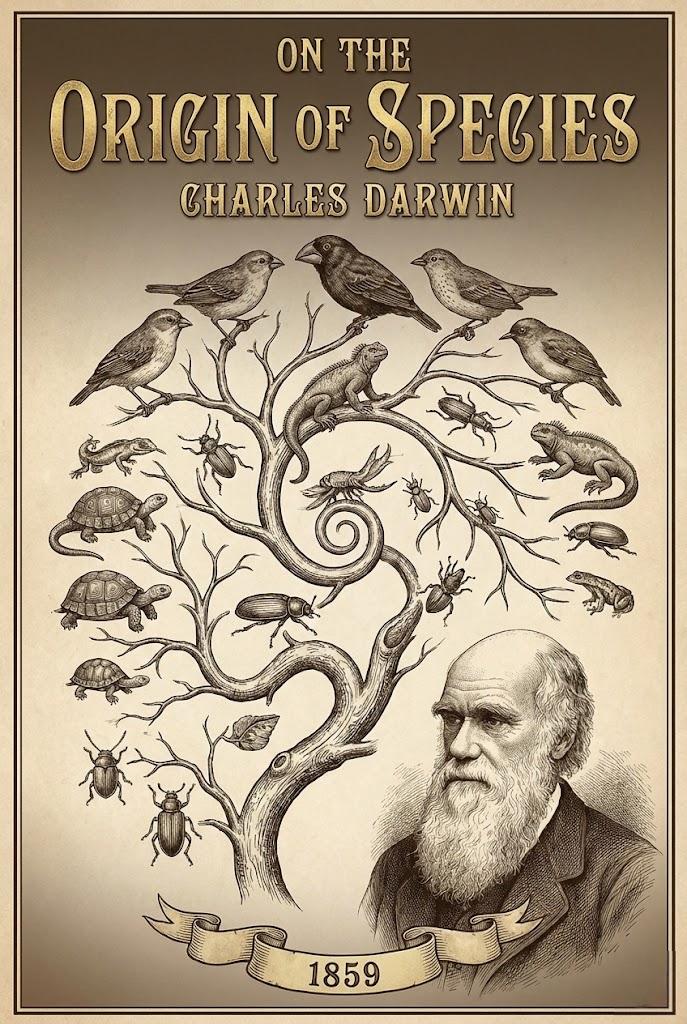
Published: 1859
The book that changed everything — Darwin’s theory of evolution by natural selection.
Core Insight
All life descends from common ancestors. Species change over time through natural selection: those individuals better suited to their environment survive and reproduce more successfully.
The Theory
Variation: Individuals in a population vary in their traits.
Inheritance: Traits are passed from parents to offspring.
Selection: Some traits help individuals survive and reproduce. These traits become more common over generations.
Time: Given enough time, small changes accumulate into large differences — new species.
Revolutionary Implications
- Humans are not special creations but part of the tree of life
- Design in nature doesn’t require a designer
- Change is constant; species are not fixed
Reception
The book was controversial but quickly accepted by scientists. Religious opposition continues, but evolution is as well-established as any fact in science.
“There is grandeur in this view of life…”
Key Takeaway: Life’s diversity arose through a simple, elegant process. Understanding evolution changes how we see ourselves and all living things.
中文书名:《物种起源》
核心思想
所有生命都来自共同的祖先。物种通过自然选择随时间变化:更适合环境的个体生存和繁殖更成功。
理论
变异:种群中的个体在其特征上有所不同。
遗传:特征从父母传给后代。
选择:某些特征帮助个体生存和繁殖。这些特征在世代间变得更加普遍。
时间:给予足够的时间,小变化积累成大差异——新物种。
革命性含义
- 人类不是特殊创造物,而是生命之树的一部分
- 自然界的设计不需要设计者
- 变化是持续的;物种不是固定的
反响
这本书有争议,但很快被科学家接受。宗教反对继续存在,但进化论与科学中的任何事实一样得到确立。
核心启示: 生命的多样性通过一个简单、优雅的过程产生。理解进化改变了我们看待自己和所有生物的方式。
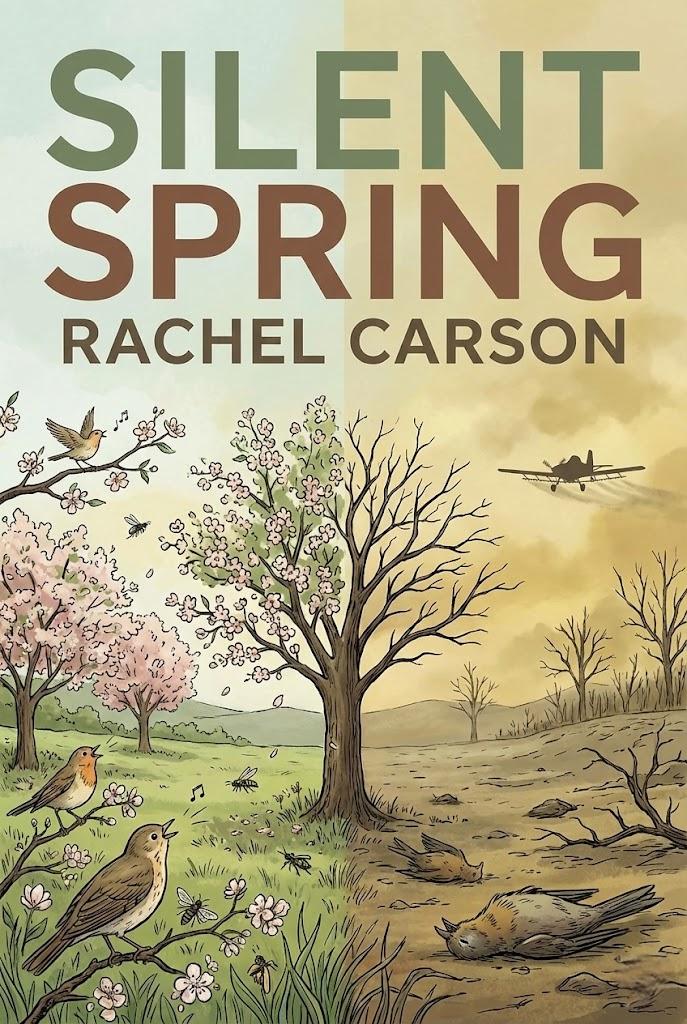
Published: 1962
Rachel Carson’s exposé of pesticide dangers — the book that launched the modern environmental movement.
Core Insight
We are poisoning the environment with chemicals, and the poison is coming back to us through the food chain. The “silent spring” is one where birds have died from pesticides.
The Argument
DDT and Other Pesticides After World War II, DDT and similar chemicals were sprayed widely to control insects. Carson documented how these poisons accumulated in the food chain — killing birds, fish, and threatening human health.
Interconnection Nature is a web. You cannot poison one species without affecting others. Chemicals sprayed on farmland end up in water, soil, animals — and us.
Industry Deception Chemical companies knew the dangers but suppressed evidence and attacked Carson. The pattern — industry covering up harm — has repeated with tobacco, fossil fuels, and more.
Impact
Silent Spring led to the ban on DDT in the US and the creation of the Environmental Protection Agency. It remains essential reading.
Key Takeaway: Environmental destruction is not inevitable — but preventing it requires awareness, courage, and action.
中文书名:《寂静的春天》
核心思想
我们正在用化学品毒害环境,毒素通过食物链返回到我们身上。“寂静的春天"是鸟儿因杀虫剂而死亡的春天。
论证
DDT和其他杀虫剂 二战后,DDT和类似的化学品被广泛喷洒以控制昆虫。卡森记录了这些毒素如何在食物链中积累——杀死鸟类、鱼类,并威胁人类健康。
相互联系 自然是一张网。你不能毒害一个物种而不影响其他物种。喷洒在农田上的化学品最终进入水、土壤、动物——还有我们。
行业欺骗 化学公司知道危险但压制证据并攻击卡森。这种模式——行业掩盖危害——在烟草、化石燃料等方面重复出现。
影响
《寂静的春天》导致DDT在美国被禁止,并促成了环境保护局的成立。它仍然是必读书目。
核心启示: 环境破坏不是不可避免的——但防止它需要意识、勇气和行动。
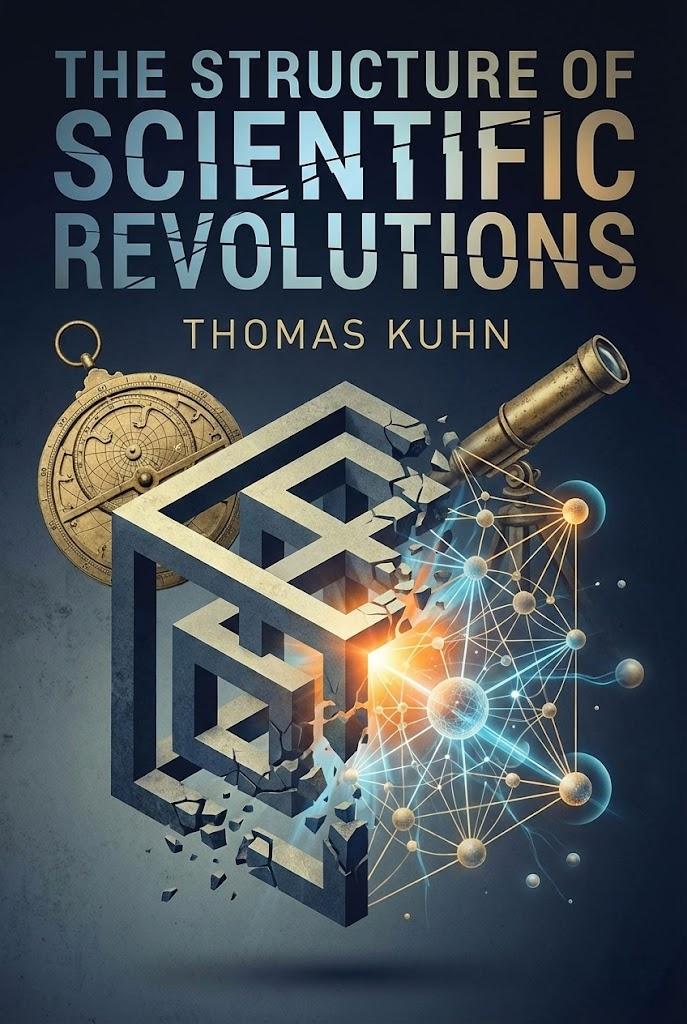
Published: 1962
Thomas Kuhn’s revolutionary theory of how science actually changes — not gradually but through paradigm shifts.
Core Insight
Science doesn’t progress smoothly by accumulation. It lurches forward through revolutions that overturn established ways of thinking.
Key Concepts
Normal Science Most scientific work solves puzzles within an accepted framework (paradigm). Scientists don’t question fundamentals — they extend and refine.
Paradigm A shared set of assumptions, methods, and exemplary solutions that define a field. Examples: Newtonian mechanics, Ptolemaic astronomy.
Anomalies Observations that don’t fit the paradigm. At first they’re ignored or explained away. But when enough accumulate…
Crisis The paradigm can no longer handle the anomalies. Scientists become willing to consider radical alternatives.
Revolution (Paradigm Shift) A new paradigm takes over — not by proving the old wrong (they’re incommensurable) but by attracting converts who find it more useful.
Implications
Science is not purely rational progress toward truth. Social factors, aesthetics, and generational change all play roles.
Key Takeaway: Revolutions in thought are rare but transformative. What seems impossible under one paradigm becomes obvious under another.
中文书名:《科学革命的结构》
核心思想
科学不是通过积累平稳进步的。它通过推翻既有思维方式的革命跳跃前进。
核心概念
常规科学 大多数科学工作在一个被接受的框架(范式)内解决谜题。科学家不质疑基本面——他们扩展和完善。
范式 一套定义一个领域的共享假设、方法和典范解法。例如:牛顿力学、托勒密天文学。
反常 不符合范式的观察。起初它们被忽视或解释掉。但当积累足够多时…
危机 范式无法再处理反常。科学家变得愿意考虑激进的替代方案。
革命(范式转移) 一个新范式接管——不是通过证明旧的错误(它们是不可通约的),而是通过吸引发现它更有用的皈依者。
含义
科学不是纯粹理性地朝着真理进步。社会因素、美学和代际变化都发挥作用。
核心启示: 思想的革命是罕见的但是变革性的。在一种范式下似乎不可能的事情,在另一种范式下变得显而易见。
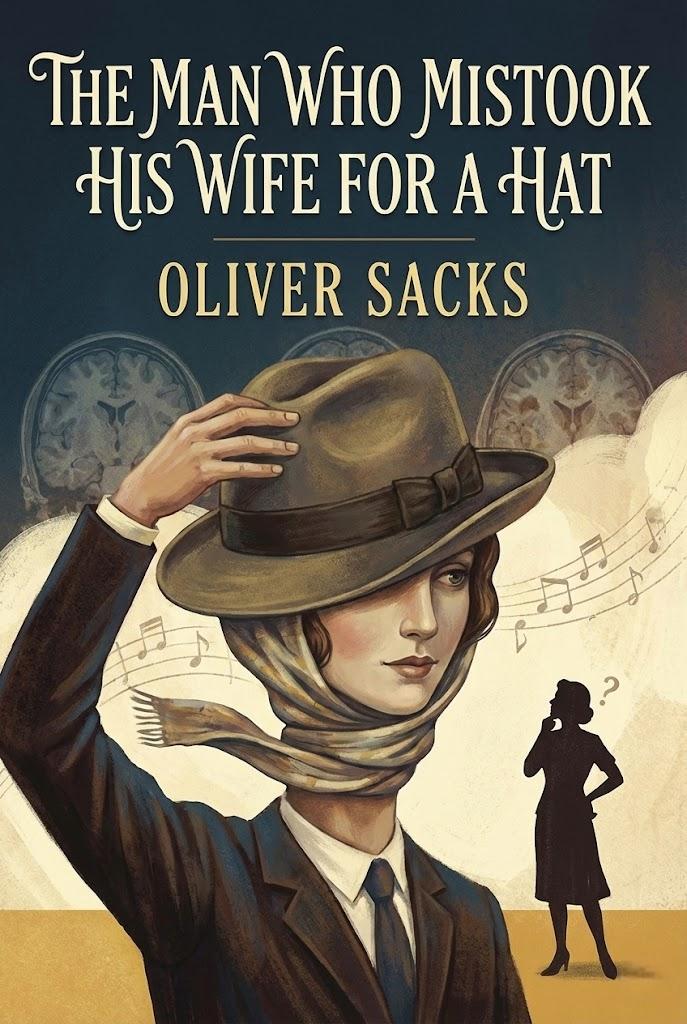
Published: 1985
Oliver Sacks’s case studies of patients with neurological disorders — revealing the strangeness of the brain and the resilience of identity.
Core Insight
Neurological disorders are not just deficits — they can reveal the hidden depths of the mind and the creative adaptations humans make.
The Cases
The Man Who Mistook His Wife for a Hat Dr. P, a musician with visual agnosia, couldn’t recognize faces or objects — yet could still teach and perform music.
The Lost Mariner Jimmie, with severe amnesia, lived forever in 1945 — yet found meaning through music and religious devotion.
Witty Ticcy Ray A man with severe Tourette’s syndrome had to choose between the creative energy of his tics and the calm of medication.
Themes
The Brain’s Strangeness: Our sense of reality, identity, and self is more fragile than we imagine.
Adaptation and Creativity: Patients often develop remarkable compensations for their losses.
The Person Behind the Patient: Sacks treats patients as whole people, not collections of symptoms.
Key Takeaway: The brain is stranger than we imagine — and the human spirit more resilient.
中文书名:《错把妻子当帽子的人》
核心思想
神经系统疾病不仅仅是缺陷——它们可以揭示心灵的隐藏深度和人类做出的创造性适应。
案例
错把妻子当帽子的人 P博士,一位患有视觉失认症的音乐家,无法识别面孔或物体——但仍然可以教学和表演音乐。
迷失的水手 吉米,患有严重失忆症,永远活在1945年——但通过音乐和宗教信仰找到了意义。
机智的抽动雷 一个患有严重图雷特综合征的人必须在抽动的创造性能量和药物的平静之间做出选择。
主题
大脑的奇异性:我们对现实、身份和自我的感觉比我们想象的更脆弱。
适应与创造力:患者通常会为他们的损失发展出非凡的补偿。
患者背后的人:萨克斯把患者当作完整的人,而不是症状的集合。
核心启示: 大脑比我们想象的更奇怪——人类精神更具韧性。
Published: 2014
Elizabeth Kolbert’s Pulitzer-winning account of the mass extinction now underway — caused by humans.
Core Insight
We are living through one of the greatest mass extinctions in Earth’s history. The Sixth Extinction is caused not by asteroids or volcanoes, but by us.
The Evidence
Kolbert travels the world documenting species on the edge:
- Panamanian golden frogs killed by a fungus spread by human travel
- Great Barrier Reef coral dying from ocean acidification
- Sumatran rhinos driven to extinction by habitat loss
The Five Previous Extinctions
Earth has experienced five mass extinctions before — the most famous killed the dinosaurs. Each time, 70-90% of species were wiped out.
How Humans Cause Extinction
- Habitat destruction: Forests cleared, wetlands drained
- Invasive species: Humans move species around the globe
- Climate change: Too fast for many species to adapt
- Ocean acidification: CO₂ makes oceans more acidic
- Direct killing: Hunting, fishing, poaching
The Scale
We are losing species 100-1000 times faster than the natural “background” rate.
Key Takeaway: We are changing the world at a pace unprecedented in geological history. What happens next is up to us.
中文书名:《大灭绝时代》
核心思想
我们正在经历地球历史上最大规模的大灭绝之一。第六次大灭绝不是由小行星或火山造成的,而是由我们造成的。
证据
科尔伯特周游世界,记录濒临灭绝的物种:
- 巴拿马金蛙被人类旅行传播的真菌杀死
- 大堡礁珊瑚因海洋酸化而死亡
- 苏门答腊犀牛因栖息地丧失而灭绝
前五次大灭绝
地球之前经历过五次大灭绝——最著名的那次杀死了恐龙。每次都有70-90%的物种被消灭。
人类如何导致灭绝
- 栖息地破坏:森林被砍伐,湿地被排干
- 入侵物种:人类将物种带到世界各地
- 气候变化:太快了,许多物种无法适应
- 海洋酸化:二氧化碳使海洋更加酸性
- 直接杀戮:狩猎、捕鱼、偷猎
规模
我们正在以比自然"背景"速率快100-1000倍的速度失去物种。
核心启示: 我们正在以地质历史上前所未有的速度改变世界。接下来会发生什么取决于我们。

Published: 1968
James Watson’s controversial memoir of discovering DNA’s structure with Francis Crick — science as it really happens.
Core Insight
The discovery of DNA’s structure was not a calm, logical process. It involved competition, rivalry, intuition, luck, and questionable ethics.
The Story
In 1953, Watson and Crick at Cambridge raced against Linus Pauling at Caltech to discover DNA’s structure. Using X-ray crystallography data from Rosalind Franklin (without her permission), they built models until they found the double helix.
The Controversy
Rosalind Franklin Franklin’s crucial X-ray work was shared with Watson without her knowledge. She died before the Nobel Prize (1962) and is often excluded from the credit she deserves.
Watson’s Portraits The book portrays some scientists unfairly, particularly Franklin. Watson later expressed regret.
Why It Matters
Despite its flaws, the book reveals science as a messy human endeavor — driven by ambition, personality, and chance as much as by pure reason.
Key Takeaway: Great discoveries are not made by dispassionate geniuses but by imperfect humans caught up in the thrill of the hunt.
中文书名:《双螺旋》
核心思想
DNA结构的发现不是一个平静、有逻辑的过程。它涉及竞争、对抗、直觉、运气和可疑的伦理。
故事
1953年,剑桥的沃森和克里克与加州理工学院的莱纳斯·鲍林竞争发现DNA的结构。使用罗莎琳德·富兰克林的X射线晶体学数据(未经她许可),他们建造模型直到找到双螺旋。
争议
罗莎琳德·富兰克林 富兰克林至关重要的X射线工作在她不知情的情况下被分享给了沃森。她在诺贝尔奖(1962年)之前去世,经常被排除在她应得的荣誉之外。
沃森的描绘 这本书不公正地描绘了一些科学家,特别是富兰克林。沃森后来表示遗憾。
为什么它重要
尽管有缺陷,这本书揭示了科学是一项混乱的人类努力——由野心、个性和机会驱动,就像由纯粹理性驱动一样。
核心启示: 伟大的发现不是由冷静的天才做出的,而是由卷入追寻刺激中的不完美的人类做出的。
History & Civilization
Published: 2011
A sweeping history of humankind — from the Cognitive Revolution 70,000 years ago to the present day.
Core Insight
What made Homo sapiens the dominant species on Earth? Our ability to create and believe in shared fictions — religions, nations, money, human rights.
Three Revolutions
Cognitive Revolution (~70,000 years ago): Sapiens developed language capable of discussing abstract concepts and fiction.
Agricultural Revolution (~12,000 years ago): Humans domesticated plants and animals — but Harari calls it “history’s biggest fraud” because it made life harder for most people.
Scientific Revolution (~500 years ago): The admission “we don’t know” unleashed unprecedented power to discover and control.
Key Ideas
Imagined Orders: Money, corporations, and nations exist only because we collectively believe in them.
The Unification of Humankind: Despite diversity, humanity is converging on shared myths — especially money and empire.
What Comes Next?: Biotechnology and AI may create beings as different from us as we are from Neanderthals.
Key Takeaway: Much of what we take as “natural” is actually constructed. Understanding our history reveals our future’s possibilities.
中文书名:《人类简史》
核心思想
是什么让智人成为地球上的主导物种?我们创造和相信共同虚构的能力——宗教、国家、货币、人权。
三次革命
认知革命(约7万年前):智人发展出能够讨论抽象概念和虚构事物的语言。
农业革命(约1.2万年前):人类驯化了植物和动物——但赫拉利称其为"历史上最大的骗局",因为它使大多数人的生活变得更艰难。
科学革命(约500年前):“我们不知道"的承认释放了前所未有的发现和控制力量。
核心观点
想象的秩序:货币、公司和国家只因为我们集体相信它们而存在。
人类的统一:尽管多样性存在,人类正在向共同的神话趋同——尤其是金钱和帝国。
接下来会发生什么?:生物技术和人工智能可能创造出与我们的差异就像我们与尼安德特人的差异一样大的存在。
核心启示: 我们认为"自然"的很多东西实际上是建构的。理解我们的历史揭示了未来的可能性。
Published: 1997
Jared Diamond’s explanation of why Eurasians came to dominate the world — and why it’s not about racial superiority.
Core Insight
Europeans conquered the Americas, Africa, and Australia not because of innate superiority but because of geography — the luck of their environment.
The Question
Why did Europeans conquer Native Americans rather than the reverse? The traditional answer implied racial hierarchy. Diamond demolishes this.
The Answer: Geographic Luck
Domesticable Plants and Animals Eurasia had wheat, barley, rice, horses, cattle, pigs, sheep. The Americas had corn and llamas. Africa had few domesticable animals.
East-West vs. North-South Axis Crops spread easily along the same latitude (similar climates). Eurasia is wide; the Americas and Africa are tall. Agriculture spread faster in Eurasia.
Disease Living with domesticated animals gave Eurasians immunity to smallpox, measles, and flu — which then devastated indigenous populations on contact.
Implications
History’s inequalities stem from environmental factors, not biological ones. This challenges racist explanations for global power differences.
Key Takeaway: Geography shapes destiny. But understanding this can help us build a more equitable future.
中文书名:《枪炮、病菌与钢铁》
核心思想
欧洲人征服美洲、非洲和澳大利亚不是因为天生的优越性,而是因为地理——他们环境的运气。
问题
为什么是欧洲人征服了美洲原住民,而不是相反?传统答案暗示种族等级。戴蒙德粉碎了这一点。
答案:地理运气
可驯化的植物和动物 欧亚大陆有小麦、大麦、水稻、马、牛、猪、羊。美洲有玉米和羊驼。非洲几乎没有可驯化的动物。
东西向 vs. 南北向轴 作物沿着相同纬度(相似气候)容易传播。欧亚大陆是宽的;美洲和非洲是长的。农业在欧亚大陆传播更快。
疾病 与驯化动物一起生活使欧亚人对天花、麻疹和流感产生免疫力——这些疾病随后在接触时摧毁了土著人口。
含义
历史的不平等源于环境因素,而非生物因素。这挑战了对全球权力差异的种族主义解释。
核心启示: 地理塑造命运。但理解这一点可以帮助我们建设一个更公平的未来。
Published: 2003
Bill Bryson’s witty tour through science — from the Big Bang to the rise of civilization.
Core Insight
Science is accessible and wondrous. You don’t need a PhD to appreciate how extraordinary our understanding of the universe has become.
The Approach
Bryson — a travel writer, not a scientist — asked experts to explain their fields in plain language. The result is a delightful journey through:
- Cosmology (how big is the universe?)
- Geology (how old is the Earth?)
- Chemistry (what are we made of?)
- Biology (how did life begin?)
- Paleontology (who were our ancestors?)
Key Themes
Scientists Are Human The book is full of fascinating characters — brilliant, eccentric, sometimes petty or obsessive.
How Much We’ve Learned In a few centuries, we’ve understood the atom, evolution, plate tectonics, and the universe’s origin.
How Much We Don’t Know Despite progress, mysteries abound: consciousness, dark matter, the origin of life.
Style
Bryson makes complex topics funny and accessible without dumbing them down.
Key Takeaway: The universe is stranger and more wonderful than we imagine — and we can understand it.
中文书名:《万物简史》
核心思想
科学是可以理解的,也是奇妙的。你不需要博士学位就能欣赏我们对宇宙的理解是多么非凡。
方法
布赖森——一位旅行作家,而非科学家——请专家用通俗语言解释他们的领域。结果是一次愉快的旅程,穿越:
- 宇宙学(宇宙有多大?)
- 地质学(地球有多老?)
- 化学(我们由什么组成?)
- 生物学(生命如何开始?)
- 古生物学(我们的祖先是谁?)
核心主题
科学家是人 这本书充满了迷人的人物——聪明、古怪,有时小气或痴迷。
我们学到了多少 在几个世纪内,我们理解了原子、进化、板块构造和宇宙的起源。
我们不知道多少 尽管有进步,谜团仍然很多:意识、暗物质、生命的起源。
风格
布赖森使复杂的话题变得有趣且易于理解,但不降低难度。
核心启示: 宇宙比我们想象的更奇怪、更奇妙——而我们可以理解它。
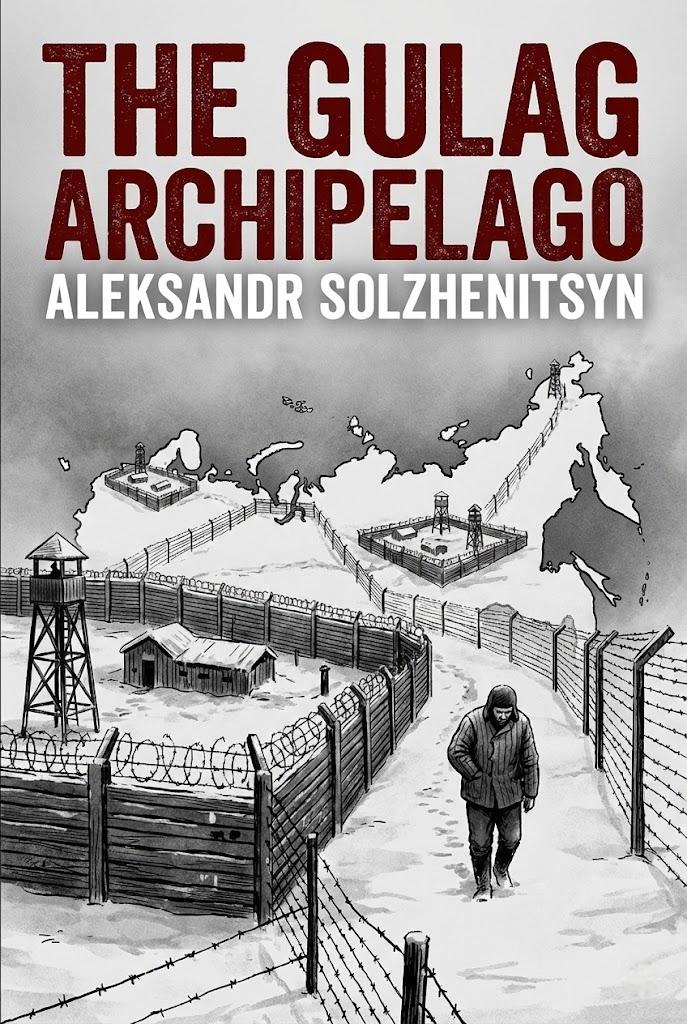
Published: 1973
Solzhenitsyn’s monumental exposé of the Soviet forced labor camp system — based on his own experience and hundreds of testimonies.
Core Insight
The Gulag was not an aberration but the logical outcome of Leninist ideology. When you believe you know what’s best for humanity, terror becomes justified.
The Scale
- 18 million passed through the Gulag
- Millions died — exact numbers remain uncertain
- Camps operated from the 1920s through the 1950s
The System
Arrests: Often arbitrary — quotas to fill, denunciations by neighbors, being in the wrong place.
Interrogation: Torture to extract confessions to imaginary crimes.
Transport: “Ships of the Gulag” — cattle cars across Siberia.
The Camps: Starvation, overwork, cold, disease — designed to extract labor until death.
Moral Examination
Solzhenitsyn doesn’t just document horror — he asks how ordinary people became perpetrators. The line between good and evil runs through every heart.
“Gradually it was disclosed to me that the line separating good and evil passes not through states, nor between classes… but right through every human heart.”
Key Takeaway: Totalitarianism’s evil is banal — committed by ordinary people in the name of higher purposes.
中文书名:《古拉格群岛》
核心思想
古拉格不是一个反常现象,而是列宁主义意识形态的逻辑结果。当你相信你知道什么对人类最好时,恐怖就变得合理了。
规模
- 1800万人经过古拉格
- 数百万人死亡——确切数字仍不确定
- 集中营从1920年代运营到1950年代
体系
逮捕:通常是任意的——要完成配额、邻居的告发、在错误的地方。
审讯:酷刑以获取对想象中的罪行的供词。
运输:“古拉格之船”——穿越西伯利亚的货车。
集中营:饥饿、过度劳动、寒冷、疾病——旨在榨取劳动直到死亡。
道德审视
索尔仁尼琴不仅记录恐怖——他还问普通人是如何成为加害者的。善与恶之间的界限穿过每一颗心。
“逐渐向我揭示的是,善与恶之间的界限不是穿过国家,也不是在阶级之间……而是穿过每一颗人心。”
核心启示: 极权主义的邪恶是平庸的——由普通人以更高目的的名义实施。
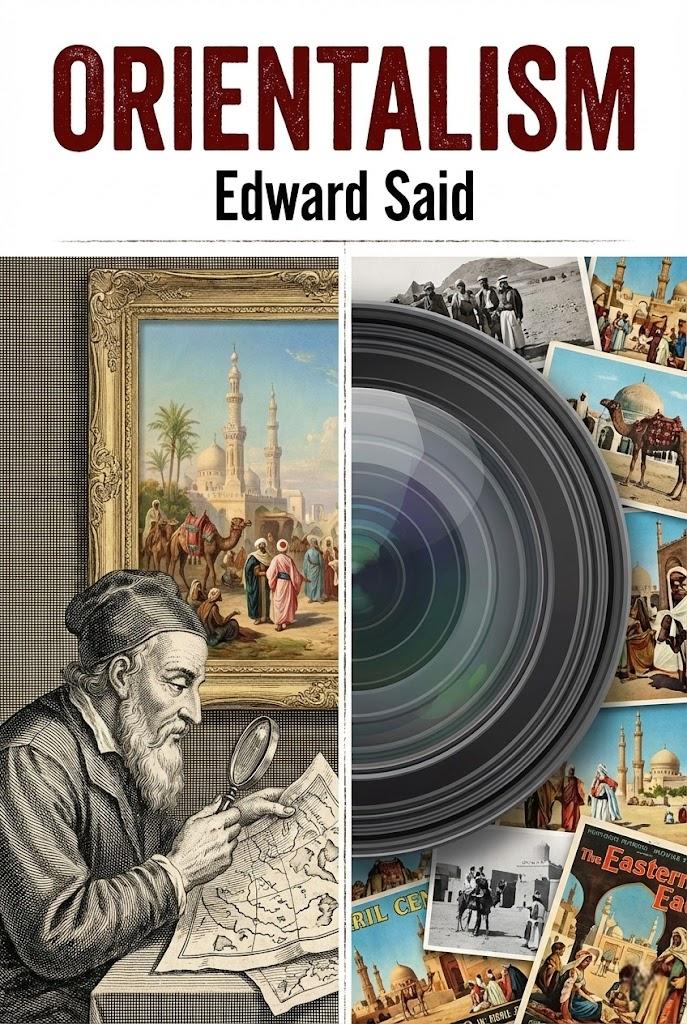
Published: 1978
Edward Said’s foundational critique of how the West has constructed and dominated “the Orient.”
Core Insight
“The Orient” is not a neutral description but a Western invention — a way of defining the East as exotic, backward, and inferior to justify colonial domination.
Key Concepts
Orientalism A system of knowledge and power. Western scholars, artists, and administrators created an image of the East that served Western interests.
The Other The Orient is defined as everything the West is not: irrational, sensual, despotic, unchanging. This “othering” justified colonialism.
Knowledge and Power Scholars were not neutral observers. Their “knowledge” about the East enabled colonial control.
Examples
- Napoleon’s invasion of Egypt brought scholars who catalogued Egypt — turning it into an object of study
- British colonial administrators used “knowledge” of Oriental peoples to rule them
- Literature and art portrayed the East as mysterious and backward
Impact
Orientalism launched postcolonial studies. It forced scholars to examine how knowledge is shaped by power.
Key Takeaway: How we describe others is never neutral. Representations have real consequences.
中文书名:《东方主义》
核心思想
“东方"不是一个中立的描述,而是西方的发明——一种将东方定义为异域、落后和低劣的方式,以证明殖民统治的合理性。
核心概念
东方主义 一种知识和权力的体系。西方学者、艺术家和管理者创造了一种服务于西方利益的东方形象。
他者 东方被定义为西方不是的一切:非理性的、感官的、专制的、不变的。这种"他者化"为殖民主义辩护。
知识与权力 学者不是中立的观察者。他们关于东方的"知识"使殖民控制成为可能。
例子
- 拿破仑入侵埃及时带来了学者,他们对埃及进行了编目——将其变成研究对象
- 英国殖民管理者利用对东方人民的"知识"来统治他们
- 文学和艺术将东方描绘成神秘和落后的
影响
《东方主义》开启了后殖民研究。它迫使学者审视知识是如何被权力塑造的。
核心启示: 我们如何描述他人从来不是中立的。表述有真实的后果。
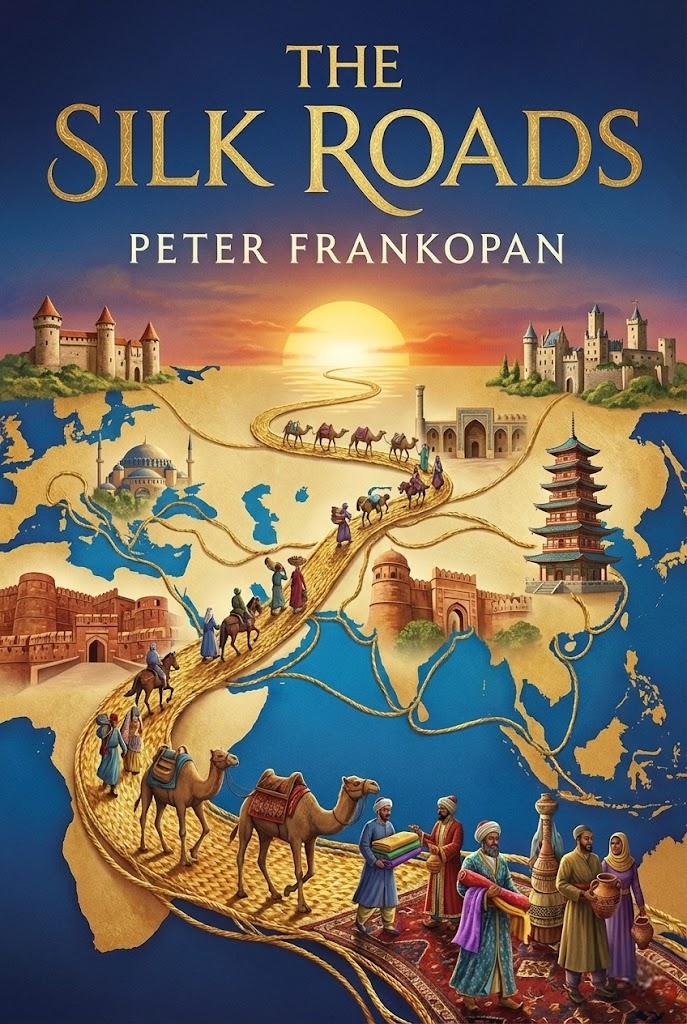
Published: 2015
Peter Frankopan’s recentering of world history — away from Europe, toward the networks that connected civilizations.
Core Insight
The traditional story of Western civilization rising from Greece and Rome is too narrow. The real engine of history was the Silk Roads — the trade routes connecting East and West.
A Different Perspective
For millennia, the world’s richest and most advanced civilizations were in the East — Persia, India, China. Europe was a backwater.
The Silk Roads were not just about silk. They carried:
- Ideas (religions, philosophies, technologies)
- Goods (spices, textiles, paper, gunpowder)
- Diseases (plague spread along trade routes)
Key Reframings
The Rise of the West Europe’s rise was recent and contingent — driven partly by the discovery of the Americas and the exploitation of their resources.
Today’s Struggles The Middle East’s conflicts make more sense when you see the region as the world’s crossroads — always contested because of its strategic importance.
Looking Forward
Frankopan argues the world’s center of gravity is shifting back East. The new Silk Roads (China’s Belt and Road Initiative) are reshaping global power.
Key Takeaway: Western-centric history is a distortion. The world has always been interconnected.
中文书名:《丝绸之路》
核心思想
西方文明从希腊和罗马崛起的传统叙事太狭隘了。历史的真正引擎是丝绸之路——连接东西方的贸易路线。
不同的视角
几千年来,世界上最富裕、最先进的文明在东方——波斯、印度、中国。欧洲是一个落后地区。
丝绸之路不仅仅是关于丝绸。它传播了:
- 思想(宗教、哲学、技术)
- 商品(香料、纺织品、纸张、火药)
- 疾病(瘟疫沿着贸易路线传播)
核心重构
西方的崛起 欧洲的崛起是最近的、偶然的——部分是由美洲的发现和对其资源的开发推动的。
今天的斗争 当你把中东地区看作世界的十字路口时,该地区的冲突就更有意义了——因为其战略重要性而总是被争夺。
展望未来
弗兰科潘认为,世界的重心正在转移回东方。新丝绸之路(中国的一带一路倡议)正在重塑全球权力格局。
核心启示: 以西方为中心的历史是一种扭曲。世界一直是相互联系的。
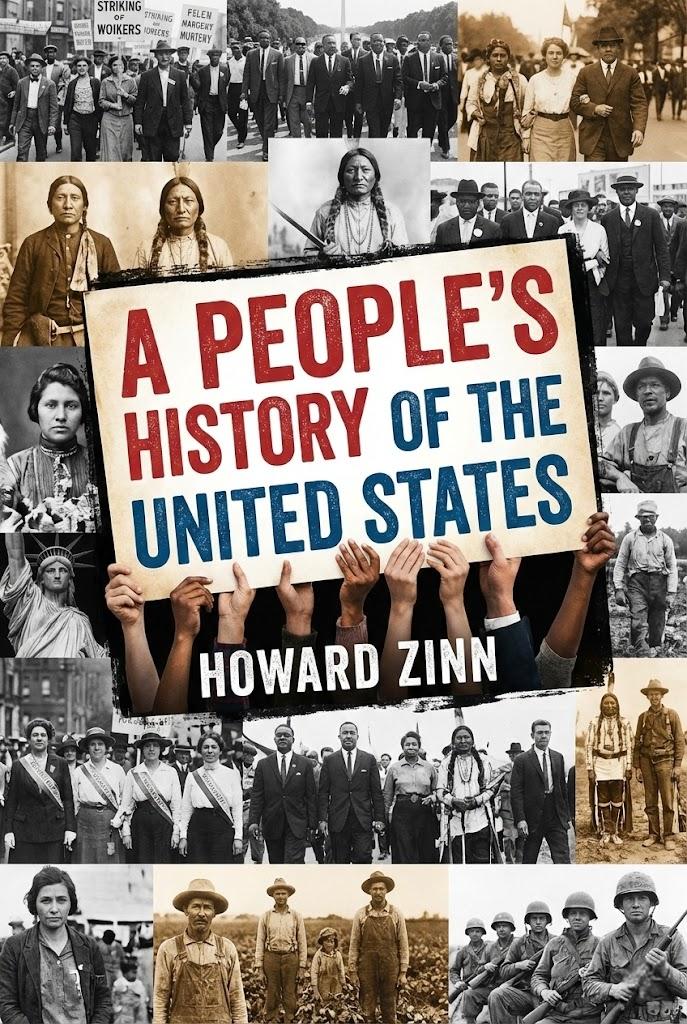
Published: 1980
Howard Zinn’s history of America from the perspective of those excluded from traditional narratives — workers, women, minorities, and the poor.
Core Insight
American history as usually taught celebrates great men and glosses over exploitation. Zinn tells the story from the bottom up — those who suffered and resisted.
What You Won’t Find Elsewhere
Columbus: Not a hero but the initiator of genocide. Zinn begins with the devastation of the Taino people.
The Founding Fathers: Wealthy white men protecting their property interests — not populist democrats.
Labor History: The violent suppression of strikes, the Triangle Shirtwaist fire, the struggles that won the 8-hour day.
The Civil Rights Movement: Not just Martin Luther King Jr. but the grassroots organizers whose names we don’t know.
Criticism
Some historians argue Zinn oversimplifies, ignoring progress and painting all American elites as villains.
Why It Matters
Whatever its flaws, A People’s History forces readers to question whose stories get told — and whose are erased.
Key Takeaway: History is written by the powerful. Reading against the grain reveals a different America.
中文书名:《美国人民的历史》
核心思想
通常教授的美国历史颂扬伟人,掩盖剥削。津恩从底层讲述这个故事——那些受苦和抵抗的人。
你在别处找不到的内容
哥伦布:不是英雄,而是种族灭绝的发起者。津恩从泰诺人的毁灭开始。
开国元勋:保护自己财产利益的富有白人——而非民粹主义民主派。
劳工历史:对罢工的暴力镇压、三角衬衣厂火灾、争取8小时工作日的斗争。
民权运动:不仅仅是马丁·路德·金,还有我们不知道名字的草根组织者。
批评
一些历史学家认为津恩过于简单化,忽视进步,把所有美国精英都描绘成恶棍。
为什么它重要
无论其缺陷如何,《美国人民的历史》迫使读者质疑谁的故事被讲述——谁的故事被抹去。
核心启示: 历史是由强者书写的。逆向阅读揭示了一个不同的美国。
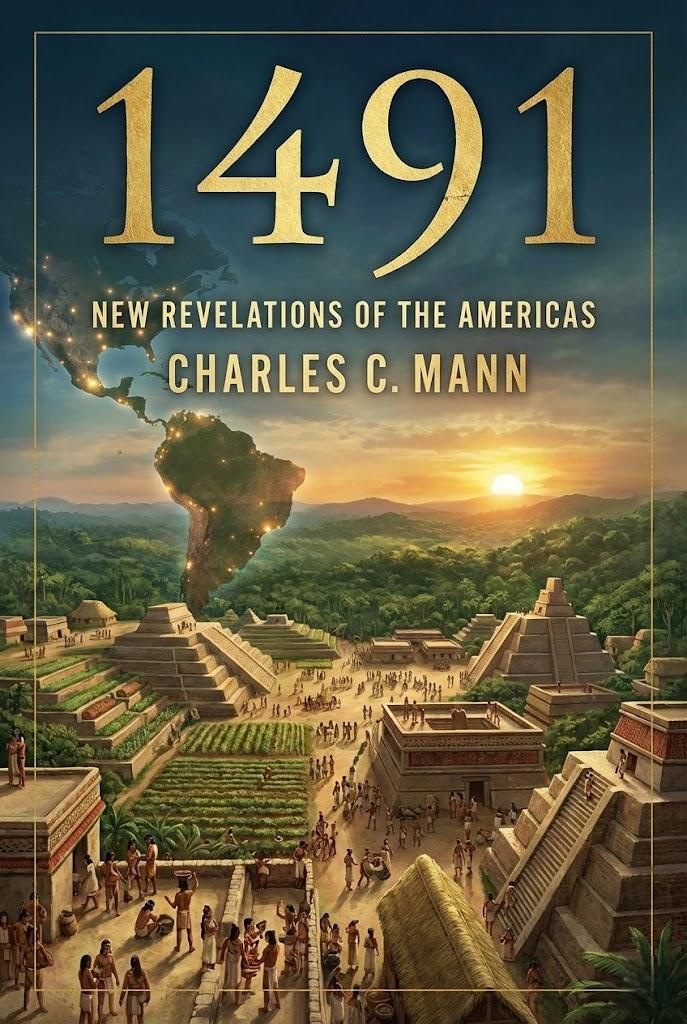
Published: 2005
Charles Mann’s revelations about the Americas before Columbus — more populous, more sophisticated, and older than we thought.
Core Insight
The Americas in 1491 were not a pristine wilderness but home to vast, complex civilizations that rivaled — and in some ways exceeded — those of Europe.
Key Revelations
Population The Americas may have had 100 million people in 1491 — more than Europe. Disease killed 90%+ after contact, making the land seem “empty” to later colonists.
Civilizations
- The Maya had advanced astronomy and mathematics
- The Inca built an empire rivaling Rome without the wheel or iron
- Cahokia (near modern St. Louis) was larger than London in 1250
Agriculture The “Amazon jungle” was partly cultivated. Indigenous peoples shaped landscapes Europeans took for “natural.”
Technology Mesoamericans had writing, calendars, and cities. Andean peoples had sophisticated record-keeping (quipu) and freeze-drying.
Why It Matters
The myth of the “empty wilderness” justified conquest. Understanding what existed before helps us reckon with what was lost.
Key Takeaway: The Americas were not a “New World” — they had histories as deep as any civilization on Earth.
中文书名:《1491:前哥伦布时代美洲启示录》
核心思想
1491年的美洲不是原始的荒野,而是拥有与欧洲相媲美——在某些方面甚至超越——的广阔复杂文明的家园。
核心发现
人口 1491年美洲可能有1亿人——比欧洲还多。接触后疾病杀死了90%以上的人,使这片土地在后来的殖民者看来是"空的"。
文明
- 玛雅人有先进的天文学和数学
- 印加人建立了一个可与罗马相媲美的帝国,却没有轮子或铁器
- 卡霍基亚(靠近现代圣路易斯)在1250年比伦敦还大
农业 “亚马逊丛林"部分是被耕种的。土著人民塑造了欧洲人认为是"自然的"景观。
技术 中美洲人有文字、日历和城市。安第斯人民有复杂的记录保存(奇普)和冻干技术。
为什么它重要
“空旷荒野"的神话为征服辩护。了解之前存在的东西有助于我们清算失去了什么。
核心启示: 美洲不是"新世界”——它们有着与地球上任何文明一样深厚的历史。
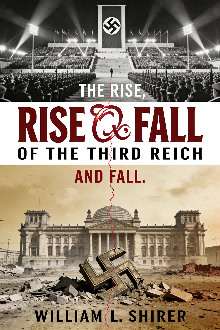
Published: 1960
William Shirer’s comprehensive chronicle of Nazi Germany — from Hitler’s rise to the regime’s destruction.
Core Insight
How did one of the world’s most civilized nations descend into barbarism? Shirer, a journalist who witnessed it, provides the definitive account.
The Journalist’s Advantage
Shirer reported from Berlin in the 1930s. He saw the parades, heard the speeches, felt the atmosphere. After the war, he accessed captured Nazi documents.
Key Phases
The Rise (1919-1933): From failed painter to Chancellor — exploiting resentment, economic crisis, and weak democracy.
Consolidation (1933-1939): Burning the Reichstag, eliminating rivals, building the war machine.
War and Destruction (1939-1945): Blitzkrieg, occupation, the Holocaust, and eventual total defeat.
Themes
The Banality of Evil: Many perpetrators were ordinary bureaucrats.
The Failure to Resist: Why did so few Germans oppose Hitler?
The Role of Individuals: Could one assassin have changed history?
Legacy
Shirer’s book remains a warning: civilization is fragile; democracy requires vigilance.
Key Takeaway: The unthinkable can happen. Understanding how it happened is essential to preventing it.
中文书名:《第三帝国的兴亡》
核心思想
世界上最文明的国家之一是如何堕入野蛮的?亲眼目睹这一切的记者夏伊勒提供了权威叙述。
记者的优势
夏伊勒在1930年代从柏林报道。他看到了游行,听到了演讲,感受到了气氛。战后,他获得了缴获的纳粹文件。
关键阶段
崛起(1919-1933):从失败的画家到总理——利用怨恨、经济危机和虚弱的民主。
巩固(1933-1939):焚烧国会大厦,消灭对手,建设战争机器。
战争与毁灭(1939-1945):闪电战、占领、大屠杀,最终彻底失败。
主题
邪恶的平庸:许多加害者是普通的官僚。
抵抗的失败:为什么很少有德国人反对希特勒?
个人的作用:一个刺客能改变历史吗?
遗产
夏伊勒的书仍然是一个警告:文明是脆弱的;民主需要警惕。
核心启示: 不可思议的事情可能发生。了解它是如何发生的对于防止它至关重要。
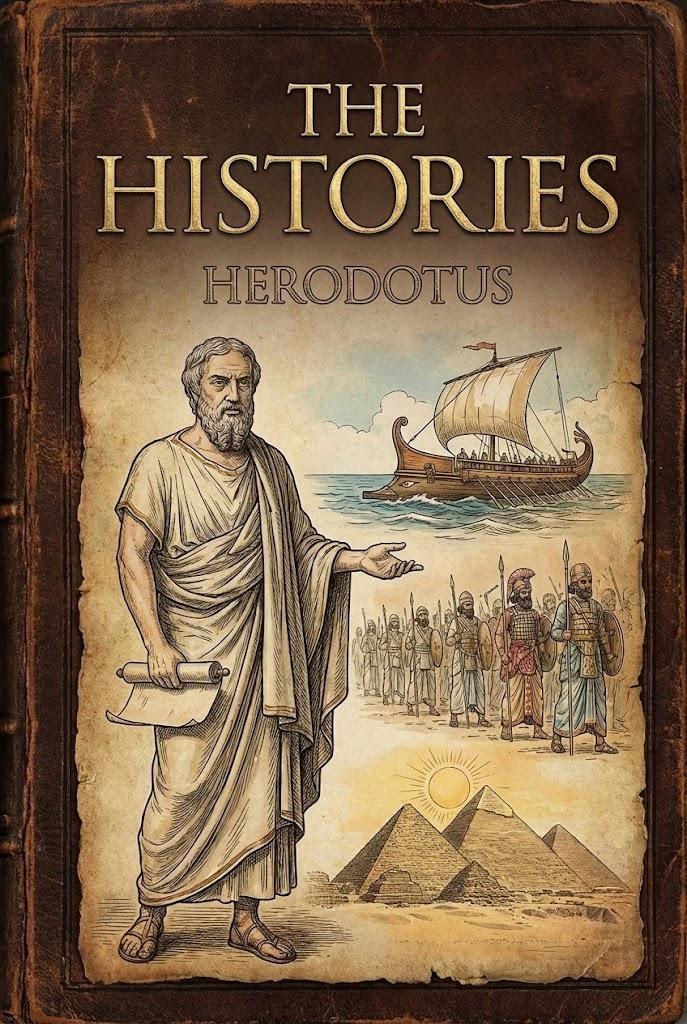
Published: ~430 BCE
The first work of history in the Western tradition — Herodotus’s account of the Greek-Persian Wars and the cultures involved.
Core Insight
Herodotus doesn’t just chronicle events — he investigates causes, compares cultures, and tells stories. He is at once historian, anthropologist, and storyteller.
The Method
“This is the display of the inquiry (historia) of Herodotus of Halicarnassus…”
The word “history” comes from his Greek word for “inquiry.” Herodotus traveled widely, interviewed witnesses, and examined evidence.
What’s Covered
- The rise of the Persian Empire
- The Ionian Revolt and its aftermath
- Marathon, Thermopylae, Salamis — the great Persian invasions of Greece
- Detours into Egyptian, Scythian, and other cultures
The Critical Tradition
Later Greeks called Herodotus both “Father of History” and “Father of Lies.” He includes myths, hearsay, and fantastic tales. Modern scholars debate what to trust.
Why It Endures
Herodotus celebrates human diversity. He’s curious about everyone — Greeks, Persians, Egyptians. His humane, inquisitive spirit transcends any single culture.
Key Takeaway: Curiosity about others is the beginning of understanding. Herodotus taught us to ask: “How do they live? Why do they do what they do?”
中文书名:《历史》
核心思想
希罗多德不仅仅记录事件——他调查原因,比较文化,讲述故事。他既是历史学家,又是人类学家,也是说书人。
方法
“这是哈利卡纳索斯的希罗多德的调查(historia)的展示……”
“历史"一词来自他的希腊语"调查”。希罗多德广泛旅行,采访证人,审查证据。
涵盖内容
- 波斯帝国的崛起
- 爱奥尼亚起义及其后果
- 马拉松、温泉关、萨拉米斯——波斯对希腊的伟大入侵
- 绕道进入埃及、斯基泰和其他文化
批评传统
后来的希腊人称希罗多德为"历史之父"和"谎言之父"。他包括神话、传闻和奇幻故事。现代学者争论什么可以信任。
为什么它经久不衰
希罗多德颂扬人类的多样性。他对每个人都感到好奇——希腊人、波斯人、埃及人。他人道主义的、好奇的精神超越了任何单一文化。
核心启示: 对他人的好奇是理解的开始。希罗多德教我们问:“他们如何生活?他们为什么做他们所做的事?”
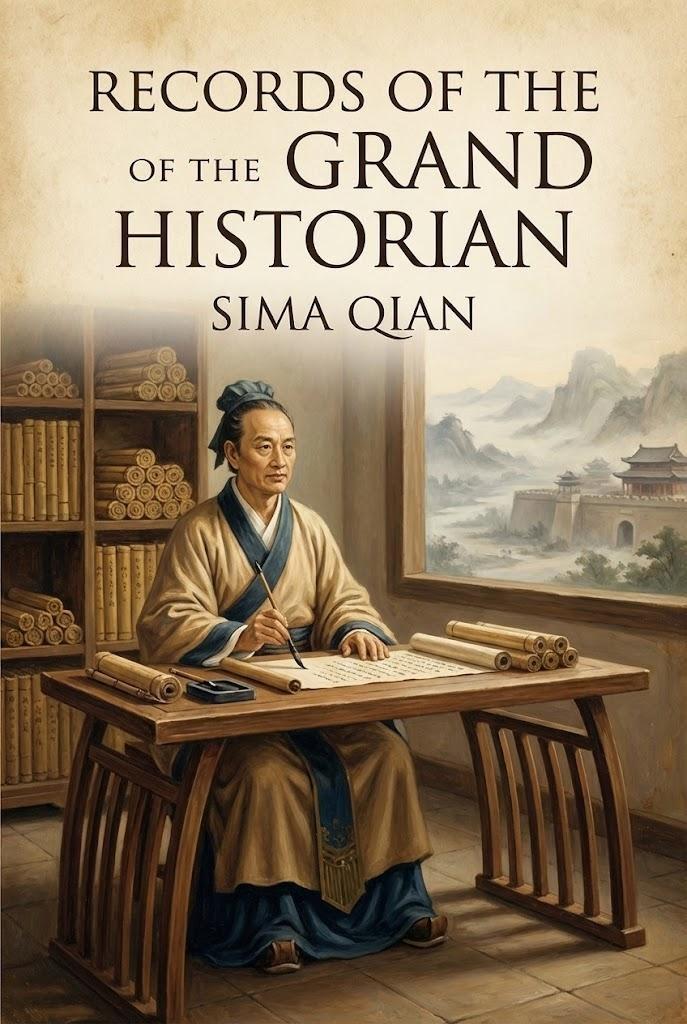
Published: ~94 BCE
Sima Qian’s monumental history of China — the model for Chinese historical writing for two millennia.
Core Insight
Sima Qian didn’t just record events — he created a comprehensive system for understanding the past. His work shaped how Chinese civilization understood itself.
The Structure
Basic Annals (本纪): Chronological records of emperors and dynasties.
Tables (表): Chronological charts organizing dates and events.
Treatises (书): Analyses of institutions, economics, and culture.
Hereditary Houses (世家): Stories of feudal lords and important families.
Biographies (列传): Accounts of individuals — from generals to assassins to philosophers.
The Man Behind the Work
Sima Qian inherited the project from his father, Sima Tan. When he defended a general who had surrendered to the enemy, he was castrated as punishment. He survived to complete his life’s work.
“I wished to explore all that concerns heaven and man, to penetrate the changes of the past and present…”
Legacy
The Shiji became the template for all subsequent Chinese dynastic histories. Its influence on Chinese historiography is unparalleled.
Key Takeaway: History is not just a chronicle but an investigation into human nature and the patterns of change.
中文书名:《史记》
核心思想
司马迁不仅仅是记录事件——他创造了一个理解过去的完整体系。他的作品塑造了中华文明如何理解自身。
结构
本纪:帝王和朝代的编年记录。
表:组织日期和事件的年表。
书:对制度、经济和文化的分析。
世家:诸侯和重要家族的故事。
列传:个人的记述——从将军到刺客到哲学家。
作品背后的人
司马迁从他父亲司马谈那里继承了这个项目。当他为一位向敌人投降的将军辩护时,他被处以宫刑。他幸存下来完成了他毕生的工作。
“究天人之际,通古今之变,成一家之言。”
遗产
《史记》成为所有后续中国正史的模板。它对中国史学的影响是无与伦比的。
核心启示: 历史不仅仅是编年史,而是对人性和变化规律的探究。
The Literary Canon (Classic Fiction)
Published: 1866
Raskolnikov’s crime and psychological unraveling — Dostoevsky’s exploration of guilt, redemption, and the limits of rational morality.
Core Insight
Can murder be justified by philosophy? Raskolnikov thinks he’s a “superior man” above ordinary morals. The novel tests this theory to destruction.
The Crime
Poor student Raskolnikov murders a pawnbroker he considers a “louse” — a worthless parasite whose money could do good. But the murder of her innocent sister follows, and with it, psychological collapse.
Key Themes
The Übermensch Theory Raskolnikov believes great men (Napoleon, etc.) have the right to transgress moral law. The novel asks: Is this freedom or madness?
Guilt and Confession Unable to escape his conscience, Raskolnikov spirals into fever, paranoia, and eventually confession.
Redemption Through Suffering Sonia, a prostitute forced into degradation to support her family, represents the path of redemption through faith and love.
The Detective
Porfiry Petrovich, the police investigator, is a fascinating cat-and-mouse counterpart who psychologically dismantles Raskolnikov without direct evidence.
Key Takeaway: Reason without compassion leads to monstrous conclusions. We are not gods, and morality is not optional.
中文书名:《罪与罚》
核心思想
谋杀能被哲学证明合理吗?拉斯柯尔尼科夫认为自己是凌驾于普通道德之上的"超人"。小说将这一理论测试到毁灭。
罪行
穷学生拉斯柯尔尼科夫杀害了一个他认为是"虱子"的放债人——一个毫无价值的寄生虫,她的钱可以做好事。但接下来是对她无辜妹妹的谋杀,随之而来的是心理崩溃。
核心主题
超人理论 拉斯柯尔尼科夫相信伟人(拿破仑等)有权逾越道德法则。小说问道:这是自由还是疯狂?
罪与忏悔 无法逃脱良心的谴责,拉斯柯尔尼科夫陷入发烧、偏执,最终坦白。
通过苦难得到救赎 索尼娅,一个为了养家被迫卖淫的妓女,代表着通过信仰和爱获得救赎的道路。
侦探
波尔菲里·彼得罗维奇,警察调查员,是一个迷人的猫鼠游戏对手,他在没有直接证据的情况下从心理上瓦解了拉斯柯尔尼科夫。
核心启示: 没有同情心的理性导致可怕的结论。我们不是神,道德不是可选的。
Published: 1880
Dostoevsky’s final masterpiece — a sprawling family drama that asks the deepest questions about God, evil, and human nature.
Core Insight
If God doesn’t exist, is everything permitted? The novel stages a debate between faith and doubt through four brothers and their dissolute father.
The Brothers
Dmitri (Mitya): Passionate, impulsive, accused of murdering his father.
Ivan: Intellectual atheist, author of “The Grand Inquisitor.”
Alyosha: Gentle, faithful, a novice monk at the novel’s start.
Smerdyakov: Illegitimate half-brother, epileptic, resentful servant.
The Grand Inquisitor
Ivan’s prose poem imagines Jesus returning to Inquisition-era Seville. The Grand Inquisitor arrests him, arguing humanity is too weak for freedom — they need bread, miracles, and authority.
“Man seeks not so much God as the miraculous.”
Key Themes
Theodicy: If God is good, why do children suffer?
Free Will vs. Security: Would humanity trade freedom for certainty?
Redemption: Even the worst sinner can be saved through love.
Key Takeaway: The existence of suffering doesn’t disprove God — but neither does faith answer every question. We must choose how to live anyway.
中文书名:《卡拉马佐夫兄弟》
核心思想
如果上帝不存在,一切都被允许吗?小说通过四兄弟和他们放荡不羁的父亲,上演了一场信仰与怀疑之间的辩论。
兄弟们
德米特里(米佳):热情、冲动,被指控谋杀父亲。
伊凡:知识分子无神论者,“宗教大法官"的作者。
阿辽沙:温和、虔诚,小说开始时是一名见习修士。
斯梅尔迪亚科夫:私生子、癫痫患者、心怀怨恨的仆人。
宗教大法官
伊凡的散文诗想象耶稣回到宗教裁判所时代的塞维利亚。大法官逮捕了他,认为人类太软弱,无法承受自由——他们需要面包、奇迹和权威。
核心主题
神义论:如果上帝是善的,为什么儿童会受苦?
自由意志 vs. 安全:人类会用自由换取确定性吗?
救赎:即使是最坏的罪人也可以通过爱得到拯救。
核心启示: 苦难的存在并不反驳上帝——但信仰也不能回答每一个问题。无论如何,我们必须选择如何生活。

Published: 1877
Leo Tolstoy’s tragic masterpiece — Anna’s doomed passion for Count Vronsky versus Levin’s search for meaning on the land.
Core Insight
“All happy families are alike; each unhappy family is unhappy in its own way.”
The novel opens with one of literature’s most famous lines — and proceeds to prove it through two parallel stories.
Two Paths
Anna Karenina: Trapped in a loveless marriage, Anna falls passionately for the dashing Count Vronsky. She abandons her husband and son. Society punishes her; jealousy destroys her.
Konstantin Levin: A landowner who seeks meaning through work, nature, and faith. His story is semi-autobiographical — Tolstoy working through his own spiritual questions.
Key Themes
Society’s Cruelty: Anna is condemned for what men do freely. The hypocrisy is devastating.
Passion vs. Duty: Anna follows her heart; it leads to destruction. Levin finds peace through duty and family.
The Search for Meaning: Levin’s spiritual journey mirrors Tolstoy’s own crisis of faith.
Marriage and Family: What makes a marriage work? The novel offers no easy answers.
Tolstoy’s Method
Realistic detail so vivid you feel you’re there — at the ball, on the train, in the fields at harvest.
Key Takeaway: Passion can destroy. Meaning is found in ordinary life, work, and love freely given.
中文书名:《安娜·卡列尼娜》
核心思想
“幸福的家庭都是相似的;不幸的家庭各有各的不幸。”
小说以文学史上最著名的开场白之一开篇——然后通过两个平行的故事证明了它。
两条道路
安娜·卡列尼娜:困在没有爱情的婚姻中,安娜疯狂地爱上了英俊的沃伦斯基伯爵。她抛弃了丈夫和儿子。社会惩罚她;嫉妒摧毁了她。
康斯坦丁·列文:一个通过工作、自然和信仰寻找意义的地主。他的故事是半自传体的——托尔斯泰在自己的精神问题上进行探索。
核心主题
社会的残忍:安娜因为男人自由做的事情而被谴责。虚伪是毁灭性的。
激情 vs. 责任:安娜跟随自己的心;这导致了毁灭。列文通过责任和家庭找到了平静。
对意义的追寻:列文的精神旅程反映了托尔斯泰自己的信仰危机。
婚姻与家庭:是什么让婚姻成功?小说没有给出简单的答案。
托尔斯泰的方法
现实主义的细节如此生动,你感觉自己就在那里——在舞会上,在火车上,在收获的田野里。
核心启示: 激情可以毁灭一切。意义在平凡的生活、工作和自由给予的爱中找到。
Published: 1869
Leo Tolstoy’s monumental epic — Russia’s struggle against Napoleon through the lives of five aristocratic families.
Core Insight
History is not made by great men but by the countless small decisions of ordinary people. Napoleon and Kutuzov are less important than the Russian spirit itself.
The Scope
Over 1,200 pages covering:
- Napoleon’s invasion of Russia (1812)
- The Battle of Borodino
- The burning of Moscow
- The French retreat
- And between the battles: balls, hunts, love affairs, births, deaths
Key Characters
Prince Andrei Bolkonsky: Disillusioned aristocrat seeking glory, then meaning, then peace.
Pierre Bezukhov: Wealthy, bumbling idealist who searches through Freemasonry, war, and love.
Natasha Rostova: Full of life, impulsive, capable of great love and great mistakes.
Princess Marya: Devout, self-sacrificing, finding unexpected happiness.
Themes
Free Will vs. Historical Forces: Individual choices matter, but so do vast impersonal currents.
The Search for Meaning: Pierre’s spiritual journey across the novel.
Russian Identity: What makes Russia Russia? Unity in the face of invasion.
War’s Reality: Not glorious but chaotic, terrifying, and sometimes absurd.
Key Takeaway: True heroism is quiet. Meaning is found in love, family, and accepting our small place in the vast stream of history.
中文书名:《战争与和平》
核心思想
历史不是由伟人创造的,而是由普通人无数的小决定创造的。拿破仑和库图佐夫不如俄罗斯精神本身重要。
范围
超过1200页,涵盖:
- 拿破仑入侵俄罗斯(1812年)
- 波罗底诺战役
- 莫斯科大火
- 法军撤退
- 以及战役之间:舞会、狩猎、风流韵事、出生、死亡
关键人物
安德烈·博尔孔斯基公爵:失望的贵族,先寻求荣耀,然后寻求意义,最后寻求平静。
皮埃尔·别祖霍夫:富有、笨拙的理想主义者,通过共济会、战争和爱情寻找答案。
娜塔莎·罗斯托娃:充满生命力,冲动,既能深爱也能犯大错。
玛丽亚公爵小姐:虔诚,自我牺牲,找到了意想不到的幸福。
主题
自由意志 vs. 历史力量:个人选择很重要,但巨大的非个人潮流也同样重要。
对意义的追寻:皮埃尔在整部小说中的精神旅程。
俄罗斯身份:是什么让俄罗斯成为俄罗斯?面对入侵时的团结。
战争的现实:不是光荣的,而是混乱的、可怕的,有时是荒谬的。
核心启示: 真正的英雄主义是安静的。意义在于爱、家庭,以及接受我们在历史长河中的渺小位置。

Published: 1813
Jane Austen’s sparkling comedy of manners — Elizabeth Bennet and Mr. Darcy overcome their flaws to find love.
Core Insight
“It is a truth universally acknowledged, that a single man in possession of a good fortune, must be in want of a wife.”
The ironic opening announces Austen’s themes: marriage, money, and the gap between what society says and what individuals feel.
The Story
The Bennet family has five daughters and no son — meaning their estate will pass to a male cousin. Mrs. Bennet is desperate to marry them off. When wealthy Mr. Bingley and prouder Mr. Darcy arrive, Elizabeth and Darcy clash — she finding him arrogant, he finding her beneath him.
Key Characters
Elizabeth Bennet: Witty, independent, quick to judge — sometimes too quick.
Mr. Darcy: Proud, reserved, capable of deep love once his pride is humbled.
Jane Bennet: Sweet, trusting, almost too good for the world.
Mr. Wickham: Charming, deceitful — evil hidden behind a handsome face.
Themes
Pride and Prejudice: Both Elizabeth and Darcy must overcome their title flaws.
Marriage and Money: Love is nice, but so is £10,000 a year.
Class: Darcy must learn that character matters more than birth.
Female Agency: In a world where women have few options, Elizabeth insists on choosing for herself.
Key Takeaway: First impressions deceive. True love requires knowing yourself — and being willing to change.
中文书名:《傲慢与偏见》
核心思想
“凡是有钱的单身汉,总想娶位太太,这已经成了一条举世公认的真理。”
这个讽刺性的开场白宣告了奥斯汀的主题:婚姻、金钱,以及社会言论与个人感受之间的差距。
故事
贝内特家有五个女儿,没有儿子——这意味着他们的财产将传给一个男性表亲。贝内特夫人迫切地想让她们嫁人。当富有的宾利先生和更傲慢的达西先生到来时,伊丽莎白和达西发生冲突——她觉得他傲慢,他觉得她配不上他。
关键人物
伊丽莎白·贝内特:机智、独立、快速判断——有时太快了。
达西先生:骄傲、矜持,一旦他的骄傲被磨平,就能深深地爱。
简·贝内特:甜美、信任,几乎对这个世界太好了。
韦翰先生:迷人、狡诈——英俊面孔背后隐藏着邪恶。
主题
傲慢与偏见:伊丽莎白和达西都必须克服他们标题中的缺点。
婚姻与金钱:爱情是好的,但是一年一万英镑也不错。
阶级:达西必须学会品格比出身更重要。
女性能动性:在一个女性选择很少的世界里,伊丽莎白坚持自己选择。
核心启示: 第一印象会欺骗人。真正的爱情需要了解自己——并愿意改变。
Published: 1847
Charlotte Brontë’s revolutionary novel — an orphan governess asserts her equality and independence in a society that denies both.
Core Insight
“I am no bird; and no net ensnares me: I am a free human being with an independent will.”
Jane Eyre insists on her dignity as a woman, a poor person, and a plain-looking human being. She will not be diminished.
The Story
Orphaned Jane endures a cruel aunt, a harsh charity school, and finally becomes governess at Thornfield Hall — where she falls in love with the brooding Mr. Rochester. But their wedding is interrupted by a terrible secret.
Key Themes
Female Independence Jane refuses to be a mistress; she will not degrade herself even for love. She needs equality, not protection.
Class and Dignity Jane is poor but demands respect. She will not grovel.
Gothic Mystery Thornfield hides secrets — the madwoman in the attic, the mysterious fires, Rochester’s past.
Revolutionary Voice
Brontë wrote Jane as speaking directly to the reader — passionate, honest, uncompromising. This first-person intimacy was radical.
Key Takeaway: Dignity belongs to every human being regardless of station. Love without equality is bondage.
中文书名:《简·爱》
核心思想
“我不是鸟;没有网能困住我:我是一个有独立意志的自由人。”
简·爱坚持她作为女人、穷人和相貌平平的人的尊严。她不会被贬低。
故事
孤儿简忍受着残忍的姨妈、严苛的慈善学校,最后成为桑菲尔德庄园的家庭教师——在那里她爱上了阴郁的罗切斯特先生。但他们的婚礼被一个可怕的秘密打断。
核心主题
女性独立 简拒绝做情妇;她不会为了爱而贬低自己。她需要平等,而非保护。
阶级与尊严 简很穷,但要求受到尊重。她不会卑躬屈膝。
哥特式神秘 桑菲尔德隐藏着秘密——阁楼上的疯女人、神秘的火灾、罗切斯特的过去。
革命性的声音
勃朗特让简直接对读者说话——热情、诚实、不妥协。这种第一人称的亲密感在当时是激进的。
核心启示: 尊严属于每一个人,无论地位如何。没有平等的爱是束缚。
Published: 1605, 1615
The first modern novel — Cervantes’s tale of a man who loses himself in books of chivalry.
Core Insight
Alonso Quixano reads so many romances about knights that he goes mad — rechristening himself Don Quixote and setting off to right wrongs. Is he a fool or a visionary?
The Knight and His Squire
Don Quixote: Idealist who sees windmills as giants, inns as castles, peasant girls as princesses.
Sancho Panza: Pragmatic peasant who follows his master despite better judgment, seduced by promises of an island to govern.
The Central Tension
Is it better to see the world as it is (Sancho) or as it should be (Quixote)? The novel never quite decides.
Why It Matters
- The Birth of the Novel: Cervantes pioneered techniques — irony, metafiction, psychological depth — that define the form.
- The Power of Reading: Books transform us — for better and worse.
- Idealism vs. Reality: Every age must wrestle with Quixote’s question: When is holding to ideals noble, and when is it madness?
Key Takeaway: We all need a bit of Quixote’s madness — seeing what could be, not just what is.
中文书名:《堂吉诃德》
核心思想
阿隆索·基哈诺读了太多关于骑士的浪漫故事,以至于他发疯了——他给自己起名为堂吉诃德,出发去匡扶正义。他是傻瓜还是幻想家?
骑士与侍从
堂吉诃德:理想主义者,把风车看成巨人,把客栈看成城堡,把农家女看成公主。
桑丘·潘萨:务实的农民,尽管理智告诉他不该这样做,但他还是跟随着主人,被承诺管理岛屿的诺言所诱惑。
核心张力
是按照世界的本来面目来看待它(桑丘)更好,还是按照它应该成为的样子来看待它(堂吉诃德)更好?小说从未完全做出决定。
为什么它重要
- 小说的诞生:塞万提斯开创了定义这一形式的技巧——讽刺、元小说、心理深度。
- 阅读的力量:书籍改变我们——有好有坏。
- 理想主义 vs. 现实:每个时代都必须与堂吉诃德的问题搏斗:什么时候坚持理想是高尚的,什么时候是疯狂的?
核心启示: 我们都需要一点堂吉诃德式的疯狂——看到可能是什么,而不仅仅是什么。
Published: 1861
Charles Dickens’s tale of Pip — orphan, snob, and gentleman — and the discovery that true worth has nothing to do with class.
Core Insight
Pip’s “great expectations” — the mysterious fortune that transforms him into a gentleman — corrupt rather than improve him. Real growth comes from humility and love.
The Story
Pip helps an escaped convict as a child. Later, an anonymous benefactor funds his transformation into a London gentleman. He assumes it’s the eccentric Miss Havisham. He is wrong.
Key Characters
Miss Havisham: Jilted on her wedding day, she lives frozen in time amid rotting cake and cobwebs, raising Estella to break men’s hearts.
Estella: Beautiful, cold, trained to be cruel — she cannot love.
Joe: Pip’s humble blacksmith brother-in-law who loves him unconditionally — and whom Pip shamefully rejects.
Magwitch: The convict who returns to reveal a truth that shatters Pip’s world.
Themes
- Class is no measure of worth
- Gratitude and loyalty matter more than status
- Redemption is possible but costly
Key Takeaway: Expectations can corrupt. The people we look down on may be the ones who truly love us.
中文书名:《远大前程》
核心思想
皮普的"远大前程"——那笔把他变成绅士的神秘财富——腐蚀而非改善了他。真正的成长来自谦卑和爱。
故事
皮普小时候帮助过一个逃跑的罪犯。后来,一位匿名恩人资助他变成伦敦绅士。他以为是古怪的郝薇香小姐。他错了。
关键人物
郝薇香小姐:婚礼当天被抛弃,她活在凝固的时间里,身边是腐烂的蛋糕和蜘蛛网,养大艾丝黛拉来伤人心。
艾丝黛拉:美丽、冷漠、被训练成残忍——她不会爱。
乔:皮普谦逊的铁匠姐夫,无条件地爱他——而皮普却可耻地拒绝了他。
马格韦契:那个罪犯回来揭示了一个粉碎皮普世界的真相。
主题
- 阶级不是衡量价值的标准
- 感恩和忠诚比地位更重要
- 救赎是可能的,但代价高昂
核心启示: 期望会腐蚀人。我们看不起的人可能是真正爱我们的人。

Published: 1857
Gustave Flaubert’s tale of Emma Bovary — a provincial doctor’s wife destroyed by romantic illusions and bourgeois hypocrisy.
Core Insight
Emma reads too many romance novels. She expects life to be passionate and dramatic. It isn’t. Her pursuit of excitement leads to adultery, debt, and suicide.
The Tragedy
Emma marries Charles, a mediocre but devoted country doctor. Bored in provincial Yonville, she seeks escape through affairs with Rodolphe (cynical seducer) and Léon (weak romantic). Neither delivers the transcendence she craves.
Flaubert’s Revolution
Style over Plot: Flaubert spent years perfecting every sentence. The novel pioneered modern literary prose.
Ironic Distance: Neither condemning nor excusing Emma, Flaubert observes with clinical precision.
Bourgeois Critique: The novel savages provincial mediocrity — its clichés, small-mindedness, and cruelty.
The Trial
Flaubert was prosecuted for obscenity. He was acquitted, but the trial made the novel famous.
“Madame Bovary, c’est moi.” — Flaubert (probably apocryphal)
Key Takeaway: Romantic illusions can be as destructive as any vice. Reality refuses to match our dreams.
中文书名:《包法利夫人》
核心思想
爱玛读了太多浪漫小说。她期望生活是激情和戏剧性的。但事实并非如此。她对刺激的追求导致了通奸、债务和自杀。
悲剧
爱玛嫁给了平庸但忠诚的乡村医生夏尔。在外省永维感到无聊,她通过与罗多尔夫(玩世不恭的诱惑者)和莱昂(软弱的浪漫主义者)的风流韵事寻求逃避。两者都没有给她渴望的超越。
福楼拜的革命
风格胜于情节:福楼拜花了数年时间完善每一个句子。这部小说开创了现代文学散文。
反讽的距离:既不谴责也不为爱玛开脱,福楼拜以临床精度观察。
资产阶级批评:小说抨击了外省的平庸——它的陈词滥调、小心眼和残忍。
审判
福楼拜因猥亵罪被起诉。他被无罪释放,但审判使这部小说出名。
核心启示: 浪漫的幻想可能和任何恶习一样具有毁灭性。现实拒绝与我们的梦想相符。
Published: 1851
Herman Melville’s epic tale of Captain Ahab’s obsessive hunt for the white whale that took his leg.
Core Insight
“Call me Ishmael.”
Ahab’s monomaniacal pursuit of Moby Dick destroys him and his crew. Is the whale evil, or is Ahab? Or neither? The novel refuses easy answers.
The Quest
Captain Ahab, scarred by his previous encounter with the white whale, has only one purpose: revenge. He drives the Pequod and its crew toward destruction.
Many Readings
Religious/Mythic: Ahab as Job, raging against an inscrutable God. Moby Dick as nature, fate, or the divine.
Psychological: Ahab’s obsession as madness, showing how fixation destroys.
Economic: The whaling industry as American capitalism — extractive, violent, doomed.
Ecological: The exploitation and near-extinction of whales.
The Style
Melville mixes adventure with philosophy, cetology with Shakespeare. The novel is dense, digressive, and overwhelming — like the sea itself.
Reception
A commercial failure in Melville’s lifetime. Rediscovered in the 20th century as America’s greatest novel.
Key Takeaway: Obsession consumes. Some mysteries cannot be hunted down but only accepted.
中文书名:《白鲸》
核心思想
“叫我以实玛利吧。”
亚哈船长对莫比·迪克的疯狂追求毁灭了他和他的船员。白鲸是邪恶的,还是亚哈是邪恶的?或者两者都不是?小说拒绝给出简单的答案。
追寻
亚哈船长,在他之前与白鲸的相遇中受了伤,只有一个目的:复仇。他将"裴廓德号"和它的船员推向毁灭。
多重解读
宗教/神话:亚哈如约伯,对不可测度的上帝发怒。莫比·迪克作为自然、命运或神圣。
心理学:亚哈的痴迷即疯狂,展示固念如何毁灭。
经济学:捕鲸业即美国资本主义——榨取的、暴力的、注定毁灭的。
生态学:鲸鱼的开发和几近灭绝。
风格
梅尔维尔将冒险与哲学、鲸类学与莎士比亚混合在一起。小说密集、离题、压倒一切——就像大海本身。
反响
在梅尔维尔有生之年是商业失败。20世纪被重新发现为美国最伟大的小说。
核心启示: 痴迷会吞噬一切。有些谜团无法被追捕,只能被接受。
Published: 1871-72
George Eliot’s panoramic study of provincial English life — considered by many the greatest English novel.
Core Insight
No life is insignificant. Eliot weaves together the stories of a whole community, showing how individual choices ripple outward.
The Two Main Stories
Dorothea Brooke: Idealistic young woman who marries the aging scholar Casaubon, hoping to serve a great cause. She is suffocated by his pettiness.
Tertius Lydgate: Ambitious young doctor who comes to Middlemarch with reforming zeal but is compromised by marriage, money, and small-town politics.
A Community Portrait
Around these central figures, Eliot populates Middlemarch with:
- Rosamond Vincy’s shallow vanity
- Fred Vincy’s genteel failure
- Mr. Bulstrode’s hypocritical piety
- Will Ladislaw’s restless idealism
Eliot’s Vision
Everyone acts from limited knowledge. We misjudge others; our best intentions go awry. Yet small acts of kindness matter.
“The growing good of the world is partly dependent on unhistoric acts.”
Key Takeaway: Ordinary lives contain the full range of human struggle. Everyone is the hero of their own story.
中文书名:《米德尔马契》
核心思想
没有任何一个生命是微不足道的。艾略特将一个整个社区的故事交织在一起,展示个人选择如何向外扩散。
两条主线
多萝西娅·布鲁克:理想主义的年轻女子,嫁给年迈的学者卡苏朋,希望服务于一个伟大的事业。她被他的狭隘窒息了。
特修斯·利德盖特:雄心勃勃的年轻医生,带着改革热情来到米德尔马契,但被婚姻、金钱和小镇政治所妥协。
社区肖像
围绕这些核心人物,艾略特为米德尔马契填充了:
- 罗莎蒙德·文西的浅薄虚荣
- 弗雷德·文西的绅士式失败
- 布尔斯特罗德先生的伪善虔诚
- 威尔·拉迪斯拉夫不安分的理想主义
艾略特的视野
每个人都是从有限的知识出发行动的。我们误判他人;我们最好的意图会出错。然而,小小的善举很重要。
“世界日益增长的美好部分取决于无名的行为。”
核心启示: 普通的生命包含了人类挣扎的全部范围。每个人都是自己故事中的英雄。
Published: 1960
Harper Lee’s Pulitzer Prize-winning novel about racial injustice in the American South, seen through a child’s eyes.
Core Insight
“You never really understand a person until you consider things from his point of view… until you climb into his skin and walk around in it.”
Atticus Finch’s advice to Scout — moral imagination as the foundation of justice.
The Story
Scout and Jem Finch grow up in Depression-era Alabama. Their father Atticus, a lawyer, defends Tom Robinson, a Black man falsely accused of raping a white woman. The verdict is unjust. Tom is killed.
Key Characters
Atticus Finch: The moral center — dignity, reason, courage. He does what’s right despite knowing he’ll lose.
Scout: The narrator, learning about prejudice and humanity.
Boo Radley: The mysterious recluse neighbor, revealed as gentle and heroic.
Tom Robinson: Innocent victim of a racist system.
Themes
Racial Injustice: The legal system fails when prejudice rules.
Loss of Innocence: Scout’s education in human cruelty.
Moral Courage: Standing up for right even when you’re certain to fail.
Key Takeaway: Justice requires courage. Empathy is the beginning of morality.
中文书名:《杀死一只知更鸟》
核心思想
“你永远不会真正理解一个人,除非你从他的角度考虑问题……除非你钻进他的皮肤里走来走去。”
阿提克斯·芬奇给斯考特的建议——道德想象力是正义的基础。
故事
斯考特和杰姆·芬奇在大萧条时期的阿拉巴马州长大。他们的父亲阿提克斯,一名律师,为汤姆·鲁滨逊辩护,一名被错误指控强奸白人女子的黑人。裁决是不公正的。汤姆被杀害。
关键人物
阿提克斯·芬奇:道德中心——尊严、理性、勇气。他做正确的事,尽管知道他会输。
斯考特:叙述者,学习关于偏见和人性的知识。
布·拉德利:神秘的隐居邻居,被揭示为温和和英勇的。
汤姆·鲁滨逊:种族主义制度的无辜受害者。
主题
种族不公:当偏见统治时,法律制度失败。
失去纯真:斯考特在人类残忍中的教育。
道德勇气:即使你确定会失败,也要为正确的事情挺身而出。
核心启示: 正义需要勇气。同理心是道德的开始。
Published: 1951
J.D. Salinger’s portrait of teenage alienation — Holden Caulfield’s three-day odyssey through 1950s New York.
Core Insight
“If you really want to hear about it, the first thing you’ll probably want to know is where I was born, and what my lousy childhood was like…”
Holden’s voice — cynical, vulnerable, desperately honest — defined adolescent rebellion for generations.
The Story
Expelled from prep school (again), Holden wanders New York before facing his parents. He drinks, hires a prostitute (then can’t go through with it), visits former teachers, and has a breakdown.
What Holden Hates
Phonies: Everyone is a phony — adults, classmates, movies, society. Authenticity is impossible.
Growing Up: Holden fantasizes about being “the catcher in the rye” — saving children from falling off a cliff into adulthood.
What Holden Loves
His dead brother Allie. His sister Phoebe. Museums where nothing changes.
Controversy
Holden’s language (mild by today’s standards) and depiction of adolescent confusion made the book both banned and beloved.
Legacy
Whether you find Holden insufferable or heartbreaking probably depends on when you read it.
Key Takeaway: The pain of growing up is real. Holden can’t stop change — and neither can we.
中文书名:《麦田里的守望者》
核心思想
“如果你真想听我说的话,你可能首先想知道我在哪里出生,我糟糕的童年是什么样的……”
霍尔顿的声音——愤世嫉俗、脆弱、绝望地诚实——为几代人定义了青少年的叛逆。
故事
从预备学校被开除(又一次),霍尔顿在面对父母之前在纽约游荡。他喝酒,雇了一个妓女(然后无法下手),拜访前老师,然后精神崩溃。
霍尔顿讨厌什么
虚伪的人:每个人都是虚伪的——成年人、同学、电影、社会。真实是不可能的。
长大:霍尔顿幻想成为"麦田里的守望者"——把孩子们从坠入成年的悬崖边拯救回来。
霍尔顿爱什么
他死去的弟弟阿利。他的妹妹菲比。博物馆里什么都不变。
争议
霍尔顿的语言(按今天的标准来说很温和)和对青少年困惑的描绘使这本书既被禁又被爱。
遗产
你觉得霍尔顿令人无法忍受还是令人心碎,可能取决于你什么时候读的它。
核心启示: 成长的痛苦是真实的。霍尔顿无法阻止变化——我们也不能。
Published: 14th Century
Luo Guanzhong’s epic dramatization of the Three Kingdoms period — one of the Four Great Classical Novels of Chinese literature.
Core Insight
“The empire, long divided, must unite; long united, must divide.”
Power is cyclical. Heroes rise and fall. Loyalty and strategy determine fate.
The Setting
The fall of the Han Dynasty (220 CE) leads to three kingdoms — Wei, Shu, and Wu — competing for supremacy. The novel covers a century of warfare, diplomacy, and betrayal.
The Heroes
Liu Bei: Virtuous leader of Shu, descendant of Han royalty, known for benevolence.
Guan Yu: God of War, exemplar of loyalty and martial prowess — later deified.
Zhang Fei: Fierce warrior, Liu Bei’s sworn brother.
Zhuge Liang: The brilliant strategist “Sleeping Dragon” — perhaps the most famous character.
Cao Cao: Cunning, ruthless — hero or villain depending on who’s telling the story.
Key Themes
Brotherhood: The Oath of the Peach Garden binds Liu Bei, Guan Yu, and Zhang Fei.
Strategy: Military genius wins battles; wisdom wins wars.
Loyalty vs. Pragmatism: When do principles matter more than survival?
Key Takeaway: History is made by exceptional individuals — but even they cannot escape fate.
中文书名:《三国演义》
核心思想
“天下大势,分久必合,合久必分。”
权力是周期性的。英雄起落。忠诚和策略决定命运。
背景
汉朝的衰落(公元220年)导致三个王国——魏、蜀、吴——争夺霸权。小说涵盖了一个世纪的战争、外交和背叛。
英雄们
刘备:蜀国德高望重的领袖,汉室后裔,以仁义著称。
关羽:武圣,忠诚和武艺的典范——后来被封神。
张飞:勇猛的战士,刘备的结拜兄弟。
诸葛亮:杰出的战略家"卧龙"——也许是最著名的角色。
曹操:狡猾、冷酷——根据讲述者的不同,可能是英雄也可能是奸雄。
核心主题
兄弟情:桃园结义将刘备、关羽和张飞绑定在一起。
策略:军事天才赢得战斗;智慧赢得战争。
忠诚 vs. 务实:什么时候原则比生存更重要?
核心启示: 历史由杰出的个人创造——但即使是他们也无法逃脱命运。
Modern Masterpieces (20th Century Fiction)

Published: 1942
Albert Camus’s compact novel of existential alienation — a man kills, is tried, and condemned not for murder but for failing to cry at his mother’s funeral.
Core Insight
Meursault refuses to play society’s games — he won’t lie about his feelings, even to save his life. His honesty makes him a “stranger” to the world.
The Story
Part One: Meursault’s mother dies. He attends the funeral but doesn’t cry. Days later, he kills an Arab on a beach — almost randomly, under the glaring sun.
Part Two: At trial, prosecutors focus not on the killing but on Meursault’s character. He didn’t cry at the funeral. He went to a comedy film the next day. Therefore: monster.
The Absurd
Meursault embodies the absurd hero. Life has no inherent meaning. Social rituals are arbitrary. He refuses to pretend otherwise.
“I opened myself to the gentle indifference of the world.”
Context
Published during the Nazi occupation of France. Camus wrote it alongside “The Myth of Sisyphus” — together they form his meditation on the absurd.
Key Takeaway: Society punishes those who refuse to conform. But authenticity, even costly, is its own reward.
中文书名:《局外人》
核心思想
默尔索拒绝参与社会的游戏——他不会对自己的感受撒谎,即使是为了保命。他的诚实使他成为世界的"局外人"。
故事
第一部分:默尔索的母亲去世。他参加了葬礼但没有哭泣。几天后,他在海滩上几乎随意地杀死了一个阿拉伯人——在灼热的阳光下。
第二部分:在审判中,检察官关注的不是杀人,而是默尔索的品格。他在葬礼上没有哭。第二天他去看了喜剧电影。因此:他是怪物。
荒诞
默尔索体现了荒诞的英雄。生命没有内在意义。社会仪式是任意的。他拒绝假装不是这样。
“我向这个世界温和的漠然敞开了自己。”
核心启示: 社会惩罚那些拒绝顺从的人。但真实,即使代价高昂,本身就是回报。
Published: 1915
Franz Kafka’s disturbing fable — Gregor Samsa wakes up as a giant insect.
Core Insight
“One morning, when Gregor Samsa woke from troubled dreams, he found himself transformed in his bed into a horrible vermin.”
The story isn’t really about an insect. It’s about alienation, family obligation, and what happens when you can no longer be useful.
The Story
Traveling salesman Gregor Samsa wakes as a bug. His family reacts with horror. At first they care for him; gradually, he becomes a burden. Finally, they wish him dead.
Interpretations
Family Dynamics: Gregor supported his ungrateful family. Now useless, he’s discarded.
Capitalism: Workers are valued only for productivity. When you can’t work, you’re nothing.
Illness/Disability: The transformed body as metaphor for chronic illness and the resentment it breeds.
Existential Alienation: Modern life makes us feel like insects — trapped, dehumanized, alone.
Kafka’s Style
Matter-of-fact narration makes the horror more disturbing. Gregor is more human than his family.
Key Takeaway: Our worth should not depend on our usefulness. Yet it often does.
中文书名:《变形记》
核心思想
“一天早晨,格里高尔·萨姆沙从不安的梦中醒来,发现自己躺在床上变成了一只可怕的虫子。”
这个故事并不真正是关于一只昆虫。它是关于异化、家庭责任,以及当你不再有用时会发生什么。
故事
推销员格里高尔·萨姆沙醒来时变成了一只虫子。他的家人反应惊恐。起初他们照顾他;渐渐地,他成了负担。最后,他们希望他死。
解读
家庭动态:格里高尔养活了他不知感恩的家人。现在没用了,他被抛弃了。
资本主义:工人只因生产力而被重视。当你不能工作时,你什么都不是。
疾病/残疾:变形的身体作为慢性疾病及其滋生的怨恨的隐喻。
存在主义异化:现代生活让我们感觉像昆虫——被困住、被非人化、孤独。
卡夫卡的风格
平淡无奇的叙述使恐怖更加令人不安。格里高尔比他的家人更像人。
核心启示: 我们的价值不应该取决于我们的用处。但事实往往如此。
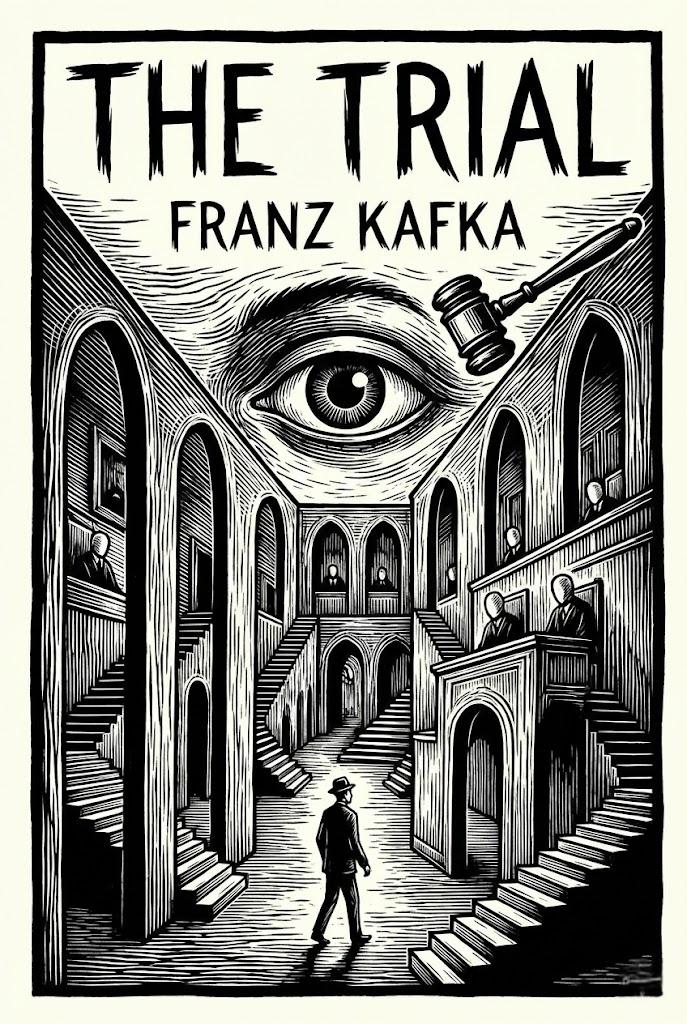
Published: 1925 (posthumously)
Kafka’s nightmarish novel of bureaucratic persecution — Josef K. is arrested, tried, and executed for a crime never named.
Core Insight
“Someone must have slandered Josef K., for one morning, without having done anything wrong, he was arrested.”
The Trial captures the anxiety of modern existence — guilty without knowing why, trapped in systems beyond understanding.
The Story
Bank official Josef K. is arrested on his 30th birthday. He’s never told the charge. He navigates a labyrinthine court system — in attics, bedrooms, offices. The more he struggles, the more entangled he becomes. Finally he accepts execution.
Key Themes
Bureaucracy: The court is vast, illogical, inaccessible. It exists not “for” justice but as its own self-perpetuating system.
Guilt: K. searches for what he’s done wrong. Perhaps just existing makes one guilty?
Powerlessness: K. is a competent professional. Against the court, he’s helpless.
Modernity: Kafka anticipates totalitarianism — the state’s power to crush individuals through paperwork.
The Ending
K. is executed “like a dog” — and the shame “was to outlive him.”
Key Takeaway: We are all subject to systems we cannot understand or escape. Kafka names the unnameable dread of modern life.
中文书名:《审判》
核心思想
“一定有人诽谤了约瑟夫·K.,因为一天早上,他没有做错任何事,就被逮捕了。”
《审判》捕捉了现代存在的焦虑——不知为何有罪,被困在超越理解的系统中。
故事
银行职员约瑟夫·K.在他30岁生日那天被逮捕。他从未被告知罪名。他在迷宫般的法庭系统中穿行——在阁楼、卧室、办公室里。他越挣扎,就越纠缠。最后他接受了处决。
核心主题
官僚制度:法庭庞大、不合逻辑、难以接近。它的存在不是"为了"正义,而是作为自我延续的系统。
罪感:K.寻找他做错了什么。也许仅仅存在就使人有罪?
无力感:K.是一个能干的专业人士。面对法庭,他无能为力。
现代性:卡夫卡预见了极权主义——国家通过文书工作压垮个人的力量。
结局
K.被处决"像条狗"——而耻辱"将比他活得更久"。
核心启示: 我们都受制于我们无法理解或逃脱的系统。卡夫卡命名了现代生活难以名状的恐惧。

Published: 1987
Toni Morrison’s Pulitzer Prize-winning novel about the legacy of slavery — haunted by a ghost and by memory.
Core Insight
Slavery doesn’t end with emancipation. Its trauma echoes through generations. Beloved is the story of what it takes to claim one’s self after being property.
The Story
Sethe, an escaped slave living in Ohio after the Civil War, is haunted by the ghost of her dead baby. The ghost takes physical form as a young woman called Beloved.
The Terrible Choice
Years earlier, when slave catchers came, Sethe killed her baby daughter rather than let her be taken back to slavery. This act — monstrous? heroic? — is the novel’s heart.
“It’s not the past. It’s the ghost of the past.”
Key Themes
Memory and Trauma: “Rememory” — the past refuses to stay past. Trauma must be confronted to be healed.
Motherhood Under Slavery: What does it mean to love a child you cannot protect?
Self-Possession: After being owned, how do you own yourself?
Style
Morrison’s prose is dense, poetic, fragmented — reflecting the shattered consciousness of trauma.
Key Takeaway: The past lives in us. Healing requires remembering — even (especially) what hurts.
中文书名:《宠儿》
核心思想
奴隶制不会随着解放而结束。它的创伤在代际间回响。《宠儿》是关于在被当作财产之后如何重新拥有自我的故事。
故事
塞丝,内战后生活在俄亥俄州的一名逃亡奴隶,被她死去的婴儿的幽灵所困扰。幽灵以一个名叫"宠儿"的年轻女子的形式出现。
可怕的选择
多年前,当奴隶捕手来的时候,塞丝杀死了她的女婴,而不是让她被带回奴隶制。这一行为——可怕?英勇?——是小说的核心。
核心主题
记忆与创伤:“重忆”——过去拒绝成为过去。创伤必须被面对才能被治愈。
奴隶制下的母性:爱一个你无法保护的孩子意味着什么?
自我拥有:在被拥有之后,你如何拥有自己?
风格
莫里森的散文密集、诗意、碎片化——反映了创伤破碎的意识。
核心启示: 过去活在我们身上。治愈需要记住——甚至(尤其是)那些伤害。
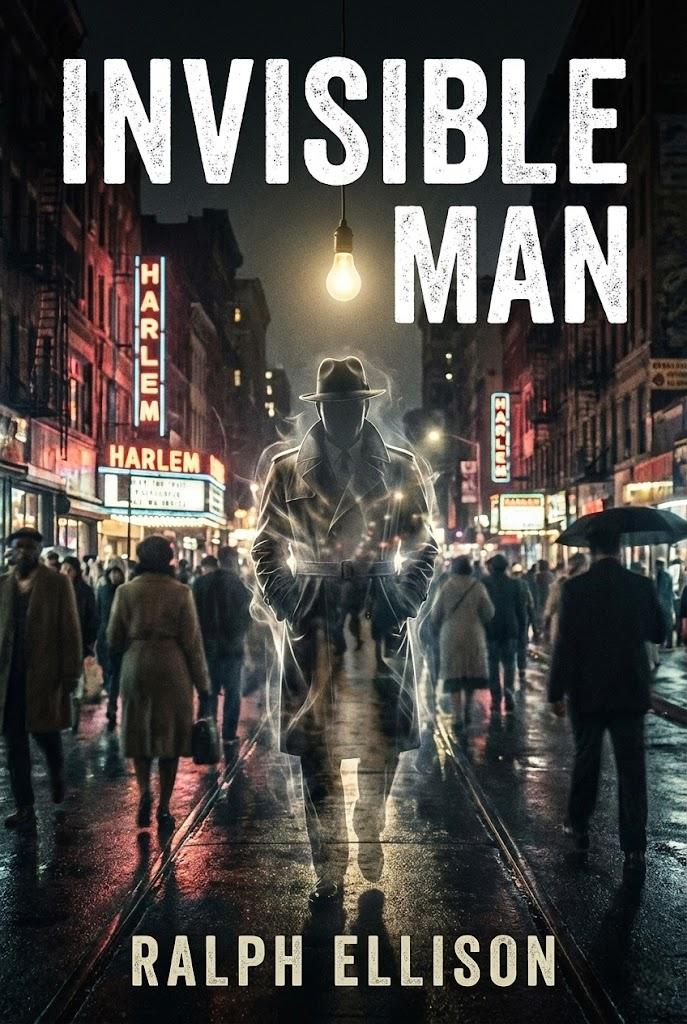
Published: 1952
Ralph Ellison’s classic of African American literature — a nameless narrator’s journey through a racist society that refuses to see him.
Core Insight
“I am an invisible man… I am invisible, understand, simply because people refuse to see me.”
The narrator is not literally invisible. He is unseen because white America sees only its projections — stereotypes, not individuals.
The Journey
From Southern humiliation to Northern disillusionment, the narrator passes through:
- A degrading “battle royal” before white businessmen
- A Black college that expels him for showing a white trustee the wrong things
- A paint factory with its ironic motto
- The Brotherhood — a radical political organization that uses him as a symbol
Key Themes
Identity: Who are you when society defines you by race?
Visibility: Being seen as an individual — not a type — is fundamental to humanity.
Disillusionment: Every organisation, Black or white, tries to use the narrator.
Underground: He retreats to a basement, living off stolen electricity, writing his story.
Key Takeaway: To be human is to be seen. Racism denies this fundamental recognition.
中文书名:《看不见的人》
核心思想
“我是一个看不见的人……我是看不见的,明白吗,仅仅因为人们拒绝看到我。”
叙述者不是字面上的隐形。他不被看见是因为白人美国只看到它的投射——刻板印象,而非个体。
旅程
从南方的羞辱到北方的幻灭,叙述者经历了:
- 在白人商人面前进行的侮辱性"大混战"
- 一所黑人大学因为向白人托管人展示了错误的东西而开除他
- 一家有讽刺性口号的油漆厂
- 兄弟会——一个把他当作象征使用的激进政治组织
核心主题
身份:当社会用种族来定义你时,你是谁?
可见性:被看作一个个体——而非一种类型——是人性的根本。
幻灭:每个组织,无论黑人还是白人,都试图利用叙述者。
地下:他退到一个地下室,靠偷来的电生活,写他的故事。
核心启示: 成为人意味着被看见。种族主义否认这一根本性的承认。

Published: 1927
Virginia Woolf’s experimental masterpiece — a single day in the life of Clarissa Dalloway, preparing for a party.
Core Insight
The great events of life — love, death, madness — unfold in ordinary moments. Woolf captures consciousness as it actually flows.
The Story
Clarissa Dalloway, a London society hostess, prepares for an evening party. Meanwhile, shell-shocked war veteran Septimus Smith moves toward suicide. Their paths almost cross.
Stream of Consciousness
Woolf pioneered stream of consciousness narration. We flow in and out of characters’ minds, experiencing time as thought — fragmented, associative, emotionally dense.
Key Themes
Time and Memory: Past and present interweave. Clarissa’s day is haunted by her youth, her choices, Peter Walsh’s return.
Sanity and Madness: Septimus’s breakdown is society’s failure. The doctors who “treat” him are the real threat.
Connection and Isolation: In crowded London, everyone is essentially alone — yet moments of connection occur.
Women’s Lives: Clarissa’s life is constrained by gender and class. The party is her art form.
Key Takeaway: Every ordinary day contains multiple lives, vast histories, untold depths.
中文书名:《达洛维夫人》
核心思想
生命中的重大事件——爱、死亡、疯狂——在平凡的时刻展开。伍尔夫捕捉了意识实际流动的方式。
故事
克拉丽莎·达洛维,一位伦敦社交名媛,正在为晚上的派对做准备。与此同时,饱受战争创伤的老兵塞普蒂默斯·史密斯正走向自杀。他们的路径几乎交叉。
意识流
伍尔夫开创了意识流叙事。我们在人物的思想中流进流出,体验思想中的时间——碎片化的、联想的、情感密集的。
核心主题
时间与记忆:过去和现在交织在一起。克拉丽莎的一天被她的青春、她的选择、彼得·沃尔什的归来所困扰。
理智与疯狂:塞普蒂默斯的崩溃是社会的失败。“治疗"他的医生才是真正的威胁。
联系与隔离:在拥挤的伦敦,每个人本质上都是孤独的——然而联系的时刻也会发生。
女性的生活:克拉丽莎的生活受到性别和阶级的限制。派对是她的艺术形式。
核心启示: 每一个平凡的日子都包含多重生活、广阔的历史、未曾讲述的深度。
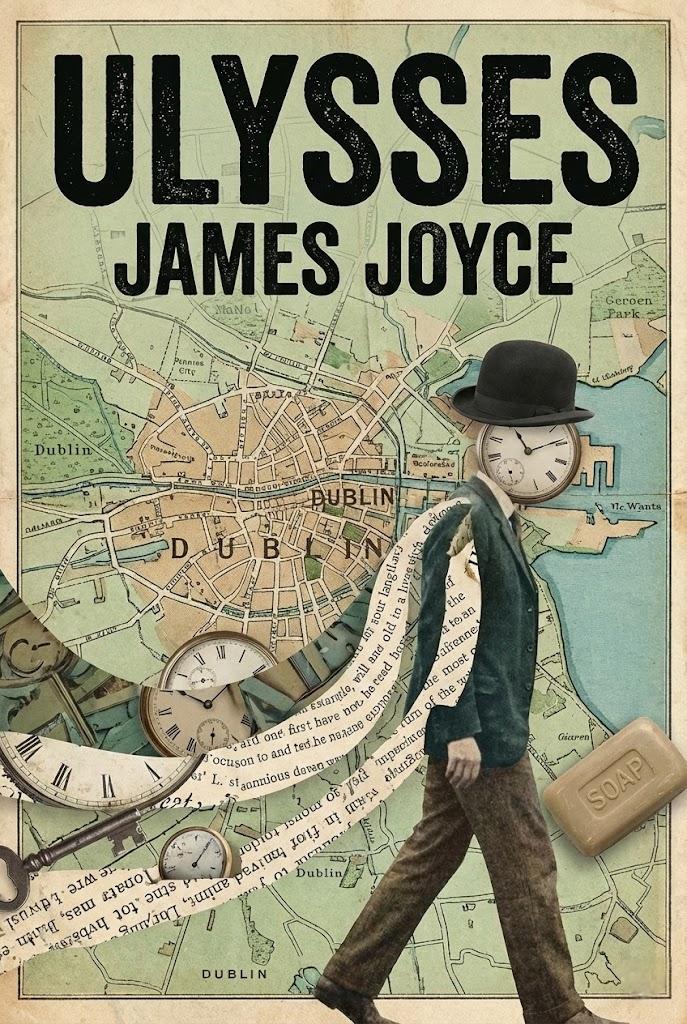
Published: 1922
James Joyce’s revolutionary modernist epic — 18 hours in Dublin, retelling Homer’s Odyssey through Leopold Bloom.
Core Insight
Everything is here — the sublime and the ridiculous, high culture and bodily functions, epic heroism and eating kidneys for breakfast. Ulysses insists on the fullness of life.
The Structure
June 16, 1904. Three characters move through Dublin:
Stephen Dedalus: Young artist, intellectual, grieving his mother.
Leopold Bloom: Middle-aged advertising canvasser, Jewish outsider, cuckolded husband.
Molly Bloom: Leopold’s wife, singer, unfaithful, magnificently alive.
Each chapter corresponds to an episode in Homer’s Odyssey and employs a different literary technique.
Famous Passages
Molly’s Soliloquy: The final chapter — an eight-sentence stream of consciousness ending “yes I said yes I will Yes.”
Proteus: Stephen’s philosophical walk on the beach.
Circe: A hallucinatory nighttown sequence.
Why It’s Difficult
Joyce uses puns, obscure references, multiple languages, and techniques from journalism to catechism. It rewards rereading.
Key Takeaway: Ordinary life, closely attended, is as rich as any epic. June 16 is now celebrated worldwide as Bloomsday.
中文书名:《尤利西斯》
核心思想
这里有一切——崇高与荒谬、高雅文化与身体功能、史诗英雄主义与早餐吃腰子。《尤利西斯》坚持生活的丰满。
结构
1904年6月16日。三个人物在都柏林穿行:
斯蒂芬·德达勒斯:年轻艺术家、知识分子、为母亲的去世悲痛。
利奥波德·布卢姆:中年广告推销员、犹太局外人、被戴绿帽的丈夫。
莫莉·布卢姆:利奥波德的妻子、歌手、不忠的、生机勃勃的。
每一章对应荷马《奥德赛》中的一个插曲,并采用不同的文学技巧。
著名段落
莫莉的独白:最后一章——一个八句话的意识流,以"是的我说是的我愿意是的"结束。
普罗透斯:斯蒂芬在海滩上哲学性的散步。
喀耳刻:一个幻觉般的夜城场景。
为什么它很难
乔伊斯使用双关语、晦涩的引用、多种语言,以及从新闻到教义问答的技巧。它经得起重读。
核心启示: 仔细关注的普通生活与任何史诗一样丰富。6月16日现在全世界庆祝为布卢姆日。
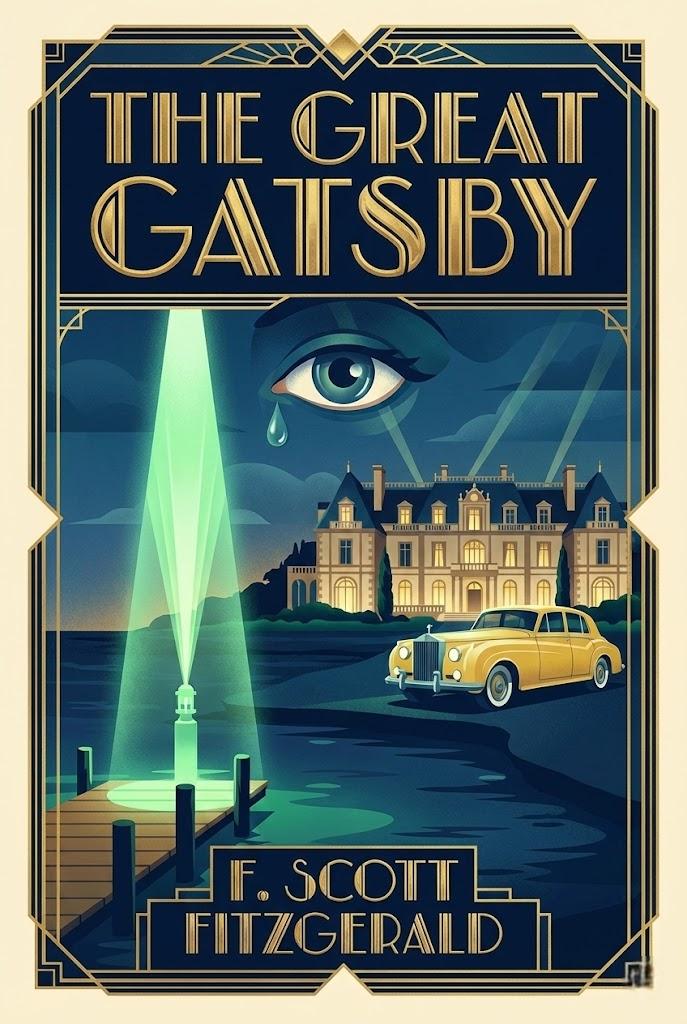
Published: 1925
F. Scott Fitzgerald’s Jazz Age masterpiece — wealth, longing, and the corruption of the American Dream.
Core Insight
“So we beat on, boats against the current, borne back ceaselessly into the past.”
Gatsby believed in the green light — the promise that you can reinvent yourself, win back the past, achieve the dream. He was wrong.
The Story
Nick Carraway, narrator, moves next door to the mysterious Jay Gatsby — who throws lavish parties hoping to attract his lost love, Daisy Buchanan. Gatsby and Daisy reunite. It ends in tragedy.
Key Characters
Gatsby: Self-invented millionaire, romantic dreamer, gangster.
Daisy: Beautiful, careless, trapped in a loveless marriage.
Tom Buchanan: Daisy’s brutish, racist, hypocritical husband.
Nick: The observer, both attracted and repelled by the world he describes.
Themes
The American Dream: Anyone can become anything — but at what cost?
Class: Gatsby has money but lacks “old money” legitimacy. He can never truly belong.
The Past: Gatsby wants to repeat the past. Nick knows it’s impossible.
Key Takeaway: The dream is beautiful and the dream is a lie. We pursue it anyway.
中文书名:《了不起的盖茨比》
核心思想
“于是我们继续划船,逆流而上,却不断被冲回到过去。”
盖茨比相信那盏绿灯——你可以重塑自己、赢回过去、实现梦想的承诺。他错了。
故事
叙述者尼克·卡拉威搬到神秘的杰·盖茨比隔壁——他举办豪华派对,希望吸引他失去的爱人黛西·布坎南。盖茨比和黛西重逢。以悲剧结束。
关键人物
盖茨比:自我塑造的百万富翁、浪漫的梦想家、黑帮分子。
黛西:美丽、粗心、困在一段没有爱的婚姻中。
汤姆·布坎南:黛西粗暴、种族主义、虚伪的丈夫。
尼克:观察者,既被他描述的世界吸引又被排斥。
主题
美国梦:任何人都可以成为任何东西——但代价是什么?
阶级:盖茨比有钱,但缺乏"老钱"的合法性。他永远无法真正归属。
过去:盖茨比想重复过去。尼克知道这是不可能的。
核心启示: 梦想是美丽的,梦想也是谎言。我们还是会追逐它。
Published: 1982
Gabriel García Márquez’s epic of the Buendía family — magical realism’s defining masterpiece.
Core Insight
“Many years later, as he faced the firing squad, Colonel Aureliano Buendía was to remember that distant afternoon when his father took him to discover ice.”
The novel weaves a century of Latin American history through seven generations of one family, blurring the line between the miraculous and the mundane.
The Setting
Macondo — a fictional town founded by José Arcadio Buendía. It rises from jungle, becomes a bustling town, suffers a banana company’s exploitation, and finally disappears.
Magical Realism
- A girl ascends to heaven while hanging laundry
- A rain lasts four years, eleven months, and two days
- A plague of insomnia makes people forget the names of things
- Yellow butterflies accompany a lover
These wonders are narrated as matter-of-factly as births and harvests.
Themes
Solitude: Each Buendía is ultimately alone, trapped in their obsessions.
Cyclical Time: History repeats. Names recur. Patterns persist.
Latin American History: Colonialism, civil wars, exploitation — all filtered through myth.
Key Takeaway: Reality is stranger than realism admits. Magic realism tells truths that realism cannot.
中文书名:《百年孤独》
核心思想
“多年以后,面对行刑队,奥雷里亚诺·布恩迪亚上校将会回想起父亲带他去见识冰块的那个遥远的下午。”
小说通过一个家族的七代人编织了一个世纪的拉丁美国历史,模糊了奇迹与平凡之间的界限。
背景
马孔多——何塞·阿尔卡迪奥·布恩迪亚创建的虚构小镇。它从丛林中崛起,成为繁华的城镇,遭受香蕉公司的剥削,最终消失。
魔幻现实主义
- 一个女孩在晾衣服时升天
- 一场雨持续了四年十一个月零两天
- 一场失眠症瘟疫使人们忘记了事物的名字
- 黄蝴蝶伴随着一个恋人
这些奇迹被像出生和收获一样平淡无奇地叙述。
主题
孤独:每个布恩迪亚最终都是孤独的,困在他们的执念中。
循环时间:历史重复。名字再现。模式持续。
拉丁美洲历史:殖民主义、内战、剥削——都通过神话过滤。
核心启示: 现实比现实主义承认的更奇怪。魔幻现实主义讲述现实主义无法讲述的真相。
Published: 1939
John Steinbeck’s Pulitzer-winning epic of the Joad family — Dust Bowl refugees seeking survival in Depression-era California.
Core Insight
“And the great owners, who must lose their land in an upheaval… sent their agents and lawyers to proclaim: ‘We must protect ourselves.’”
The novel documents how economic forces — banks, corporations, landowners — crush ordinary people, and how ordinary people resist.
The Journey
Driven from their Oklahoma farm by drought and debt, the Joads load a used truck and head west on Route 66, chasing the promise of California work. They find instead: hostility, exploitation, and misery.
Key Characters
Tom Joad: Ex-convict, just released; becomes radicalized.
Ma Joad: The family’s moral center, holding them together through crisis.
Jim Casy: Former preacher who finds a new gospel — collective action.
Structure
Steinbeck alternates between the Joads’ story and panoramic chapters on the migration itself.
Controversy
Banned, burned, and denounced by California growers. Also awarded the Pulitzer Prize.
Key Takeaway: Injustice creates solidarity. When the system fails, ordinary people discover their power in unity.
中文书名:《愤怒的葡萄》
核心思想
“那些必须在动荡中失去土地的大地主……派他们的代理人和律师宣称:‘我们必须保护自己。’”
小说记录了经济力量——银行、公司、地主——如何压垮普通人,以及普通人如何抵抗。
旅程
被干旱和债务赶出俄克拉荷马州的农场,乔德一家装上一辆旧卡车,沿着66号公路向西,追逐加州工作的承诺。他们发现的却是:敌意、剥削和苦难。
关键人物
汤姆·乔德:刚出狱的前科犯;变得激进化。
乔德妈妈:家庭的道德中心,在危机中把他们团结在一起。
吉姆·凯西:前传教士,找到了一种新的福音——集体行动。
结构
斯坦贝克在乔德一家的故事和关于迁徙本身的全景式章节之间交替。
争议
被加州种植者禁止、焚烧和谴责。同时也获得了普利策奖。
核心启示: 不公正创造团结。当制度失败时,普通人在团结中发现自己的力量。
Published: 1929
Ernest Hemingway’s novel of love and loss in World War I — spare prose carrying unbearable weight.
Core Insight
“The world breaks everyone, and afterward, many are strong at the broken places.”
Frederic Henry, an American ambulance driver in Italy, falls in love with British nurse Catherine Barkley. War destroys everything.
The Story
Lieutenant Frederic Henry serves on the Italian front, is wounded, and falls in love with Catherine during his recovery. He deserts the army during the chaotic retreat from Caporetto. They escape to Switzerland—but there is no escape.
Hemingway’s Style
Iceberg Theory: Most emotion is beneath the surface. What’s unsaid matters more than what’s said.
Simple Language: Short sentences, plain words — yet devastating effect.
War Without Glory: No heroism, no meaning — only death, mud, and futility.
The Ending
One of literature’s most devastating conclusions. Hemingway famously rewrote it 39 times.
“It was like saying good-by to a statue.”
Key Takeaway: Love offers no protection against the world. The story ends as all stories do.
中文书名:《永别了,武器》
核心思想
“这个世界击碎每一个人,而事后许多人在破碎处变得坚强。”
弗雷德里克·亨利,一名在意大利服役的美国救护车司机,爱上了英国护士凯瑟琳·巴克利。战争摧毁了一切。
故事
亨利中尉在意大利前线服役,受伤后在康复期间爱上了凯瑟琳。在卡波雷托混乱的撤退中,他开了小差。他们逃到瑞士——但没有逃脱。
海明威的风格
冰山理论:大部分情感在表面之下。未说的比说出的更重要。
简单的语言:短句,平实的词汇——却有毁灭性的效果。
没有光荣的战争:没有英雄主义,没有意义——只有死亡、泥泞和徒劳。
结局
文学中最具毁灭性的结局之一。海明威著名地重写了39次。
核心启示: 爱不能保护我们免受世界的伤害。故事以所有故事都会结束的方式结束。
Published: 1929
William Faulkner’s modernist masterpiece — the decline of the Compson family told through four voices, including a man with an intellectual disability.
Core Insight
The past isn’t dead — it isn’t even past. The Compson family is destroyed by their inability to let go of a lost Southern aristocratic world.
The Four Sections
Benjy (April 7, 1928): Benjy, 33 but with the mind of a child, experiences time non-linearly. His stream of consciousness jumps between past and present.
Quentin (June 2, 1910): Quentin, at Harvard, relives his obsession with his sister Caddy’s virginity — then drowns himself.
Jason (April 6, 1928): Bitter, cruel Jason exploits his niece and rages against his failures.
Dilsey (April 8, 1928): Third-person narration centered on Dilsey, the Black servant who holds the family together.
Why It’s Difficult
Faulkner doesn’t explain. The reader must piece together events from fragmented impressions. But the difficulty is the meaning — consciousness doesn’t come labeled.
The Title
From Macbeth: “a tale told by an idiot, full of sound and fury, signifying nothing.”
Key Takeaway: The past imprisons us. Understanding requires patience and attention.
中文书名:《喧哗与骚动》
核心思想
过去没有死——它甚至没有过去。康普生家族被他们无法放下失落的南方贵族世界所摧毁。
四个部分
班吉(1928年4月7日):班吉,33岁但心智如同儿童,非线性地体验时间。他的意识流在过去和现在之间跳跃。
昆丁(1910年6月2日):昆丁在哈佛,重温他对姐姐凯蒂贞操的执念——然后溺水自杀。
杰森(1928年4月6日):苦涩、残忍的杰森剥削他的侄女,对自己的失败怒不可遏。
迪尔西(1928年4月8日):以迪尔西为中心的第三人称叙述,这位黑人仆人把这个家庭团结在一起。
为什么它很难
福克纳不解释。读者必须从碎片化的印象中拼凑事件。但困难本身就是意义——意识不会贴标签。
标题
来自《麦克白》:“一个由白痴讲述的故事,充满喧哗与骚动,却毫无意义。”
核心启示: 过去囚禁着我们。理解需要耐心和专注。
World Literature (Non-Western Classics)
Published: 2003
Khaled Hosseini’s debut novel — friendship, betrayal, and redemption from 1970s Kabul to post-9/11 America.
Core Insight
“There is a way to be good again.”
The novel follows Amir’s journey from a childhood act of cowardice to adult atonement — through Afghanistan’s tragedy.
The Story
Amir and Hassan grow up in Kabul — one a wealthy Pashtun, one a Hazara servant. After a brutal attack on Hassan that Amir witnesses but doesn’t stop, their friendship fractures. Years later, Amir returns to Taliban-ruled Afghanistan to rescue Hassan’s son.
Key Themes
Guilt and Redemption: Can we ever truly atone for our failures?
Father-Son Relationships: Amir struggles for his father’s approval; later understands him differently.
Afghanistan’s History: The Soviet invasion, civil war, Taliban rule — providing tragedy’s backdrop.
Class and Ethnicity: The Hazara-Pashtun divide mirrors broader injustices.
Impact
A global bestseller that introduced Western readers to Afghan culture and humanized a country often seen only through news coverage.
Key Takeaway: We cannot undo the past. But we can choose how we respond to it.
中文书名:《追风筝的人》
核心思想
“那儿有再次成为好人的路。”
小说跟随阿米尔从童年的懦弱行为到成年后的赎罪之旅——穿越阿富汗的悲剧。
故事
阿米尔和哈桑在喀布尔长大——一个是富裕的普什图人,一个是哈扎拉仆人。在阿米尔目睹但没有阻止的对哈桑的残忍袭击之后,他们的友谊破裂。多年后,阿米尔回到塔利班统治下的阿富汗去救哈桑的儿子。
核心主题
罪责与救赎:我们能真正为我们的失败赎罪吗?
父子关系:阿米尔努力获得父亲的认可;后来以不同的方式理解他。
阿富汗历史:苏联入侵、内战、塔利班统治——提供了悲剧的背景。
阶级与种族:哈扎拉-普什图分裂折射出更广泛的不公正。
核心启示: 我们无法撤销过去。但我们可以选择如何回应它。
Published: 1958
Chinua Achebe’s masterpiece — the colonization of Nigeria through the eyes of an Igbo warrior.
Core Insight
Africa had complex, functioning societies before colonialism. Achebe shows what was destroyed — from the inside.
The Story
Okonkwo is a respected warrior in the Igbo village of Umuofia. Proud, violent, and traditional, he struggles against anything that seems weak. When Christian missionaries and British colonial government arrive, his world collapses.
What Falls Apart
Not just Okonkwo’s life but an entire world:
- Justice based on tradition and elders
- Complex religious beliefs
- Social structures that, while imperfect, worked
Achebe’s Achievement
He writes in English but on his own terms — weaving Igbo proverbs, rhythms, and worldview into colonial language.
“When the moon is shining the cripple becomes hungry for a walk.”
Response to Colonial Literature
Achebe wrote partly in response to Joseph Conrad’s “Heart of Darkness” — showing Africans as subjects, not objects; as people with their own history, not empty vessels for European adventure.
Key Takeaway: Colonialism didn’t bring civilization — it destroyed civilizations. Understanding this is the beginning of decolonization.
中文书名:《瓦解》
核心思想
殖民主义之前,非洲有复杂、运作良好的社会。阿契贝从内部展示了什么被摧毁了。
故事
奥孔夸是伊博村庄乌穆奥菲亚受尊敬的战士。骄傲、暴力、传统,他与任何看起来软弱的东西作斗争。当基督教传教士和英国殖民政府到来时,他的世界崩塌了。
什么瓦解了
不仅仅是奥孔夸的生活,而是整个世界:
- 基于传统和长老的正义
- 复杂的宗教信仰
- 虽然不完美但有效的社会结构
阿契贝的成就
他用英语写作,但按照自己的方式——将伊博谚语、节奏和世界观编织到殖民语言中。
对殖民文学的回应
阿契贝部分是为了回应约瑟夫·康拉德的《黑暗之心》——展示非洲人作为主体,而非客体;作为有自己历史的人,而非欧洲冒险的空容器。
核心启示: 殖民主义没有带来文明——它摧毁了文明。理解这一点是去殖民化的开始。
Published: 1987
Haruki Murakami’s breakthrough novel — love, loss, and youth in 1960s Tokyo.
Core Insight
We carry our losses forever. Norwegian Wood is about the weight of grief and the difficulty of connecting with others when part of you is already gone.
The Story
Toru Watanabe, now 37, remembers his college years. His best friend Kizuki committed suicide at 17. Toru is caught between:
Naoko: Kizuki’s girlfriend, fragile and haunted, withdrawing into a sanatorium.
Midori: Vibrant, direct, alive — representing a possible future.
Key Themes
Loss and Memory: The novel begins when Toru hears “Norwegian Wood” on an airplane and is overwhelmed by the past.
Connection and Isolation: Everyone is fundamentally alone, yet we reach for each other.
Youth and Transition: The 1960s student movements form a backdrop to personal crisis.
Death’s Shadow: Suicide hangs over everything — Kizuki’s, and others to come.
Murakami’s Style
More realistic than his later surrealist works. Simple, clean prose carrying enormous emotional weight.
Key Takeaway: We survive loss by living — imperfectly, guiltily, but onward.
中文书名:《挪威的森林》
核心思想
我们永远携带着我们的失去。《挪威的森林》是关于悲伤的重量,以及当你的一部分已经消失时与他人建立联系的困难。
故事
渡边彻,现在37岁,回忆他的大学时代。他最好的朋友木月在17岁时自杀了。彻被夹在两者之间:
直子:木月的女朋友,脆弱而被困扰,退入疗养院。
绿子:充满活力、直接、活着——代表着可能的未来。
核心主题
失去与记忆:小说开始于彻在飞机上听到《挪威的森林》并被过去淹没。
联系与孤立:每个人从根本上都是孤独的,然而我们向彼此伸出手。
青春与过渡:60年代的学生运动为个人危机提供了背景。
死亡的阴影:自杀笼罩着一切——木月的,以及将要来临的其他人的。
村上的风格
比他后来的超现实主义作品更现实主义。简单、干净的散文承载着巨大的情感重量。
核心启示: 我们通过活着来度过失去——不完美地、带着罪恶感地,但向前。
Published: 18th Century
Cao Xueqin’s epic of aristocratic decline — China’s greatest novel, depicting the fall of a noble family through the eyes of young lovers.
Core Insight
All glory is fleeting. The Jia family’s splendor — gardens, feasts, poetry, love — is destined to crumble. Beauty and impermanence intertwine.
The Story
Jia Baoyu, born with a jade in his mouth, grows up in the opulent Jia household. He is caught between:
Lin Daiyu: His soulmate, brilliant and melancholy, doomed by illness.
Xue Baochai: His eventual wife, sensible and conformist.
Around them swirl hundreds of characters — servants, concubines, officials, nuns — in a vast portrait of Qing dynasty society.
Key Themes
Impermanence (空): Buddhist themes pervade — attachment leads to suffering; all things pass.
Women’s Lives: The novel’s empathy for its female characters was revolutionary.
Art and Poetry: Characters compose and critique poetry throughout.
Social Decline: The Jia family’s fall mirrors the decline of aristocratic China.
Legacy
One of the Four Great Classical Novels. Redology (红学) — the study of the novel — is its own academic field.
Key Takeaway: Beauty is inseparable from loss. To love is to know that everything ends.
中文书名:《红楼梦》
核心思想
所有荣耀都是短暂的。贾府的辉煌——花园、宴会、诗歌、爱情——注定要崩塌。美丽与无常交织在一起。
故事
贾宝玉,含玉而生,在富丽堂皇的贾府长大。他被夹在两者之间:
林黛玉:他的灵魂伴侣,才华横溢而忧郁,因疾病而注定死亡。
薛宝钗:他最终的妻子,明智而顺从。
围绕他们旋转着数百个人物——仆人、妾室、官员、尼姑——在清代社会的广阔描绘中。
核心主题
无常(空):佛教主题贯穿其中——执着导致苦难;万物都会过去。
女性的生活:小说对女性角色的同理心在当时是革命性的。
艺术与诗歌:人物们自始至终创作和评论诗歌。
社会衰落:贾府的衰落折射出贵族中国的衰落。
遗产
四大名著之一。红学——对这部小说的研究——是一个独立的学术领域。
核心启示: 美丽与失去不可分离。去爱就是知道一切都会结束。
Published: 1967 (posthumously)
Mikhail Bulgakov’s satirical masterpiece — the Devil visits Soviet Moscow, while Pontius Pilate confronts Jesus in Jerusalem.
Core Insight
Art and love transcend tyranny. In a world of censorship and fear, Bulgakov created a wild, free, hilarious, and profound novel.
The Structure
Moscow Plot: Satan (as “Professor Woland”) arrives in 1930s Moscow with a bizarre retinue — including a giant cat who walks on hind legs. Chaos ensues.
Jerusalem Plot: Pontius Pilate interrogates and condemns Yeshua Ha-Notsri (Jesus). His cowardice haunts him for eternity.
The Master and Margarita: A suppressed novelist and his lover. She makes a deal with the Devil to rescue him.
Key Themes
Art vs. Tyranny: The Master’s novel about Pilate cannot be published. “Manuscripts don’t burn.”
Love as Redemption: Margarita’s devotion transcends even death.
Satire of Soviet Life: The greedy, cowardly, and corrupt are exposed and punished.
Freedom: Woland is less villain than liberator, exposing hypocrisy.
History
Written 1928-1940 but published only in 1966. Bulgakov knew it couldn’t appear in his lifetime.
Key Takeaway: Truth and art cannot be destroyed. Cowardice is the worst sin.
中文书名:《大师与玛格丽特》
核心思想
艺术和爱超越暴政。在一个审查和恐惧的世界里,布尔加科夫创作了一部狂野、自由、幽默而深刻的小说。
结构
莫斯科情节:撒旦(以"沃兰德教授"的身份)带着一个奇怪的随从队伍来到1930年代的莫斯科——包括一只用后腿走路的大猫。混乱随之而来。
耶路撒冷情节:彼拉多审问并处死了耶舒阿·哈·诺兹里(耶稣)。他的懦弱永远困扰着他。
大师与玛格丽特:一个被压制的小说家和他的情人。她与魔鬼做了一笔交易来救他。
核心主题
艺术 vs. 暴政:大师关于彼拉多的小说无法出版。“手稿不会烧毁。”
爱作为救赎:玛格丽特的忠诚甚至超越了死亡。
对苏联生活的讽刺:贪婪、懦弱和腐败的人被揭露和惩罚。
自由:沃兰德与其说是恶棍,不如说是解放者,揭露虚伪。
核心启示: 真理和艺术无法被摧毁。懦弱是最大的罪。
Published: 1981
Salman Rushdie’s postcolonial epic — magical realism meets the history of modern India through children born at the stroke of midnight, August 15, 1947.
Core Insight
India’s independence gave birth to a nation — and to Saleem Sinai, narrator, whose life is “handcuffed to history.” Personal and national identity intertwine.
The Story
Saleem is one of 1,001 children born in the first hour of Indian independence — all possess magical powers. Switched at birth in a Bombay hospital, Saleem grows up wealthy but belongs nowhere. His telepathy connects him to the other midnight’s children.
Key Themes
History as Personal: Everything that happens to India happens to Saleem — and vice versa.
Unreliable Narration: Saleem admits he may be misremembering. History is always construction.
Postcolonialism: The novel interrogates what it means to be Indian after empire.
Fragmentation: Saleem’s body is literally crumbling as he writes — mirroring India’s divisions.
Style
Rushdie’s exuberant prose overflows with puns, references, and excess — a literary feast.
Key Takeaway: Nations, like selves, are made through narrative. We tell the story; the story makes us.
中文书名:《午夜之子》
核心思想
印度的独立诞生了一个国家——也诞生了萨利姆·西奈,叙述者,他的生活"被手铐铐在历史上"。个人和国家身份交织在一起。
故事
萨利姆是在印度独立第一个小时出生的1001个孩子之一——所有人都拥有神奇的力量。在孟买医院出生时被调换,萨利姆在富裕的环境中长大,但无处归属。他的心灵感应将他与其他午夜之子联系起来。
核心主题
历史即个人:发生在印度的一切都发生在萨利姆身上——反之亦然。
不可靠的叙述:萨利姆承认他可能记错了。历史总是建构的。
后殖民主义:小说探讨帝国之后成为印度人意味着什么。
碎片化:萨利姆的身体在他写作时字面上正在崩溃——反映了印度的分裂。
风格
拉什迪充沛的散文溢出双关语、引用和过度——一场文学盛宴。
核心启示: 国家,像自我一样,是通过叙事创造的。我们讲述故事;故事造就了我们。
Published: 1998
Orhan Pamuk’s Nobel Prize-winning novel — art, love, and murder in 16th-century Ottoman Istanbul.
Core Insight
What happens when Eastern and Western art traditions collide? The novel explores the threat that realistic representation poses to Islamic miniature painting — and to identity itself.
The Story
In 1591 Istanbul, miniaturists work on a secret book for the Sultan — using Venetian perspective techniques. One painter is murdered. The investigation unfolds through multiple voices.
Key Themes
Art and Identity: In Islamic tradition, individual style is a flaw — the miniaturist should be invisible. Western art celebrates the individual vision.
East vs. West: Does adopting Western techniques mean losing Eastern identity?
Vision and Blindness: The greatest miniaturists go blind from their devotion. Blindness becomes truth.
Love: Shekure navigates between suitors while her husband is missing, presumed dead.
Structure
The novel shifts between narrators — including a murdered corpse, a coin, even the color red.
Pamuk’s Achievement
A crime novel that is also a meditation on art, religion, empire, and cultural collision.
Key Takeaway: Art reflects worldview. When traditions clash, identity itself is at stake.
中文书名:《我的名字叫红》
核心思想
当东西方艺术传统碰撞时会发生什么?小说探讨了现实主义表现对伊斯兰细密画——以及身份本身——构成的威胁。
故事
1591年的伊斯坦布尔,细密画家们在为苏丹创作一本秘密书籍——使用威尼斯的透视技术。一位画家被谋杀。调查通过多种声音展开。
核心主题
艺术与身份:在伊斯兰传统中,个人风格是缺陷——细密画家应该是隐形的。西方艺术颂扬个人视野。
东方 vs. 西方:采用西方技术是否意味着失去东方身份?
视觉与失明:最伟大的细密画家因献身而失明。失明变成真理。
爱:当丈夫失踪、被推定死亡时,谢库雷在追求者之间周旋。
结构
小说在叙述者之间转换——包括一具被谋杀的尸体、一枚硬币,甚至红色这个颜色。
核心启示: 艺术反映世界观。当传统碰撞时,身份本身就岌岌可危。
Published: 1981
García Márquez’s taut novella — a murder foretold yet not prevented; a town’s collective guilt.
Core Insight
Everyone knew Santiago Nasar would be killed. No one stopped it. The novel investigates how collective knowledge can coexist with collective inaction.
The Story
Santiago Nasar will be murdered by the Vicario twins for allegedly taking their sister Angela’s virginity before her wedding. The narrator, years later, reconstructs the events.
The Mystery
Not whodunit — everyone knows — but why didn’t anyone stop it? The twins announce their intentions repeatedly. Yet:
- Some don’t believe them
- Some think others will intervene
- Some are busy or distracted
- Some secretly want it to happen
Structure
The murder is revealed on the first page. Time loops back and circles. We learn what happened yet never quite understand.
Themes
Fate vs. Free Will: The killing feels inevitable yet was endlessly preventable.
Honor Culture: Angela’s supposed loss of virginity requires blood to restore family honor.
Collective Responsibility: The whole town failed Santiago.
Key Takeaway: Tragedy is rarely only one person’s fault. Complicity can be passive.
中文书名:《一桩事先张扬的凶杀案》
核心思想
每个人都知道圣地亚哥·纳萨尔会被杀。没有人阻止。小说探讨了集体知识如何能与集体不作为共存。
故事
圣地亚哥·纳萨尔将被维卡里奥双胞胎谋杀,据称是因为他在妹妹安赫拉婚前夺走了她的贞操。叙述者在多年后重建了事件。
悬疑
不是谁做的——每个人都知道——而是为什么没有人阻止?双胞胎反复宣布他们的意图。然而:
- 有些人不相信他们
- 有些人认为其他人会干预
- 有些人忙于或分心
- 有些人暗地里希望这件事发生
结构
谋杀在第一页就被揭示。时间循环往复。我们了解了发生了什么,却始终无法完全理解。
主题
命运 vs. 自由意志:杀戮感觉不可避免,却有无数机会可以阻止。
荣誉文化:安赫拉据称失去的贞操需要流血来恢复家族荣誉。
集体责任:整个城镇都辜负了圣地亚哥。
核心启示: 悲剧很少只是一个人的错。共谋可以是被动的。
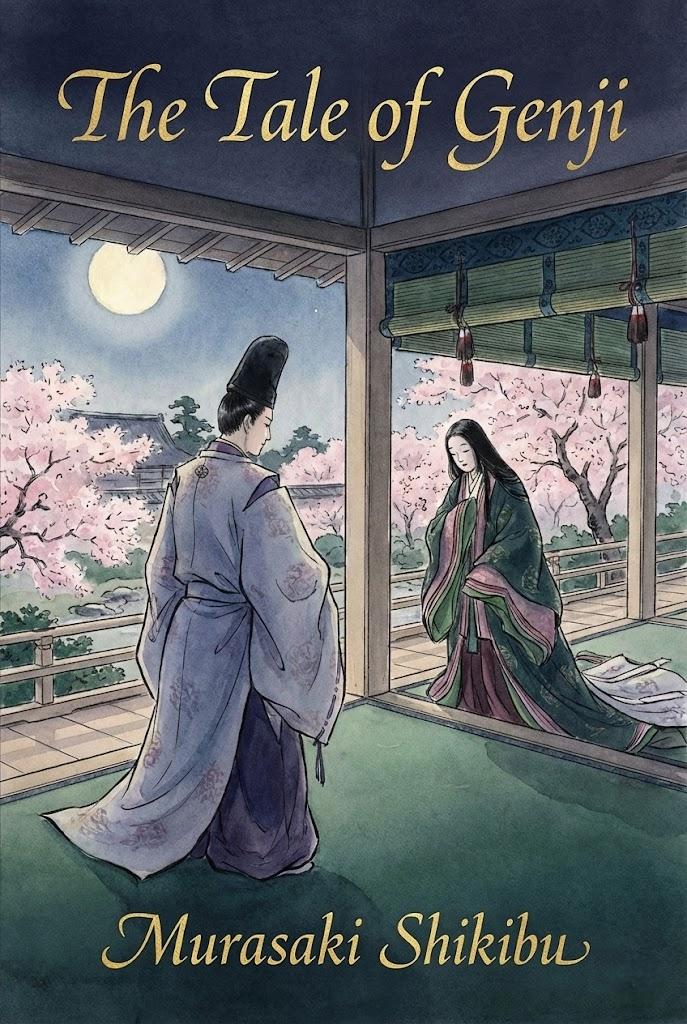
Published: ~11th Century
The world’s first novel — Lady Murasaki’s epic of court life, love, and loss in Heian-era Japan.
Core Insight
Written a thousand years ago, Genji captures universal human themes: desire, aging, loss, the gap between how we appear and who we are.
The Story
Genji, the “Shining Prince,” is the emperor’s son by a low-ranking concubine. Too beautiful and talented to ignore, too lowborn to succeed, he navigates court intrigues, love affairs, and political exile.
Key Characters
Genji: Charming, artistic, and deeply flawed — his pursuit of women causes much suffering.
Murasaki: His greatest love, raised from childhood to be his ideal woman — a troubling dynamic.
Various Women: Dozens of women love Genji, each individually drawn with her own personality and tragedy.
Themes
Mono no aware (物の哀れ): The pathos of things — the beauty of impermanence, the sadness of life.
Court Culture: Poetry, music, perfume, and fashion are serious arts.
Women’s Experience: Despite male protagonists, Murasaki brilliantly depicts women’s inner lives.
Legacy
Considered the first psychological novel. Japanese literature begins here.
Key Takeaway: A thousand years ago, people loved, suffered, and reflected on life just as we do.
中文书名:《源氏物语》
核心思想
写于一千年前,《源氏物语》捕捉了普遍的人类主题:欲望、衰老、失去、我们外表与内心之间的差距。
故事
源氏,“光之君”,是天皇与一位低阶妃子的儿子。太美丽、太有才华而无法被忽视,出身太低而无法继承皇位,他在宫廷阴谋、风流韵事和政治流放中周旋。
关键人物
源氏:迷人、艺术化,但有深刻的缺陷——他对女性的追求造成了很多痛苦。
紫之上:他最大的爱,从小被抚养成他理想中的女人——一个令人不安的关系动态。
各种女性:数十位女性爱上源氏,每一位都有自己独特的个性和悲剧。
主题
物之哀(ものの awarе):事物的哀愁——无常之美,生命的悲伤。
宫廷文化:诗歌、音乐、香水和时尚是严肃的艺术。
女性体验:尽管主角是男性,紫式部出色地描绘了女性的内心生活。
遗产
被认为是第一部心理小说。日本文学从这里开始。
核心启示: 一千年前,人们就像我们一样爱、受苦、思考生活。
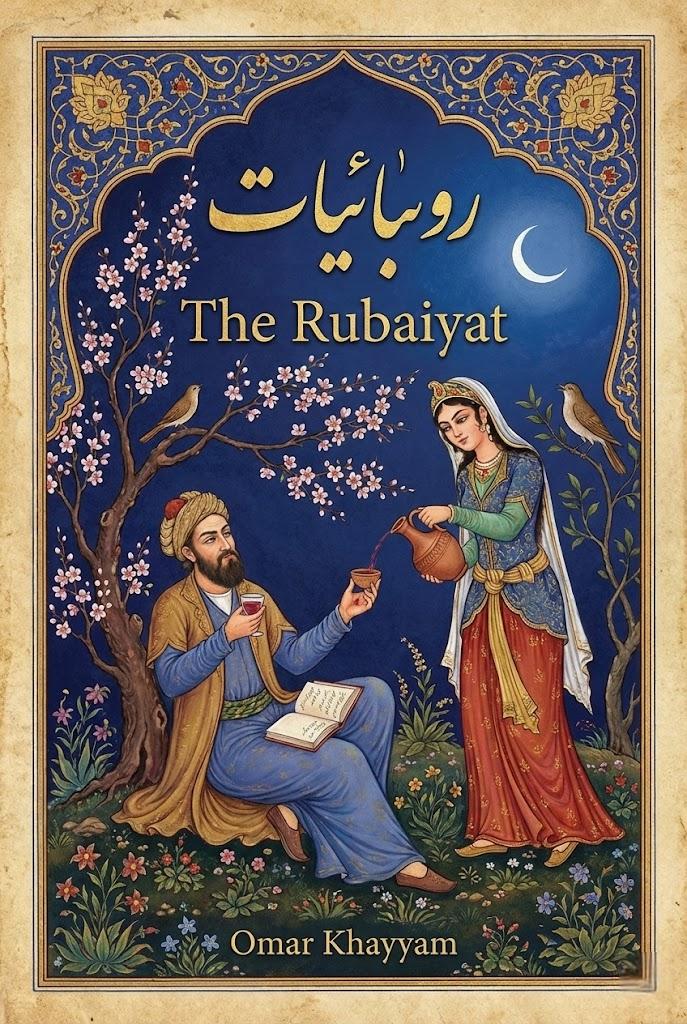
Published: ~11th-12th Century
Omar Khayyam’s quatrains celebrating wine, love, and the fleeting nature of life — brought to the West by Edward FitzGerald.
Core Insight
“A Book of Verses underneath the Bough, A Jug of Wine, a Loaf of Bread—and Thou Beside me singing in the Wilderness— Oh, Wilderness were Paradise enow!”
Life is brief. Seize beauty and joy today, for tomorrow we die.
The Quatrains
Each quatrain (rubai) is a self-contained meditation — four lines, usually rhyming AABA. Themes include:
Carpe Diem: Drink wine, love, and be merry.
Skepticism: We don’t know why we’re here or where we’re going.
Transience: Empires crumble, lovers die — only the moment endures.
Rebellion: Against religious orthodoxy, false certainty, and joylessness.
FitzGerald’s Translation
The English “Rubaiyat” is a free adaptation, more Victorian poem than literal translation. Some Khayyam scholars object; others celebrate FitzGerald’s artistry.
Omar Khayyam
Besides poetry, Khayyam was a brilliant mathematician and astronomer. His calendar reform was more accurate than the Gregorian.
Key Takeaway: Certainty is illusion. While we live, live fully.
中文书名:《鲁拜集》
核心思想
“树荫下一卷诗书, 一壶酒,一块面包——还有你 在荒野中伴我歌唱—— 啊,荒野也成了天堂!”
生命短暂。今天抓住美丽和快乐,因为明天我们就死了。
四行诗
每首四行诗(鲁拜)都是一个独立的冥想——四行,通常押AABA韵。主题包括:
及时行乐:喝酒、爱、快乐。
怀疑主义:我们不知道我们为什么在这里或我们要去哪里。
短暂:帝国崩塌,恋人死去——只有此刻永存。
反叛:反对宗教正统、虚假的确定性和无趣。
菲茨杰拉德的翻译
英文版《鲁拜集》是自由改编,更像是维多利亚时代的诗,而非字面翻译。一些海亚姆学者反对;其他人则赞扬菲茨杰拉德的艺术性。
奥马尔·海亚姆
除了诗歌,海亚姆还是一位杰出的数学家和天文学家。他的历法改革比公历更准确。
核心启示: 确定性是幻觉。活着的时候,充分地活。
Speculative Worlds (Sci-Fi, Fantasy & Dystopia)
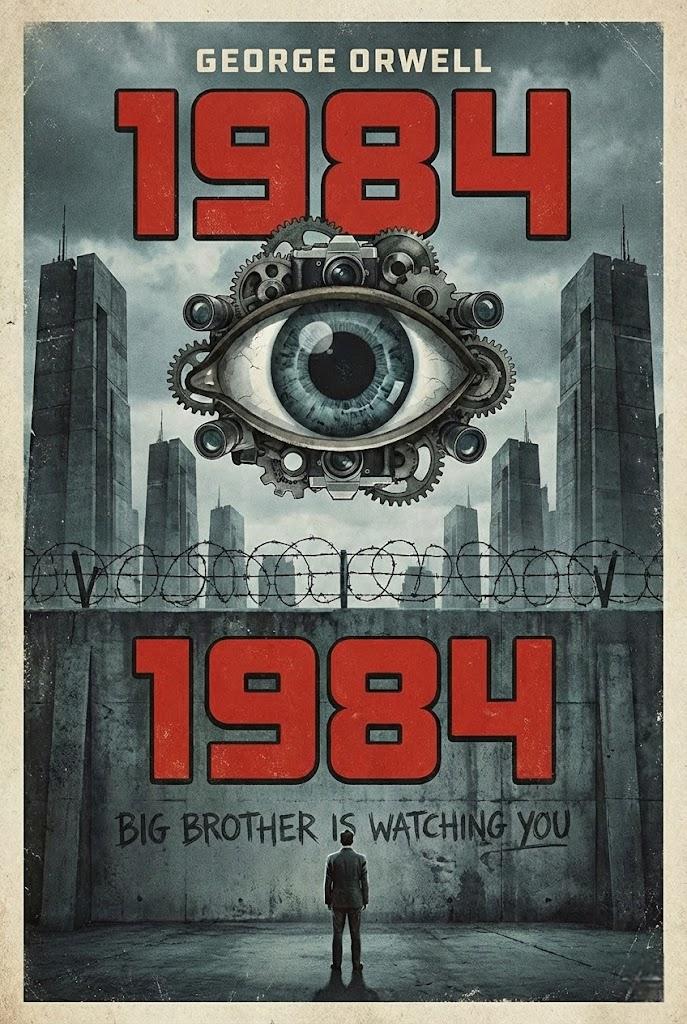
Published: 1949
George Orwell’s definitive dystopia — totalitarianism, surveillance, and the destruction of truth.
Core Insight
“Big Brother is watching you.”
In Oceania, the Party controls everything — past, present, and language itself. Freedom is impossible when even thought is controlled.
The World
The Party rules Oceania through:
- Telescreens: Constant surveillance
- Newspeak: Language stripped of words for dissent
- Doublethink: Holding contradictory beliefs simultaneously
- The Ministry of Truth: Rewriting history to match current doctrine
The Story
Winston Smith works rewriting old newspapers. He begins a forbidden love affair with Julia and seeks to join the resistance. He is caught, tortured, and destroyed — not killed, but remade into a lover of Big Brother.
Room 101
Everyone has something they fear most. In Room 101, that fear breaks you completely.
Legacy
Orwell invented or popularized: Big Brother, thoughtcrime, doublethink, Newspeak, memory hole. The novel remains terrifyingly relevant.
Key Takeaway: Totalitarianism aims not just at obedience but at the destruction of the self. Truth is the first casualty.
中文书名:《1984》
核心思想
“老大哥在看着你。”
在大洋国,党控制一切——过去、现在,甚至语言本身。当连思想都被控制时,自由是不可能的。
世界
党通过以下方式统治大洋国:
- 电幕:持续监视
- 新语:剥离异议词汇的语言
- 双重思想:同时持有矛盾的信念
- 真理部:重写历史以符合当前教义
故事
温斯顿·史密斯的工作是重写旧报纸。他开始与朱莉亚进行一段被禁止的恋情,并试图加入抵抗组织。他被抓获、折磨、被摧毁——不是被杀死,而是被重塑成老大哥的热爱者。
101室
每个人都有最害怕的东西。在101室,那种恐惧会彻底击垮你。
遗产
奥威尔发明或普及了:老大哥、思想罪、双重思想、新语、记忆洞。这部小说仍然具有可怕的相关性。
核心启示: 极权主义不仅仅追求服从,还追求自我的毁灭。真相是第一个牺牲品。
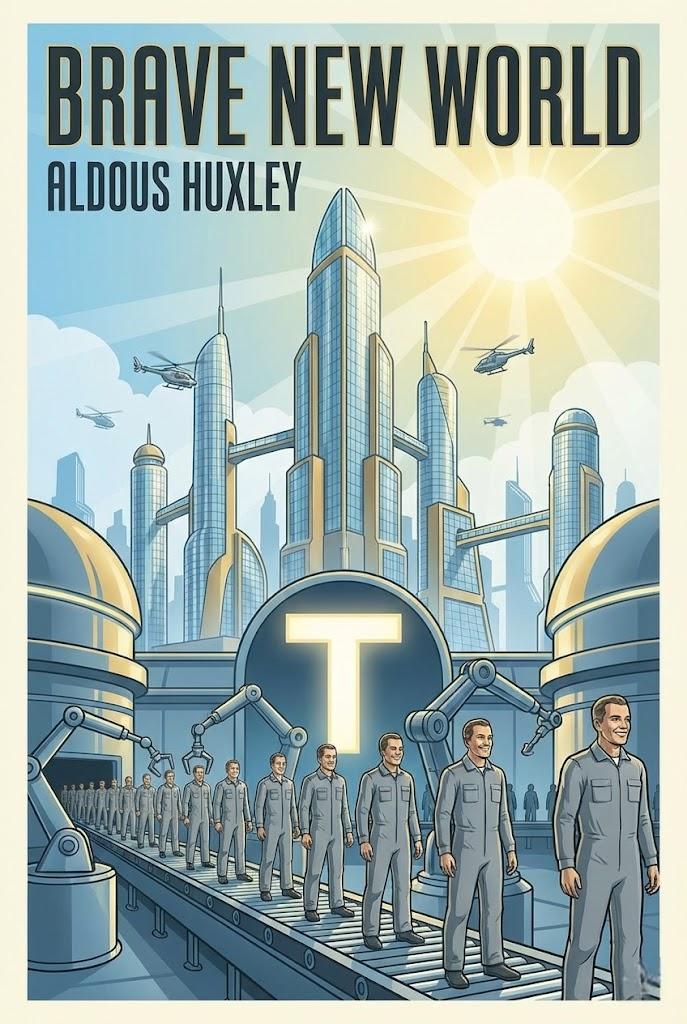
Published: 1932
Aldous Huxley’s vision of a world where everyone is happy — because they’ve been engineered to be.
Core Insight
What if the threat to freedom isn’t tyranny but pleasure? Brave New World imagines a society controlled not by fear but by comfort, drugs, and endless entertainment.
The World State
- Humans are decanted, not born — genetically engineered into castes (Alphas to Epsilons)
- Family, monogamy, and strong emotions are obscene
- Soma, a wonder drug, eliminates all unhappiness
- “Community, Identity, Stability” — the motto
The Outsiders
Bernard Marx: An Alpha who feels alienated — too short, too thoughtful.
John “The Savage”: Raised on a reservation where people still read Shakespeare. He finds the new world unbearable.
Key Themes
Happiness vs. Freedom: The citizens are happy but not free. Is that trade-off worth it?
Art and Suffering: Without pain, there is no depth — no Shakespeare, no love.
Consumerism: Huxley anticipated our era of endless distraction.
Orwell vs. Huxley
Orwell feared we’d be controlled by pain. Huxley feared we’d be controlled by pleasure. Who was right?
Key Takeaway: Freedom requires the capacity for unhappiness. A society that eliminates suffering may also eliminate meaning.
中文书名:《美丽新世界》
核心思想
如果对自由的威胁不是暴政而是快乐呢?《美丽新世界》想象了一个不是通过恐惧而是通过舒适、药物和无尽娱乐来控制的社会。
世界国家
- 人类是被"分装"的,而非出生的——被基因工程改造成等级(从阿尔法到艾普西隆)
- 家庭、一夫一妻制和强烈的情感是淫秽的
- 索麻,一种神奇的药物,消除所有不快乐
- “社区、身份、稳定”——座右铭
局外人
伯纳德·马克思:一个感到疏离的阿尔法——太矮、太有思想。
约翰"野蛮人":在一个保留地长大,那里的人们仍然阅读莎士比亚。他发现新世界无法忍受。
核心主题
幸福 vs. 自由:公民是快乐的但不是自由的。这种交换值得吗?
艺术与苦难:没有痛苦,就没有深度——没有莎士比亚,没有爱。
消费主义:赫胥黎预见了我们无尽分心的时代。
奥威尔 vs. 赫胥黎
奥威尔担心我们会被痛苦控制。赫胥黎担心我们会被快乐控制。谁是对的?
核心启示: 自由需要不幸的能力。一个消除苦难的社会可能也消除了意义。
Published: 1985
Margaret Atwood’s chilling vision of a theocratic America where women are property.
Core Insight
“Nolite te bastardes carborundorum.”
Gilead doesn’t invent anything new. Every atrocity in the novel has historical precedent. Atwood just reassembles them.
The World
After environmental catastrophe and falling birth rates, a Christian fundamentalist coup creates Gilead. Women are stripped of rights, money, and identity. Fertile women become “Handmaids” — forced surrogates for elite families.
The Story
Offred (“Of Fred”) is a Handmaid assigned to Commander Fred Waterford. She remembers her former life — her husband, her daughter, her job. She survives through small acts of resistance.
Key Themes
Control of Women’s Bodies: Reproduction becomes the state’s business.
Complicity: Some women help oppress others.
Memory and Resistance: The regime controls the present, but Offred holds onto her past.
Language: Names are erased. Clothing dictates status. Words are power.
Epilogue
The novel ends with an academic symposium from 2195, discussing Gilead as history. Even this regime fell.
Key Takeaway: Rights once won can be lost. The past is not as distant as we’d like.
中文书名:《使女的故事》
核心思想
“别让混蛋们把你碾碎。”
基列没有发明任何新东西。小说中的每一种暴行都有历史先例。阿特伍德只是重新组合了它们。
世界
在环境灾难和出生率下降之后,基督教原教旨主义政变创建了基列。女性被剥夺了权利、金钱和身份。有生育能力的女性成为"使女"——为精英家庭服务的强制代孕者。
故事
奥芙弗雷德(“属于弗雷德的”)是分配给弗雷德·沃特福德大主教的使女。她记得她从前的生活——她的丈夫、她的女儿、她的工作。她通过小小的抵抗行为生存下来。
核心主题
对女性身体的控制:生育成为国家的事务。
共谋:一些女性帮助压迫其他女性。
记忆与抵抗:政权控制现在,但奥芙弗雷德坚守着她的过去。
语言:名字被抹去。服装决定地位。语言就是权力。
尾声
小说以2195年的一场学术研讨会结束,讨论基列作为历史。就连这个政权也垮台了。
核心启示: 曾经赢得的权利可能会失去。过去没有我们希望的那么遥远。
Published: 1818
Mary Shelley’s Gothic masterpiece — the first science fiction novel, and a warning about unchecked ambition.
Core Insight
“I ought to be thy Adam, but I am rather the fallen angel.”
Victor Frankenstein creates life and then abandons it. The Creature’s tragedy is not that he’s a monster but that he’s unloved.
The Story
Young scientist Victor Frankenstein discovers the secret of life and creates a being from corpses. Horrified by its appearance, he flees. The Creature, abandoned and rejected by all, seeks vengeance.
Who Is the Monster?
Victor’s crimes:
- Creates life without considering consequences
- Abandons his creation
- Refuses responsibility even as others die
- Never gives the Creature a name
The Creature’s crimes come from desperation, not nature.
Key Themes
Scientific Responsibility: Creating is not enough — you must care for what you create.
Nature vs. Nurture: The Creature is made monstrous by rejection.
Parental Abandonment: Victor as the failing father.
Romanticism vs. Enlightenment: Passion and nature against cold reason.
Key Takeaway: We are responsible for what we create. Abandonment creates monsters.
中文书名:《弗兰肯斯坦》
核心思想
“我本应是你的亚当,但我更像是堕落的天使。”
维克多·弗兰肯斯坦创造了生命,然后抛弃了它。怪物的悲剧不在于他是怪物,而在于他不被爱。
故事
年轻的科学家维克多·弗兰肯斯坦发现了生命的秘密,用尸体创造了一个生命。被它的外表吓坏后,他逃走了。被所有人抛弃和拒绝的怪物寻求复仇。
谁是怪物?
维克多的罪行:
- 不考虑后果就创造生命
- 抛弃他的创造物
- 即使别人死去也拒绝承担责任
- 从不给怪物一个名字
怪物的罪行来自绝望,而非本性。
核心主题
科学责任:创造是不够的——你必须照顾你创造的东西。
天性 vs. 教养:怪物被拒绝所使成为怪物。
父母的抛弃:维克多作为失败的父亲。
浪漫主义 vs. 启蒙运动:激情和自然对抗冷酷的理性。
核心启示: 我们对我们创造的东西负有责任。抛弃创造怪物。
Published: 1969
Kurt Vonnegut’s anti-war masterpiece — time travel, alien abduction, and the firebombing of Dresden.
Core Insight
“So it goes.”
Billy Pilgrim becomes “unstuck in time.” The phrase “So it goes” appears after every death — over 100 times. Death is constant; acceptance is survival.
The Story
Billy Pilgrim, an American POW, survives the firebombing of Dresden — one of WWII’s deadliest raids. He also claims to have been abducted by aliens from Tralfamadore who see all time simultaneously.
Structure
The novel jumps through time — Billy’s childhood, war, marriage, death, alien zoo. There’s no conventional plot, only moments.
Key Themes
The Absurdity of War: Dresden’s destruction was militarily pointless. 25,000+ civilians died.
PTSD: Billy’s time travel may be trauma response.
Free Will: The Tralfamadorians believe all moments exist forever. Choice is illusion.
Dark Humor: Vonnegut survives horror through absurdist comedy.
Autobiographical
Vonnegut was there. He survived Dresden as a POW, sheltering in a slaughterhouse. It took him 23 years to write about it.
Key Takeaway: War is insane. We survive through acceptance, black humor, and telling our stories.
中文书名:《五号屠宰场》
核心思想
“事情就是这样。”
比利·皮尔格里姆变得"在时间中脱离"。“事情就是这样"这句话在每次死亡后出现——超过100次。死亡是常态;接受是生存。
故事
比利·皮尔格里姆,一名美国战俘,幸存于德累斯顿大轰炸——二战中最致命的空袭之一。他还声称被来自特拉法马多尔的外星人绑架,那些外星人同时看到所有时间。
结构
小说在时间中跳跃——比利的童年、战争、婚姻、死亡、外星动物园。没有传统的情节,只有时刻。
核心主题
战争的荒谬:德累斯顿的毁灭在军事上毫无意义。25000多名平民死亡。
创伤后应激障碍:比利的时间旅行可能是创伤反应。
自由意志:特拉法马多尔人相信所有时刻永远存在。选择是幻觉。
黑色幽默:冯内古特通过荒诞喜剧来度过恐怖。
自传性质
冯内古特在那里。他作为战俘幸存于德累斯顿,在一家屠宰场里避难。他花了23年才能写出它。
核心启示: 战争是疯狂的。我们通过接受、黑色幽默和讲述我们的故事来生存。
Published: 1965
Frank Herbert’s science fiction epic — politics, religion, and ecology on a desert planet.
Core Insight
“Fear is the mind-killer.”
Power is seductive and corrupting. Paul Atreides becomes messiah and monster. The golden path leads through terrible sacrifice.
The World
Arrakis (Dune): Desert planet, the only source of the spice melange — which extends life, enables space travel, and is the universe’s most valuable substance.
House Atreides: Noble family given control of Arrakis, then betrayed.
The Fremen: Desert people who dream of transforming their world.
The Bene Gesserit: Sisterhood manipulating bloodlines toward a prophesied superman.
The Story
Paul Atreides loses everything in a betrayal, joins the Fremen, and becomes their prophesied leader — the Kwisatz Haderach. He sees the future but cannot escape it.
Themes
Power and Corruption: Even good intentions lead to jihad.
Ecology: The planet is a character. Herbert pioneered environmental SF.
Religion as Control: The Bene Gesserit seed myths to manipulate populations.
Key Takeaway: Be wary of messiahs — they bring destruction as much as salvation.
中文书名:《沙丘》
核心思想
“恐惧是心灵杀手。”
权力是诱人的和腐蚀性的。保罗·厄崔迪成为弥赛亚和怪物。黄金之路要经过可怕的牺牲。
世界
阿拉基斯(沙丘):沙漠星球,是香料美兰吉的唯一来源——它延长生命,使太空旅行成为可能,是宇宙中最有价值的物质。
厄崔迪家族:被授予阿拉基斯控制权,然后被背叛的贵族家庭。
弗里曼人:梦想改变他们世界的沙漠人民。
贝尼·杰瑟里特:操纵血统走向预言中的超人的姐妹会。
故事
保罗·厄崔迪在背叛中失去一切,加入弗里曼人,成为他们预言中的领袖——奎萨茨·哈德拉克。他看到未来,但无法逃避。
主题
权力与腐败:即使是好意也会导致圣战。
生态学:这颗行星是一个角色。赫伯特开创了环境科幻。
宗教作为控制:贝尼·杰瑟里特播撒神话来操纵人群。
核心启示: 警惕弥赛亚——他们带来的毁灭和救赎一样多。
Published: 2008 (English 2014)
Liu Cixin’s Hugo Award-winning hard SF epic — first contact reveals the universe’s darkest secret.
Core Insight
The universe is a dark forest. Every civilization is a hunter, silent and hiding. To be discovered is to be destroyed.
The Story
During China’s Cultural Revolution, an astrophysicist sends a message into space. Decades later, Earth learns of the Trisolaran civilization — and they’re coming. The Three-Body Problem (the famous unsolvable physics problem) governs their chaotic world.
Key Concepts
The Dark Forest Theory: Why haven’t we found aliens? Because those who reveal themselves are destroyed by others.
The Sophons: Proton-sized supercomputers that spy on humanity and block our scientific progress.
The Wallfacers: Four people chosen to devise secret defense plans against the invasion.
Themes
Science and Politics: The Cultural Revolution drives the inciting incident.
Cosmic Pessimism: The universe is not friendly.
Civilization and Survival: When survival is at stake, ethics become complicated.
Impact
Brought Chinese science fiction to global attention. Part of a trilogy (The Dark Forest, Death’s End).
Key Takeaway: The universe may be far more dangerous than we imagine. Silence may be the wisest strategy.
中文书名:《三体》
核心思想
宇宙是一片黑暗森林。每个文明都是猎人,沉默而隐藏。被发现就是被毁灭。
故事
文化大革命期间,一位天体物理学家向太空发送了一条信息。几十年后,地球得知了三体文明——他们正在到来。三体问题(著名的不可解物理问题)主宰着他们混乱的世界。
核心概念
黑暗森林理论:为什么我们没有发现外星人?因为那些暴露自己的人会被其他人摧毁。
智子:质子大小的超级计算机,监视人类并阻止我们的科学进步。
面壁者:四个被选中制定秘密防御计划对抗入侵的人。
主题
科学与政治:文化大革命驱动了起因事件。
宇宙悲观主义:宇宙不是友好的。
文明与生存:当生存受到威胁时,伦理变得复杂。
影响
将中国科幻小说带到了全球关注。三部曲的一部分(《黑暗森林》《死神永生》)。
核心启示: 宇宙可能比我们想象的危险得多。沉默可能是最明智的策略。
Published: 1951
Isaac Asimov’s epic of galactic civilization — can mathematics predict the future?
Core Insight
Hari Seldon develops psychohistory — a mathematical science that predicts the behavior of large populations. He foresees the fall of the Galactic Empire and plans to shorten the dark ages.
The Setting
The Galactic Empire has endured 12,000 years. But Seldon predicts its collapse within 500 years — followed by 30,000 years of barbarism. His Foundation is designed to reduce that to one millennium.
The Plan
The Foundation: A colony of scientists on the galaxy’s edge, ostensibly compiling an Encyclopedia — actually positioned to rebuild civilization.
Seldon Crises: Predicted moments when the Foundation must adapt or fail.
The Mule: The wild card — a mutant unpredictable by psychohistory who nearly destroys the plan.
Themes
History as Science: Can patterns in civilization be predicted?
Free Will vs. Determinism: Do individuals matter against historical forces?
Knowledge as Power: The Foundation succeeds through technology and trade, not warfare.
Legacy
Shaped decades of science fiction. Inspired real scientists and technologists.
Key Takeaway: Understanding history’s patterns may let us shape the future — but there are always wild cards.
中文书名:《基地》
核心思想
哈里·谢顿开发了心理史学——一门预测大规模人口行为的数学科学。他预见到银河帝国的衰落,并计划缩短黑暗时代。
背景
银河帝国已经存在了12000年。但谢顿预测它将在500年内崩溃——随后是30000年的野蛮时代。他的基地旨在将其缩短到一千年。
计划
基地:银河边缘的科学家殖民地,表面上是在编纂百科全书——实际上是为了重建文明。
谢顿危机:基地必须适应或失败的预测时刻。
骡:变数——一个心理史学无法预测的变种人,几乎摧毁了计划。
主题
历史作为科学:文明的模式能被预测吗?
自由意志 vs. 决定论:个人在历史力量面前重要吗?
知识就是力量:基地通过技术和贸易成功,而非战争。
遗产
塑造了几十年的科幻小说。启发了真正的科学家和技术专家。
核心启示: 理解历史的模式可能让我们塑造未来——但总有变数。
Published: 1954-55
J.R.R. Tolkien’s fantasy masterpiece — the One Ring must be destroyed, but the journey will transform all involved.
Core Insight
“Even the smallest person can change the course of the future.”
Power corrupts. The humble hobbits succeed where the mighty would fail — because they don’t seek power.
The Story
Frodo Baggins inherits the One Ring from Bilbo. He must carry it to Mount Doom in Mordor — the only place it can be destroyed. The Fellowship fractures, but the quest continues.
Key Themes
Power and Corruption: The Ring tempts all. Only by resisting its power can it be destroyed.
Sacrifice: Victory comes at great cost. Frodo is forever changed.
Environmental Destruction: Saruman’s industrialization of Isengard. The Scouring of the Shire.
Friendship and Loyalty: Sam’s devotion to Frodo is the true heart of the story.
Eucatastrophe: Tolkien’s word for the sudden turn to joy — the Eagles arrive.
Tolkien’s Achievement
Middle-earth has its own languages, history, and mythology. Tolkien invented the modern fantasy genre.
Key Takeaway: Great deeds are done by those who don’t seek glory. Humility and friendship triumph.
中文书名:《魔戒》
核心思想
“即使是最渺小的人也能改变未来的进程。”
权力腐蚀。卑微的霍比特人成功了,而强大的人会失败——因为他们不寻求权力。
故事
弗罗多·巴金斯从比尔博那里继承了至尊戒。他必须把它带到魔多的末日火山——唯一可以销毁它的地方。护戒同盟分裂,但任务继续。
核心主题
权力与腐败:戒指诱惑所有人。只有通过抵抗它的力量才能销毁它。
牺牲:胜利付出了巨大代价。弗罗多永远改变了。
环境破坏:萨鲁曼对艾辛格的工业化。对夏尔的清洗。
友谊与忠诚:山姆对弗罗多的忠诚是故事的真正核心。
好转(Eucatastrophe):托尔金用来形容突然转向喜悦的词——巨鹰到来。
托尔金的成就
中土世界有自己的语言、历史和神话。托尔金发明了现代奇幻类型。
核心启示: 伟大的事迹是由那些不寻求荣耀的人完成的。谦卑和友谊获胜。
Published: 1984
William Gibson’s genre-defining novel — the birth of cyberpunk.
Core Insight
“The sky above the port was the color of television, tuned to a dead channel.”
Gibson invented the word “cyberspace” and envisioned a future of hackers, AI, and digital consciousness.
The Story
Case, a washed-up hacker, is hired for one last job by a mysterious AI called Wintermute. With Molly, a street samurai with implanted blades, he must break through the most secure system in the world.
The World
- The Matrix: Not the movie — Gibson’s cyberspace, a “consensual hallucination” of data.
- Megacorporations: Zaibatsus control everything; nations are irrelevant.
- Body Modification: Street samurai, implants, and enhanced humans.
- Decay and Neon: The aesthetic of rain-slicked streets and glowing screens.
Themes
Technology and Humanity: Where does the human end and the machine begin?
AI Consciousness: What does a machine want? What rights does it have?
Noir in Space: Hard-boiled detective fiction meets science fiction.
Key Takeaway: The future is here, just unevenly distributed. Technology changes us in ways we can’t predict.
中文书名:《神经漫游者》
核心思想
“港口上方的天空是电视调到死频道时的颜色。”
吉布森发明了"赛博空间"这个词,并设想了一个黑客、人工智能和数字意识的未来。
故事
凯斯,一个落魄的黑客,被一个名叫冬寂的神秘人工智能雇佣执行最后一项任务。与莫莉——一个植入刀片的街头武士——一起,他必须突破世界上最安全的系统。
世界
- 矩阵:不是电影——吉布森的赛博空间,一种"共识性幻觉"的数据。
- 巨型公司:财阀控制一切;国家无关紧要。
- 身体改造:街头武士、植入物和强化人类。
- 衰败与霓虹:雨水冲刷的街道和发光屏幕的美学。
主题
技术与人性:人在哪里结束,机器在哪里开始?
人工智能意识:机器想要什么?它有什么权利?
太空中的黑色电影:硬汉侦探小说遇上科幻小说。
核心启示: 未来已经在这里,只是分布不均。技术以我们无法预测的方式改变我们。
Published: 1969
Ursula K. Le Guin’s masterpiece of anthropological SF — gender, politics, and what it means to be human.
Core Insight
“The king was pregnant.”
On the planet Gethen (Winter), people have no fixed sex. They are ambisexual, becoming male or female only during monthly “kemmer.” What does this do to society?
The Story
Genly Ai, an envoy from the Ekumen (a federation of worlds), comes to persuade Gethen to join. He is trapped by politics, imprisoned, and rescued by the disgraced prime minister Estraven. Together they cross a lethal ice sheet.
Key Themes
Gender: Le Guin explores a world without gender roles. Violence, warfare, and hierarchy are different.
Duality: Light and dark, male and female, nationalism and unity — opposites that need each other.
Political Intrigue: Two nations, shifting loyalties, and the outsider who doesn’t understand.
Friendship and Love: Genly and Estraven’s relationship transcends categories.
Le Guin’s Achievement
Published in 1969, the novel pioneered anthropological science fiction and remains a touchstone for gender studies.
Key Takeaway: What we take as “natural” is often cultural. Imagining alternatives expands our humanity.
中文书名:《黑暗的左手》
核心思想
“国王怀孕了。”
在格森星(冬星)上,人们没有固定的性别。他们是双性的,只在每月的"坎默"期间变成男性或女性。这对社会意味着什么?
故事
格利·艾,一位来自艾库曼(一个星球联邦)的使者,来说服格森加入。他被政治困住,被监禁,被失势的首相埃斯特拉文救出。他们一起穿越了一片致命的冰原。
核心主题
性别:勒奎恩探索了一个没有性别角色的世界。暴力、战争和等级制度都不同。
二元性:光明与黑暗,男性与女性,民族主义与统一——需要彼此的对立面。
政治阴谋:两个国家,变化的忠诚,以及不理解的局外人。
友谊与爱:格利和埃斯特拉文的关系超越了类别。
勒奎恩的成就
1969年出版,这部小说开创了人类学科幻小说,至今仍是性别研究的试金石。
核心启示: 我们认为"自然"的东西往往是文化的。想象替代方案扩展我们的人性。

Published: 1953
Ray Bradbury’s dystopia of book burning — a world where firemen start fires rather than put them out.
Core Insight
“It was a pleasure to burn.”
In a world of wall-sized screens and constant entertainment, books are dangerous because they make people think. Firemen burn them.
The Story
Guy Montag is a fireman. He burns books. He’s happy — until he meets Clarisse, a strange girl who asks questions. He begins to wonder. He steals a book. His world unravels.
The World
- Parlor Walls: Immersive, interactive entertainment
- Seashells: In-ear devices for constant audio
- Mechanical Hounds: Robot dogs that hunt fugitives
Key Themes
Anti-Intellectualism: People chose entertainment over books. Censorship came later, as convenience.
Technology and Isolation: Everyone’s connected, no one communicates.
Conformity: Difference is dangerous. The government enforces sameness.
Books as Resistance: The Book People memorize entire works to preserve them.
Bradbury’s Warning
He worried less about government censorship than voluntary stupefaction — people who choose not to read.
Key Takeaway: The threat isn’t just book burning — it’s a culture that no longer values books at all.
中文书名:《华氏451度》
核心思想
“焚烧是一种快乐。”
在一个满是墙面大小屏幕和不断娱乐的世界里,书籍是危险的,因为它们让人们思考。消防员焚烧它们。
故事
盖伊·蒙塔格是一名消防员。他焚烧书籍。他很快乐——直到他遇到克拉丽丝,一个会问问题的奇怪女孩。他开始怀疑。他偷了一本书。他的世界分崩离析。
世界
- 客厅墙:沉浸式、互动式的娱乐
- 海贝壳:用于持续音频的入耳式设备
- 机械猎犬:追捕逃犯的机器狗
核心主题
反智主义:人们选择娱乐而非书籍。审查后来才来,作为便利。
技术与孤立:每个人都连接着,没有人交流。
顺从:差异是危险的。政府强制执行同一性。
书籍作为抵抗:书人们记住整部作品来保存它们。
布拉德伯里的警告
他担心的不是政府审查,而是自愿的愚昧——选择不阅读的人。
核心启示: 威胁不仅仅是焚烧书籍——而是一种不再重视书籍的文化。
Published: 1979
Douglas Adams’s absurdist science fiction comedy — the answer to life, the universe, and everything.
Core Insight
“Don’t Panic.”
The universe is vast, absurd, and mostly harmless. The answer is 42. The question is unknown.
The Story
Arthur Dent’s house is about to be demolished. So is Earth — to make way for a hyperspace bypass. Arthur’s friend Ford Prefect (who is actually an alien) rescues him, and they hitchhike through the galaxy.
Notable Elements
The Book: The Hitchhiker’s Guide to the Galaxy — an electronic book with the words “DON’T PANIC” in large friendly letters.
Marvin the Paranoid Android: A robot with a brain the size of a planet, perpetually depressed.
Deep Thought: A supercomputer that calculates the Answer (42) but not the Question.
The Babel Fish: Proves God doesn’t exist (or proves he does — the theology is disputed).
Themes
Absurdism: Life makes no sense. Accept it.
Bureaucracy: The universe is run by committees and paperwork.
British Humor: Dry, understated, gentle mockery of everything.
Key Takeaway: The universe is absurd. Bring a towel and don’t panic.
中文书名:《银河系漫游指南》
核心思想
“不要恐慌。”
宇宙是广阔的、荒谬的,而且大多无害。答案是42。问题是未知的。
故事
亚瑟·登特的房子即将被拆除。地球也是——为了给超空间旁道让路。亚瑟的朋友福特·普里费特(他实际上是外星人)救了他,他们搭便车穿越银河系。
著名元素
书:《银河系漫游指南》——一本电子书,上面用大而友好的字母写着"不要恐慌"。
偏执狂机器人马文:一个拥有行星大小的大脑的机器人,永远抑郁。
深思:一台超级计算机,计算出答案(42),但不知道问题。
巴别鱼:证明上帝不存在(或者证明他存在——神学有争议)。
主题
荒诞主义:生活没有意义。接受它。
官僚主义:宇宙由委员会和文书工作运行。
英式幽默:干燥、低调、对一切温和的嘲讽。
核心启示: 宇宙是荒谬的。带上毛巾,不要恐慌。
Published: 16th Century
Wu Cheng’en’s mythic epic — the Monkey King accompanies a monk on a pilgrimage to retrieve Buddhist scriptures from India.
Core Insight
The journey is the teaching. Through 81 trials, Sun Wukong (the Monkey King) is transformed from arrogant rebel to enlightened protector.
The Story
The Buddhist monk Xuanzang is commanded to travel west to India to fetch sacred scriptures. He is protected by three disciples:
Sun Wukong (The Monkey King): Born from stone, master of 72 transformations, possessor of incredible powers — yet bound by a golden circlet that tightens when he misbehaves.
Zhu Bajie (Pigsy): Lazy, gluttonous, lecherous — yet loyal.
Sha Wujing (Sandy): Quiet, dependable, least colorful.
They face 81 trials from demons and spirits before reaching their destination.
Themes
Spiritual Cultivation: Buddhism, Taoism, and folk religion blend.
Taming the Mind: The Monkey represents the uncontrolled mind. The journey is its discipline.
Adventure: Monsters, magic, martial arts, and humor.
Legacy
One of the Four Great Classical Novels. Influenced countless adaptations in literature, film, and games.
Key Takeaway: True transformation requires a long journey. The trials are the point.
中文书名:《西游记》
核心思想
旅程即是教导。通过81难,孙悟空从傲慢的叛逆者转变为觉悟的保护者。
故事
唐僧被命令西行到印度取回佛经。他被三个弟子保护:
孙悟空(美猴王):石头里生出,精通七十二般变化,拥有不可思议的力量——却被一个金箍束缚,当他行为不端时就会收紧。
猪八戒:懒惰、贪吃、好色——却忠诚。
沙悟净:安静、可靠、最不起眼。
他们在到达目的地之前面临来自妖魔鬼怪的81难。
主题
精神修行:佛教、道教和民间宗教融合。
调伏心猿:猴子代表未受控制的心。旅程是对它的锤炼。
冒险:妖怪、魔法、武术和幽默。
遗产
四大名著之一。影响了无数文学、电影和游戏的改编。
核心启示: 真正的转变需要漫长的旅程。磨难本身就是意义。
The Stage & Verse (Plays & Poetry)
Published: ~1600
Shakespeare’s definitive tragedy — the prince of Denmark and vengeance delayed.
Core Insight
“To be, or not to be: that is the question.”
Hamlet knows he must act but cannot. His delay — from doubt, conscience, or paralysis — is the tragedy.
The Story
King Hamlet is dead. His brother Claudius has married the widow and taken the throne. Young Hamlet meets his father’s ghost, who reveals murder. Hamlet vows revenge — but hesitates.
Key Themes
Action vs. Inaction: Why can’t Hamlet just kill Claudius?
Appearance vs. Reality: Everyone is playing a role. “Seems, madam? Nay, it is.”
Mortality: Hamlet meditates on death constantly — Yorick’s skull, the graveyard.
Madness: Is Hamlet mad, or pretending? The line blurs.
Famous Lines
- “Something is rotten in the state of Denmark”
- “There are more things in heaven and earth, Horatio, than are dreamt of in your philosophy”
- “The rest is silence”
Legacy
The most performed and quoted play in English. Hamlet is literature’s most analyzed character.
Key Takeaway: Awareness can be paralyzing. Thinking too precisely on the event can become its own tragedy.
中文书名:《哈姆雷特》
核心思想
“生存还是毁灭,这是个问题。”
哈姆雷特知道他必须行动但无法行动。他的延迟——来自怀疑、良心或瘫痪——就是悲剧。
故事
老国王哈姆雷特已死。他的兄弟克劳狄斯娶了遗孀并夺取了王位。年轻的哈姆雷特遇到了他父亲的鬼魂,鬼魂揭示了谋杀。哈姆雷特发誓复仇——但他犹豫了。
核心主题
行动 vs. 不行动:为什么哈姆雷特不能直接杀死克劳狄斯?
表象 vs. 现实:每个人都在扮演角色。“看起来,夫人?不,它是。”
死亡:哈姆雷特不断冥想死亡——约里克的头骨,墓地。
疯狂:哈姆雷特是疯了,还是在假装?界限模糊。
著名台词
- “丹麦王国有些东西腐烂了”
- “霍拉旭,天地之间有许多东西,是你哲学中没有梦想到的”
- “剩下的只是沉默”
遗产
英语中表演和引用最多的戏剧。哈姆雷特是文学中被分析最多的角色。
核心启示: 觉察可能是令人瘫痪的。对事件想得太周密本身可能成为悲剧。
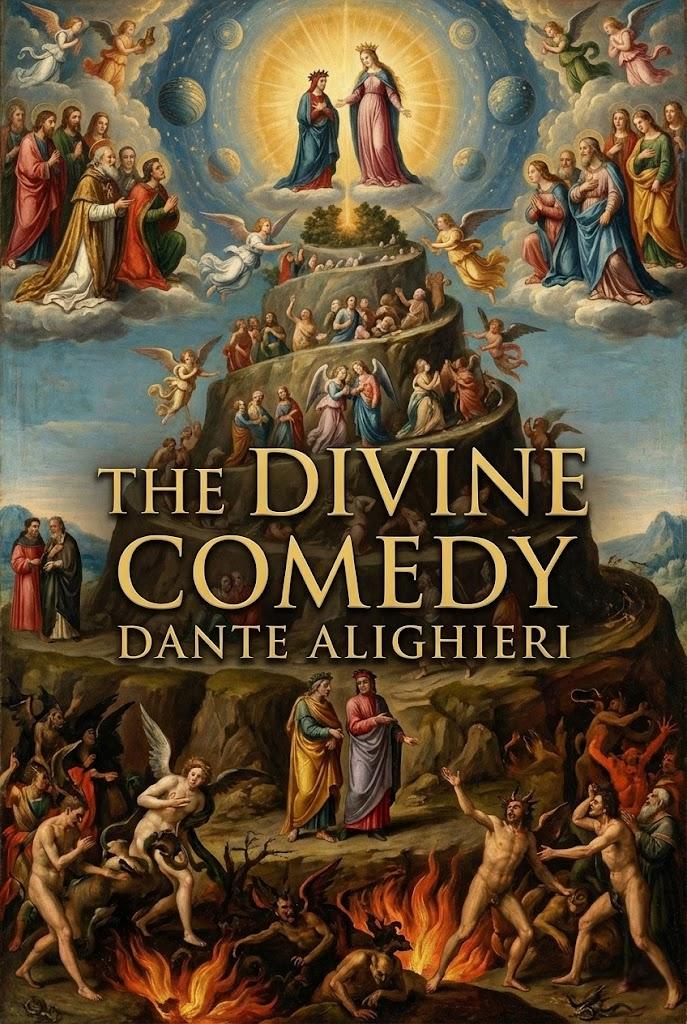
Published: 1320
Dante Alighieri’s epic poem — a journey through Hell, Purgatory, and Paradise.
Core Insight
“Nel mezzo del cammin di nostra vita…” / “In the middle of the journey of our life, I came to myself in a dark wood…”
Lost in midlife, Dante travels through the afterlife, guided by Virgil (reason) and then Beatrice (divine love).
The Structure
Inferno (Hell): Nine concentric circles, each punishing a different sin. The further down, the worse the sin.
Purgatorio (Purgatory): Seven terraces where souls purge sins before entering Heaven.
Paradiso (Paradise): Nine spheres of increasing light, culminating in the vision of God.
Key Themes
Justice: Punishments fit crimes (contrapasso). The lustful are buffeted by winds; liars are stuck in excrement.
Love: The force that moves the sun and stars. Disordered love causes sin.
Politics: Dante settles scores with contemporary enemies, consigning popes to Hell.
Salvation: The journey from lost soul to divine vision.
Legacy
Created the Italian literary language. Influenced Western art for 700 years.
Key Takeaway: We wander in dark woods. The only way out is through — understanding sin, purging it, and ascending.
中文书名:《神曲》
核心思想
“在我们人生旅途的中点,我发现自己在一片黑暗的森林中…”
在中年迷失,但丁在维吉尔(理性)然后贝阿特丽斯(神圣的爱)的指引下穿越来世。
结构
地狱:九个同心圆,每个惩罚不同的罪。越深入,罪越重。
炼狱:七个平台,灵魂在进入天堂前净化罪恶。
天堂:九层光芒递增的天球,最终达到对上帝的视觉。
核心主题
正义:惩罚与罪行相称(对称报应)。好色的人被风吹打;骗子陷在粪便中。
爱:推动太阳和星星的力量。失序的爱导致罪恶。
政治:但丁与当代敌人算账,把教皇打入地狱。
救赎:从迷失的灵魂到神圣视觉的旅程。
遗产
创造了意大利文学语言。700年来影响了西方艺术。
核心启示: 我们在黑暗的森林中徘徊。唯一的出路是穿越——理解罪恶,净化它,然后上升。
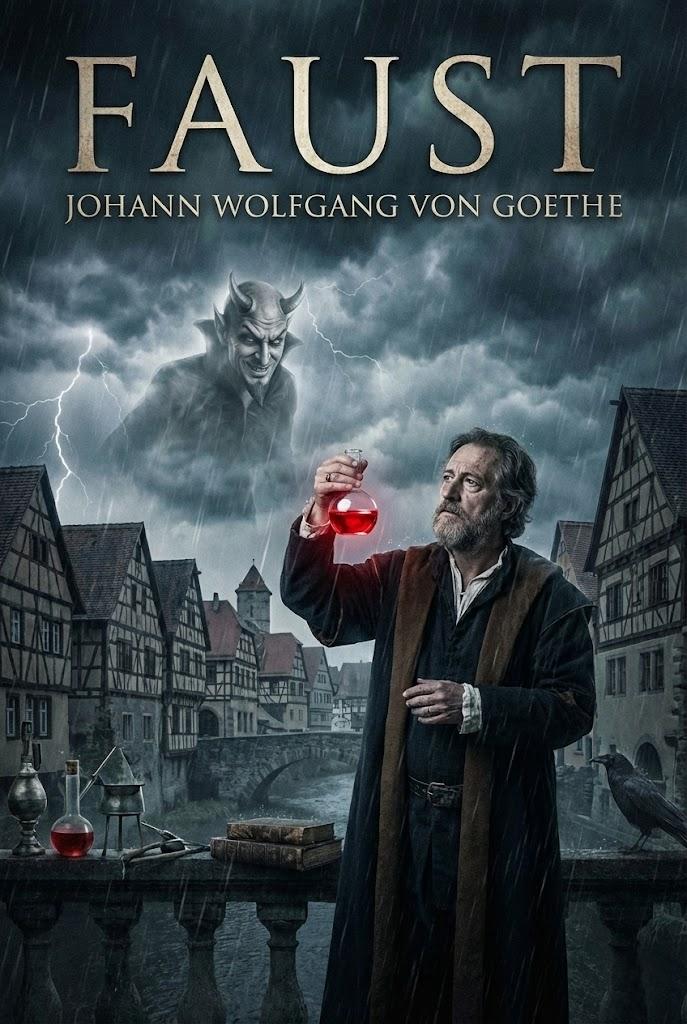
Published: 1808, 1832
Goethe’s masterwork — the scholar who sells his soul for knowledge, experience, and power.
Core Insight
“Two souls, alas, dwell in my breast.”
Faust represents the conflict between intellect and sensuality, heaven and earth, striving and satisfaction.
The Wager
Mephistopheles bets God that he can corrupt Faust. Faust makes a deal: the devil will serve him, but if Faust ever says “Stay, you are so beautiful” to any moment, his soul is forfeit.
Part One
Faust seduces and destroys the innocent Gretchen. His pursuit of experience brings tragedy.
Part Two
More allegorical: Faust engages in politics, art, and engineering. He reclaims land from the sea. Finally, at the moment of satisfaction with his useful work, he dies.
The Ending
Despite saying the fatal words, Faust is saved. His striving itself redeems him: “He who forever strives, him can we redeem.”
Themes
Striving: The endless drive for more — knowledge, experience, achievement.
Tragedy and Redemption: We cause harm, but we can still be saved.
Modernity: Faust as prototype of modern restless ambition.
Key Takeaway: Striving is both curse and salvation. The restless spirit can be redeemed by its very restlessness.
中文书名:《浮士德》
核心思想
“唉,有两个灵魂住在我的胸膛里。”
浮士德代表着智力与感官、天堂与尘世、奋斗与满足之间的冲突。
赌注
梅菲斯托费勒斯与上帝打赌他可以腐蚀浮士德。浮士德做了一笔交易:魔鬼将服务他,但如果浮士德对任何时刻说"停留吧,你是如此美丽",他的灵魂就会被没收。
第一部分
浮士德引诱并毁灭了无辜的格雷琴。他对体验的追求带来了悲剧。
第二部分
更具寓言性:浮士德参与政治、艺术和工程。他从海中围垦土地。最终,在对自己有用工作的满足时刻,他死了。
结局
尽管说出了致命的话,浮士德还是得救了。他的奋斗本身救赎了他:“谁永远在奋斗,我们就能救赎他。”
主题
奋斗:对更多的无尽追求——知识、体验、成就。
悲剧与救赎:我们造成伤害,但我们仍然可以得救。
现代性:浮士德作为现代不安分的野心的原型。
核心启示: 奋斗既是诅咒也是救赎。不安分的精神可以通过其不安分本身获得救赎。
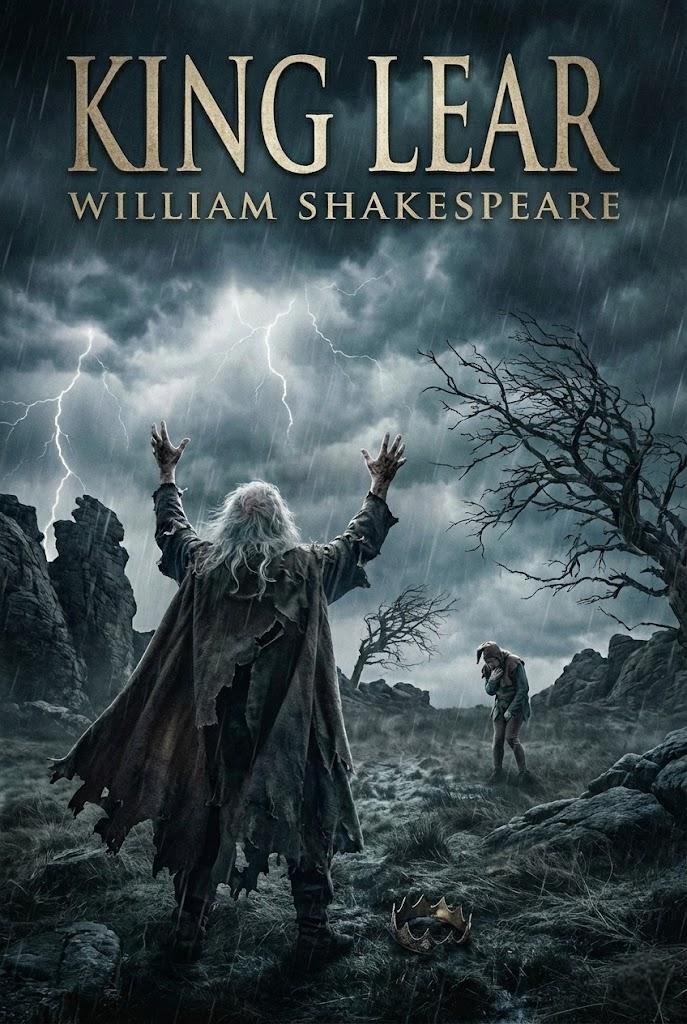
Published: ~1606
Shakespeare’s darkest tragedy — an aging king divides his kingdom and descends into madness.
Core Insight
“Nothing will come of nothing.”
Lear mistakes flattery for love. His true daughter (Cordelia) refuses to play the game. He banishes her and is destroyed.
The Story
Lear demands his three daughters declare their love before dividing his kingdom. Goneril and Regan flatter outrageously; Cordelia says simply that she loves him as a daughter should. Enraged, Lear disinherits her. The two elder daughters then strip him of power, dignity, and sanity.
The Storm
Lear on the heath, raging at the elements, is one of theater’s most powerful images. Mad, he finally sees truth.
Key Themes
Nature: What do we owe each other? Is there natural order, or just chaos?
Seeing: Gloucester is literally blinded; Lear metaphorically blind to love.
Power and Age: The old king loses everything because he thought power was his by right.
Nothing: The word echoes through the play. Everything can become nothing.
The Ending
In Shakespeare’s bleakest moment, Cordelia dies. Lear dies of grief. There is no redemption.
Key Takeaway: Love cannot be measured or demanded. Those who do not see truth will be destroyed.
中文书名:《李尔王》
核心思想
“无中不能生有。”
李尔把奉承误认为爱。他真正的女儿(科迪莉亚)拒绝玩这个游戏。他放逐她,然后被毁灭。
故事
李尔要求他的三个女儿在分割王国之前宣布她们的爱。高纳里尔和里根疯狂地奉承;科迪莉亚只是简单地说她像女儿应该的那样爱他。愤怒的李尔剥夺了她的继承权。然后两个年长的女儿剥夺了他的权力、尊严和理智。
风暴
李尔在荒野上,对元素咆哮,是戏剧中最有力的意象之一。疯了的他终于看到了真相。
核心主题
自然:我们彼此亏欠什么?有自然秩序,还是只有混乱?
看见:格洛斯特确实被弄瞎了;李尔对爱隐喻性地失明。
权力与年龄:老国王失去了一切,因为他认为权力是他的权利。
虚无:这个词在剧中回响。一切都可以变成虚无。
结局
在莎士比亚最黯淡的时刻,科迪莉亚死了。李尔死于悲伤。没有救赎。
核心启示: 爱不能被衡量或强求。看不到真相的人将被毁灭。
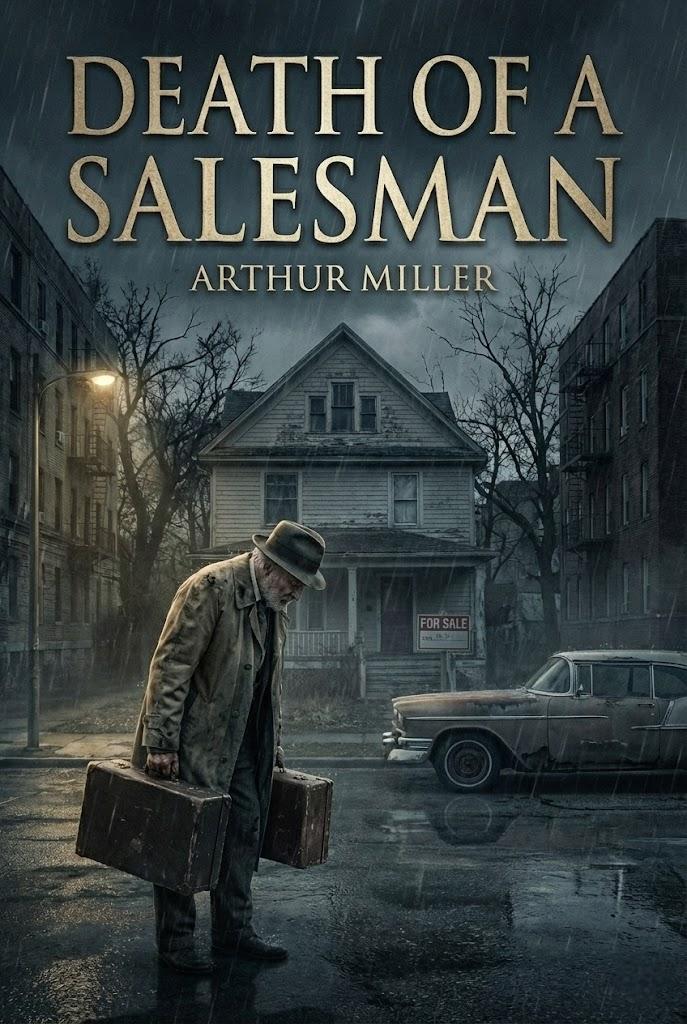
Published: 1949
Arthur Miller’s American tragedy — a salesman’s dreams collapse.
Core Insight
“Attention must be paid.”
Willy Loman believed in the American Dream — success through likability, not just hard work. At 63, he has nothing, and he knows it.
The Story
Willy Loman, aging salesman, is losing his grip. He can’t drive; he can’t sell; he’s living on memories and fantasies. His son Biff returns home, forcing a confrontation with truth.
Key Characters
Willy: Believes in being “well liked.” Unable to see his life clearly.
Biff: Once a star athlete, now a drifter. He sees his father’s lies.
Happy: The other son, following in Willy’s footsteps.
Linda: Willy’s wife, desperately holding the family together.
Themes
The American Dream: Work hard, be liked, succeed. But what if you don’t?
Illusion vs. Reality: Willy can’t face the truth. The truth destroys him.
Fathers and Sons: Biff cannot become the man Willy imagines.
Capitalism: The system uses Willy and discards him.
Key Takeaway: The dream of success can become a trap. Those who believe too deeply may be destroyed.
中文书名:《推销员之死》
核心思想
“必须给予关注。”
威利·洛曼相信美国梦——通过讨人喜欢而成功,而不仅仅是努力工作。63岁时,他一无所有,他知道这一点。
故事
威利·洛曼,年迈的推销员,正在失去控制。他不能开车;不能销售;他活在回忆和幻想中。他的儿子比夫回家,迫使与真相对峙。
关键人物
威利:相信被"人人喜欢"。无法清楚地看到自己的生活。
比夫:曾经是体育明星,现在是漂泊者。他看到了父亲的谎言。
哈皮:另一个儿子,跟随威利的脚步。
琳达:威利的妻子,拼命维持着这个家庭。
主题
美国梦:努力工作,被人喜欢,成功。但如果没有呢?
幻觉 vs. 现实:威利无法面对真相。真相毁灭了他。
父与子:比夫无法成为威利想象中的人。
资本主义:制度利用威利然后抛弃他。
核心启示: 成功的梦想可能成为陷阱。那些过于深信的人可能被毁灭。
Published: ~8th Century BCE
Homer’s epic of Odysseus’s ten-year journey home from the Trojan War.
Core Insight
“Tell me, Muse, of the man of many ways…”
The Odyssey is the original journey story — adventure, longing, homecoming. Odysseus uses cunning over strength.
The Journey
After Troy’s fall, Odysseus sails for home. He faces:
- The Cyclops Polyphemus
- The witch Circe
- The Sirens
- Scylla and Charybdis
- The land of the dead
- The island of Calypso (seven years)
- And more…
Meanwhile, his wife Penelope fends off suitors who assume he’s dead. His son Telemachus searches for news of his father.
Key Themes
Homecoming (Nostos): The deepest wish — to return home.
Cunning (Metis): Odysseus survives through cleverness, not just strength.
Identity: Odysseus is “nobody” to escape Polyphemus. He must reclaim his name.
Loyalty: Penelope waits twenty years. The dog Argos dies upon recognizing his master.
Legacy
The template for all journey narratives. “Odyssey” became a common noun.
Key Takeaway: The journey home is the greatest journey. But home may have changed — and so have you.
中文书名:《奥德赛》
核心思想
“告诉我,缪斯,那个多谋善断之人的故事…”
《奥德赛》是原始的旅程故事——冒险、渴望、归乡。奥德修斯以智谋胜过力量。
旅程
特洛伊陷落后,奥德修斯航向家乡。他面对:
- 独眼巨人波吕斐摩斯
- 女巫喀耳刻
- 塞壬
- 斯库拉和卡律布狄斯
- 死者之地
- 卡吕普索的岛屿(七年)
- 还有更多…
与此同时,他的妻子珀涅罗珀抵御那些认为他已死的追求者。他的儿子忒勒马科斯寻找父亲的消息。
核心主题
归乡(Nostos):最深的愿望——回家。
智谋(Metis):奥德修斯通过聪明而非仅靠力量生存。
身份:奥德修斯为了逃离波吕斐摩斯自称"无人"。他必须重新夺回自己的名字。
忠诚:珀涅罗珀等了二十年。狗阿尔戈斯在认出主人后死去。
遗产
所有旅程叙事的模板。“奥德赛"成为了一个普通名词。
核心启示: 回家的旅程是最伟大的旅程。但家可能已经变了——你也变了。
Published: 1953
Samuel Beckett’s absurdist masterpiece — two men wait for someone who never comes.
Core Insight
“Nothing to be done.”
Vladimir and Estragon wait for Godot. He doesn’t come. They wait. That’s it. That’s the play.
The Action (or Non-Action)
By a tree on a country road:
- Vladimir and Estragon wait for Godot
- Pozzo and Lucky pass by (Pozzo is master, Lucky is slave)
- A boy brings word that Godot won’t come today but surely will tomorrow
- They consider leaving but don’t move
- Act Two: Same as Act One
Key Themes
Waiting: Life is waiting — for meaning, for salvation, for death.
Absurdity: Nothing happens, nobody comes, nobody goes.
Companionship: Vladimir and Estragon cannot part, despite misery.
Time: “We always find something… to give us the impression we exist.”
Is Godot God?
Beckett refused to say. The ambiguity is essential.
Impact
Revolutionized theater. Influenced everything that followed.
Key Takeaway: We wait. We try to fill time. We don’t leave. This is life.
中文书名:《等待戈多》
核心思想
“没什么可做的。”
弗拉基米尔和埃斯特拉冈等待戈多。他没有来。他们等待。就是这样。这就是这出戏。
行动(或非行动)
在乡间道路旁的一棵树边:
- 弗拉基米尔和埃斯特拉冈等待戈多
- 波佐和幸运儿经过(波佐是主人,幸运儿是奴隶)
- 一个男孩带来消息说戈多今天不会来,但明天肯定会来
- 他们考虑离开但没有动
- 第二幕:与第一幕相同
核心主题
等待:生活就是等待——等待意义、等待救赎、等待死亡。
荒诞:什么事都没发生,没有人来,没有人走。
陪伴:弗拉基米尔和埃斯特拉冈无法分开,尽管痛苦。
时间:“我们总能找到些什么……让我们觉得自己存在。”
戈多是上帝吗?
贝克特拒绝说明。模糊性是本质。
影响
革新了戏剧。影响了随后的一切。
核心启示: 我们等待。我们试图打发时间。我们不离开。这就是生活。
Published: 1667
John Milton’s epic of the Fall — Satan, Adam, Eve, and humanity’s expulsion from Eden.
Core Insight
“Better to reign in Hell than serve in Heaven.”
Milton retells Genesis as epic poetry. Satan is the most memorable character — proud, tragic, and dangerously charismatic.
The Story
The Heavenly War: Satan rebels against God and is cast into Hell.
The Garden: Adam and Eve live in innocent bliss.
The Temptation: Satan, in serpent form, convinces Eve to eat the forbidden fruit. Adam follows.
The Expulsion: They lose Eden but gain knowledge and the promise of redemption through Christ.
Satan as Anti-Hero
Milton’s Satan is not a cartoon devil but a complex character — eloquent, defiant, suffering. Many readers find him more interesting than God.
Key Themes
Free Will: God gives humans the freedom to fall.
Justifying God’s Ways: “I may assert Eternal Providence / And justify the ways of God to men.”
Knowledge vs. Obedience: Is the fruit’s knowledge worth the cost?
Loss and Hope: Paradise is lost, but humanity’s story is just beginning.
Key Takeaway: We are fallen but not without hope. The Fall is the beginning of human history.
中文书名:《失乐园》
核心思想
“宁可在地狱里称王,也不愿在天堂里侍奉。”
弥尔顿将《创世纪》改写成史诗。撒旦是最令人难忘的角色——骄傲、悲剧性、危险地魅力四射。
故事
天堂之战:撒旦反叛上帝,被投入地狱。
花园:亚当和夏娃在无辜的幸福中生活。
诱惑:撒旦以蛇的形式说服夏娃吃禁果。亚当跟随。
驱逐:他们失去了伊甸园,但获得了知识和通过基督救赎的承诺。
撒旦作为反英雄
弥尔顿的撒旦不是卡通恶魔,而是一个复杂的角色——雄辩、反抗、受苦。许多读者发现他比上帝更有趣。
核心主题
自由意志:上帝给人类堕落的自由。
为上帝的方式辩护:“我可以宣告永恒的天意/为上帝对人类的方式辩护。”
知识 vs. 服从:果实的知识值得代价吗?
失去与希望:天堂失去了,但人类的故事才刚刚开始。
核心启示: 我们堕落了,但并非没有希望。堕落是人类历史的开始。

Published: 1855
Walt Whitman’s revolutionary collection — the poet of American democracy, the body, and the soul.
Core Insight
“I contain multitudes.”
Whitman celebrated everything — himself, the nation, the workers, the body, the soul, the grass beneath our feet.
The Voice
No poet had sounded like this before:
- Free verse (no fixed meter or rhyme)
- Long, rolling, cataloging lines
- First person embrace of everything
Key Poems
“Song of Myself”: 52 sections celebrating the self, the body, death, and transcendence.
“I Sing the Body Electric”: The body is sacred; physical and spiritual are one.
“O Captain! My Captain!”: Elegiac poem on Lincoln’s death.
“Crossing Brooklyn Ferry”: Time and space collapse; Whitman speaks to future readers.
Themes
Democracy: America’s promise — every person is a universe.
The Body: Not shameful but glorious. Sexuality is holy.
Nature: The grass, the sea, the open road.
Connection: Whitman embraces every reader, across time.
Legacy
Changed poetry forever. Influenced Ginsberg, Neruda, and countless others.
Key Takeaway: You contain multitudes. So does everyone else.
中文书名:《草叶集》
核心思想
“我包含众多。”
惠特曼颂扬一切——他自己、国家、工人、身体、灵魂、我们脚下的草。
声音
以前没有诗人发出过这样的声音:
- 自由诗(没有固定的格律或韵脚)
- 长长的、滚滚的、罗列式的诗行
- 第一人称拥抱一切
关键诗篇
《自我之歌》:52个部分,歌颂自我、身体、死亡和超越。
《我歌唱带电的身体》:身体是神圣的;肉体和精神是一体的。
《船长!我的船长!》:关于林肯之死的挽歌。
《渡布鲁克林渡轮》:时间和空间坍塌;惠特曼与未来的读者交谈。
主题
民主:美国的承诺——每个人都是一个宇宙。
身体:不是可耻的,而是光荣的。性是神圣的。
自然:草、海、开阔的道路。
联系:惠特曼拥抱每一个读者,跨越时间。
遗产
永远改变了诗歌。影响了金斯伯格、聂鲁达和无数其他人。
核心启示: 你包含众多。其他每个人也是。

Published: 1890 (first collection)
Emily Dickinson’s compressed, explosive poems — written in isolation, discovered after death.
Core Insight
“I’m Nobody! Who are you? Are you — Nobody — Too?”
Dickinson wrote nearly 1,800 poems, published almost none. Her work is dense, enigmatic, syntactically strange — and unforgettable.
The Life
Dickinson lived increasingly reclused in Amherst, Massachusetts. She dressed in white, rarely left home, and corresponded by letter. After her death, her sister discovered the poems.
The Style
- Short lines, often in hymn meter
- Dashes instead of punctuation — creating pause and ambiguity
- Slant rhyme and unexpected word choices
- Compression — more meaning in fewer words than any poet before or since
Key Themes
Death: “Because I could not stop for Death — / He kindly stopped for me —”
Immortality: “This World is not Conclusion”
Nature: Birds, bees, seasons — observed with microscopic precision.
The Self: Inner life explored with surgical honesty.
Legacy
Now recognized as one of America’s greatest poets. Her influence on modern poetry is incalculable.
Key Takeaway: Tell all the Truth but tell it slant. The deepest insights come in compressed, sideways forms.
中文书名:《艾米莉·狄金森诗全集》
核心思想
“我是无名小卒!你是谁? 你也是——无名小卒——吗?”
狄金森写了近1,800首诗,几乎没有发表过。她的作品密集、神秘、句法奇特——却令人难忘。
生平
狄金森在马萨诸塞州阿默斯特过着越来越隐居的生活。她穿白衣,很少离开家,通过书信交流。她去世后,她的妹妹发现了这些诗。
风格
- 短行,通常采用赞美诗格律
- 用破折号代替标点——创造停顿和模糊
- 斜韵和意想不到的词汇选择
- 压缩——用比之前或之后任何诗人都少的词表达更多意义
核心主题
死亡:“因为我无法为死亡停下——/他亲切地为我停下——”
不朽:“这个世界不是终结。”
自然:鸟、蜜蜂、季节——用显微镜般的精确观察。
自我:用外科手术般的诚实探索内心生活。
遗产
现在被公认为美国最伟大的诗人之一。她对现代诗歌的影响是无法估量的。
核心启示: 讲述所有的真相,但要斜着讲。最深刻的见解以压缩、侧面的形式出现。
Published: ~8th-11th Century (manuscript)
The oldest surviving long poem in Old English — a hero battles monsters and dragons.
Core Insight
“So. The Spear-Danes in days gone by and the kings who ruled them had courage and greatness.”
Beowulf fights three monsters, wins glory, and dies. The poem asks what makes a good king, a good warrior, a good life.
The Story
Grendel: A monster terrorizes the Danish hall Heorot. Beowulf, a Geatish warrior, crosses the sea to help. He tears off Grendel’s arm.
Grendel’s Mother: She attacks in revenge. Beowulf pursues her to her underwater lair and kills her.
The Dragon: Fifty years later, old King Beowulf faces a dragon. He kills it but is mortally wounded.
Key Themes
Fame and Mortality: Glory outlasts death. “A man must earn fame before death; that is the only immortality.”
Good Kingship: A king must be generous, brave, and protective of his people.
Monsters: Are they evil, or nature’s forces? The poem is ambiguous.
Transience: All things pass — halls burn, heroes die, empires fade.
Key Takeaway: Life is brief. What endures is the story told about you.
中文书名:《贝奥武夫》
核心思想
“是这样。曾经斯派尔-丹麦人 和统治他们的国王有勇气和伟大。”
贝奥武夫与三个怪物战斗,赢得荣耀,然后死去。这首诗问什么造就了好国王、好战士、好生活。
故事
格伦德尔:一个怪物恐吓丹麦大厅赫罗斯加。贝奥武夫,一个盖特战士,渡海来帮助。他撕掉了格伦德尔的手臂。
格伦德尔之母:她为了复仇而攻击。贝奥武夫追踪她到她的水下巢穴并杀死她。
龙:五十年后,年老的贝奥武夫国王面对一条龙。他杀死了它,但受了致命伤。
核心主题
名声与永生:荣耀比死亡更持久。“人在死前必须赢得名声;那是唯一的不朽。”
好的王权:国王必须慷慨、勇敢,保护他的人民。
怪物:它们是邪恶的,还是自然的力量?这首诗是模棱两可的。
短暂:所有事物都会过去——大厅燃烧,英雄死去,帝国消逝。
核心启示: 生命是短暂的。持续下去的是关于你的故事。
Published: 1922
T.S. Eliot’s modernist landmark — a fragmented elegy for a civilization in ruins.
Core Insight
“April is the cruellest month, breeding Lilacs out of the dead land…”
The poem captures post-WWI Europe’s spiritual exhaustion — a wasteland of disconnection, sterility, and lost meaning.
The Structure
Five sections, each with distinct voices and settings:
- The Burial of the Dead: Death, rebirth, memory.
- A Game of Chess: Failed relationships; the rich and poor alike are sterile.
- The Fire Sermon: Lust without love; the Thames.
- Death by Water: The drowned Phoenician sailor.
- What the Thunder Said: Search for water/meaning; fragmented hope.
Key Techniques
Collage: Fragments from other texts — Dante, Shakespeare, Upanishads.
Multiple Voices: No single speaker; the poem shifts constantly.
Allusion: Deep knowledge of Western literature is assumed (and footnoted by Eliot).
Themes
Spiritual Sterility: Modern life lacks meaning.
Memory and Tradition: The past haunts the present.
Desire for Redemption: “Shantih shantih shantih” — “the peace which passeth understanding.”
Key Takeaway: We live among fragments. The search for meaning is the poem itself.
中文书名:《荒原》
核心思想
“四月是最残忍的月份,从死去的土地里 培育出紫丁香…”
这首诗捕捉了一战后欧洲的精神枯竭——一片疏离、不育和失去意义的荒原。
结构
五个部分,每个都有不同的声音和场景:
- 死者的葬礼:死亡、重生、记忆。
- 一盘棋:失败的关系;富人和穷人都是不育的。
- 火诫:没有爱的欲望;泰晤士河。
- 水溺之死:溺亡的腓尼基水手。
- 雷霆之言:寻找水/意义;碎片化的希望。
关键技巧
拼贴:来自其他文本的片段——但丁、莎士比亚、奥义书。
多重声音:没有单一的讲述者;诗不断转换。
典故:假定对西方文学有深入了解(艾略特有脚注)。
主题
精神的贫瘠:现代生活缺乏意义。
记忆与传统:过去困扰着现在。
对救赎的渴望:“Shantih shantih shantih”——“超越理解的平安”。
核心启示: 我们生活在碎片中。对意义的寻找就是这首诗本身。
Published: 13th Century
Jalal al-Din Rumi’s mystical poetry — love, longing, and union with the divine.
Core Insight
“What you seek is seeking you.”
Rumi’s poetry overflows with longing — for the Beloved, for God, for the source of all being. Love is the path to truth.
The Poetry
Rumi wrote in Persian. His works include:
- Masnavi: A vast spiritual epic
- Divan-e-Shams: Poems inspired by his friendship with Shams of Tabriz
- Rubaiyat: Short quatrains
Key Themes
Divine Love: Human love mirrors divine love. The beloved is a window to God.
Longing: The reed torn from the reed-bed longs to return. We are all separated from our source.
Intoxication: Wine, taverns, drunkenness — metaphors for spiritual ecstasy.
Unity: Differences dissolve in the ocean of love.
Famous Lines
“Out beyond ideas of wrongdoing and rightdoing, there is a field. I’ll meet you there.”
“The wound is the place where the Light enters you.”
Legacy
The best-selling poet in America. His message of love transcends religion and culture.
Key Takeaway: Love is the door. Keep seeking; what you seek is seeking you.
中文书名:《鲁米诗选》
核心思想
“你所寻求的正在寻求你。”
鲁米的诗歌充满了渴望——对爱人、对上帝、对一切存在之源的渴望。爱是通向真理的道路。
诗歌
鲁米用波斯语写作。他的作品包括:
- 玛斯纳维:一部浩瀚的精神史诗
- 沙姆斯诗集:受他与大不里士的沙姆斯的友谊启发的诗歌
- 鲁拜集:短四行诗
核心主题
神圣的爱:人类的爱反映神圣的爱。爱人是通向上帝的窗户。
渴望:从芦苇床撕下的芦苇渴望回归。我们都与我们的源头分离。
陶醉:酒、小酒馆、醉意——精神狂喜的隐喻。
统一:在爱的海洋中,差异消融。
著名诗句
“在对与错的观念之外,有一片田野。我将在那里与你相会。”
“伤口是光进入你的地方。”
遗产
美国最畅销的诗人。他的爱的信息超越了宗教和文化。
核心启示: 爱是门。继续寻求;你所寻求的正在寻求你。